
Analogous inspiration (analogies)
Find someone else who has already solved a problem like yours, take the principle, and check where it stops fitting.
- Time
- 30 min
- People
- 3–6
- Kind of work
- Generate

In short
The analogies method helps a team generate ideas by looking at a different setting that faces a similar challenge, such as a restaurant kitchen checking orders or an airline boarding queue. You name the core of your challenge, find two or three analogous settings, extract the principle that makes them work, then test where the analogy breaks before using it.
What it is
Teams that look only at their own sector tend to produce ideas their competitors already have. Analogies widen the search. You ask a simple question: who else has to deal with something like this? A hospital handover has something in common with a pit stop. A permit office checking files has something in common with a kitchen checking plates before they leave.
You take the principle underneath what the other setting does and ask how it might work for you. Then you look hard at the limits, because every analogy breaks somewhere. The practice is often called analogous inspiration in human-centred design. This worksheet records four things: your challenge, the analogy, the principle you transfer, and the limit where the comparison stops holding.
When to use it
Use it when
- Your ideas keep coming from inside your own organisation and feel familiar.
- You face a challenge that is common in other fields, such as queues, checks, handovers or trust.
- You want to persuade a cautious audience by showing a working example elsewhere.
- A team is stuck and needs a fresh angle on a problem it knows well.
- You can arrange a short visit or call with someone in another field.
Skip it when
- You have not yet defined the core of your challenge. Without it you cannot tell which settings are similar.
- The issue is governed by strict rules that leave no room for a different approach.
- You need a fast decision and have no time to test the analogy's limits.
You need
- Time
- About 30 minutes in the room. Add an hour or two if you visit or call an analogous setting.
- People
- 3 to 6 people with varied backgrounds and interests outside work.
- Materials
- The challenge on a card, sticky notes, a board with four columns (challenge, analogy, principle, limit), and optionally photos or notes from a visit.
How to run it
Step 1: Strip the challenge to its core
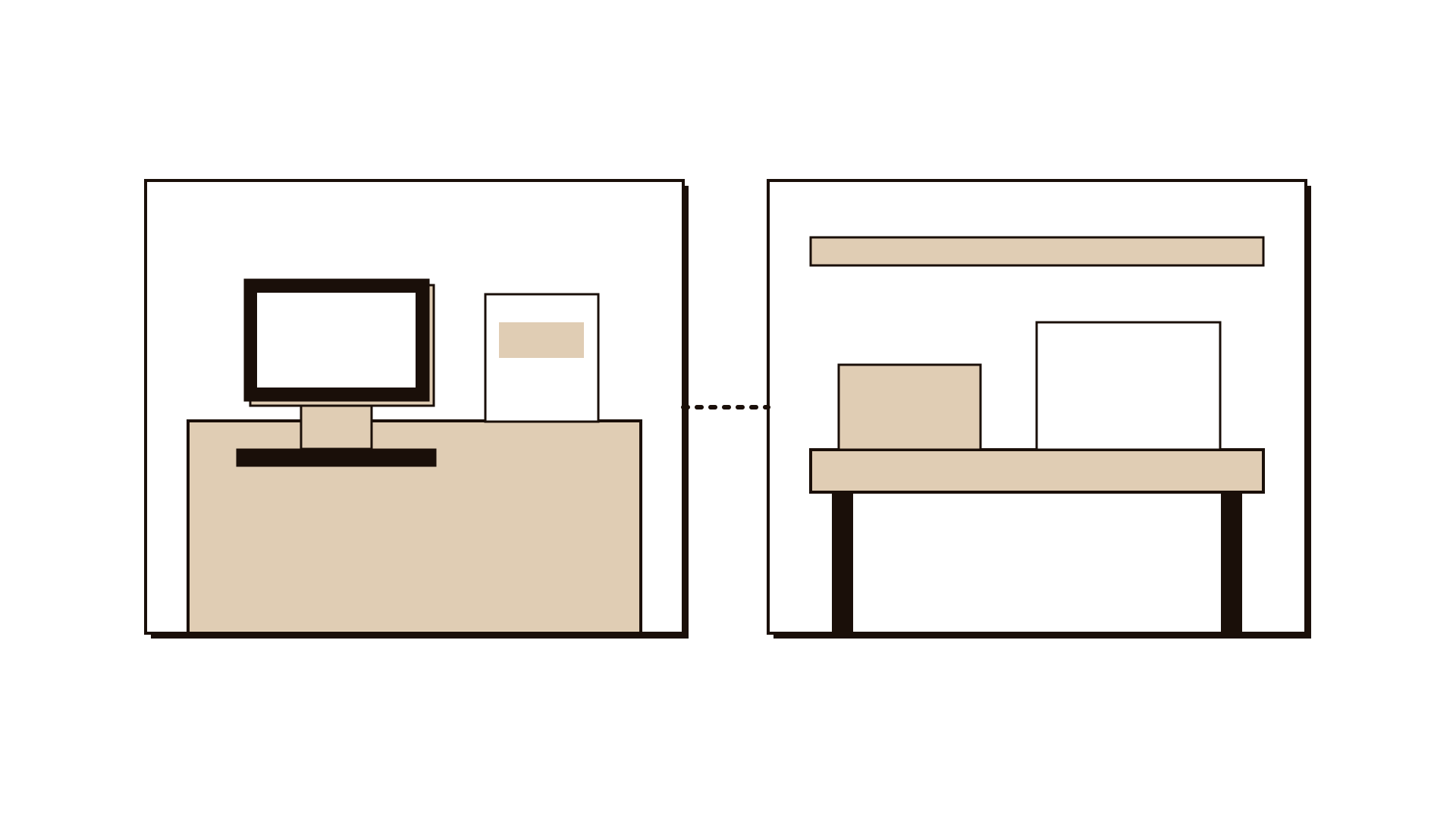
Write your challenge, then remove the details that make it specific to your sector. "Reduce returned building permit applications" becomes "catch mistakes before something is handed over". This general version is what you will look for elsewhere.
Step 2: List settings that face the same core
Give everyone four minutes to write other places where the same core challenge appears, one per sticky note. Encourage far-away settings: kitchens, airports, sport, retail, religious events, schools, logistics. Aim for 15 or more.
Step 3: Choose two or three to explore
Pick the settings that seem both different and rich. A setting that is too close to yours will give you the same ideas. One that is too far away may not transfer at all.
Step 4: Describe how they handle it
For each chosen setting, describe what people there actually do. If anyone in the room has worked there, ask them. If possible, arrange a short visit or call before the session and bring the notes.
Step 5: Extract the principle
Ask: why does this work there? Write the answer as a principle that is not tied to the setting. "A chef checks every plate against the ticket" becomes "one quick check by a single person at the last point before handover".

Step 6: Test where the analogy breaks
For each principle, list the ways your context is different: volume, risk, law, skills, who is paying. Write these in the limit column. A principle that survives the limits is worth taking forward. One that breaks in many places may still inspire a smaller idea.
Step 7: Turn principles into ideas
For the strongest principles, write one to three concrete ideas for your own service. Record each on the worksheet with its analogy, principle and limit.
Worked example
A city planning department found that many home renovation permit applications were returned for corrections, often several times. Each return added about two weeks. The team's core challenge was "catch mistakes before something is handed over".
Five people met for 30 minutes: two plan reviewers, a service designer, a front desk officer and an IT analyst. One reviewer had worked in a hotel kitchen as a student.
The group listed 18 settings, including restaurant kitchens, aircraft pre-flight checks, exam halls and courier dispatch. They chose the kitchen pass and the pre-flight checklist.
From the kitchen pass, the principle was "one quick final check against the order by a single person, just before handover". From the pre-flight check, it was "a short list of the few items that cause most failures, read aloud".
In the limit column they noted that a kitchen check takes seconds and applications are longer, and that pilots are trained to use checklists while applicants are not. This ruled out copying a long professional checklist.
The resulting idea was a seven-item checklist clipped to the front of each application, covering the errors behind most returns, which a front desk officer would check with the applicant in five minutes at submission. The team planned a two-week trial at one office.
IllustrativeTips and mistakes
Tips
- Invite someone with an unusual job history. They often know analogous settings first-hand.
- Visit if you can. Twenty minutes watching a kitchen or a check-in desk beats an hour of guessing.
- Write the principle before the idea. Jumping straight to "let's do what airlines do" skips the useful step.
- Keep the limit column honest. It protects you from ideas that only sound clever.
Common mistakes
- Choosing settings that are too similar, such as another government office, and calling it an analogy.
- Copying the other setting's solution without understanding why it works.
- Ignoring the limits, so the idea fails on first contact with real users.
- Relying on what people imagine happens in the other setting rather than what really happens.
What you walk away with
The team leaves with a few clear principles borrowed from other fields, each with its limits written down, and a short list of concrete ideas built on them. Before going further, use assumption mapping to list what must be true for the borrowed idea to work. SCAMPER can also help you adapt the principle step by step to your current service.
Questions people ask
What is analogous inspiration in design thinking?
It is the practice of looking at a different setting with a similar challenge to find fresh ideas. You study how people there handle the challenge and adapt the principle to your own context.
How do I find a good analogy?
Strip your challenge to its core in general words, then ask where else that core appears. Good analogies are different enough to offer new ideas and similar enough in the core that the principle can travel.
How long does an analogies session take?
About 30 minutes in the room for one challenge. If you add a visit or a call to the analogous setting, plan an extra hour or two, which is usually worth it.
Tool card
The worksheet your team fills in, one box per field.
- Challenge
- Analogy
- Transferred principle
- Limit