
Concept Blending
Borrow what people love about another service, and rebuild one moment of your own around it.
- Time
- 70 min
- People
- 3–8
- Kind of work
- Generate
In short
Concept Blending is a method for redesigning one moment of a service by borrowing from services people love elsewhere. To run it, frame the host moment, choose four donors at near, far and wild distances, extract their signatures through four lenses, force each into your service, then distil the best three into testable concepts.
What it is
Concept Blending is an idea generation method for services. You take the service you are redesigning, called the host, and borrow on purpose from services that seem unrelated to it, called the donors. For each donor you ask one question: if our service worked like this, what would it become? It works because people carry expectations from one service into the next, while sectors tend to study only themselves. Hospitals compare themselves with hospitals and ministries with ministries, so the fresh idea often sits in a service nobody thought to compare against.
Concept Blending is a method by Mahmoud Abdelrahman. He first used it in Intensified Hospitality, a hotel service design project, in 2010, and revised it in 2026. It is licensed CC BY 4.0, so you may share and adapt it with attribution. It draws on lateral thinking (Edward de Bono) and on conceptual blending in cognitive science (Gilles Fauconnier and Mark Turner). Its own contribution is practical: three donor distances, four lenses (moments, roles, rules and feelings), five moves, and one rule that holds them together: borrow the why, not the what.
When to use it
Use it when
- The problem is agreed, but every idea so far feels like a small improvement on what already exists.
- The team knows its own sector so well that it keeps proposing what its peers already do.
- You need a new kind of experience for one moment, such as waiting, arriving or hearing a decision, not a repair.
- You have research on the people you serve and a clear how might we question to work from.
- A workshop needs a structured way to bring in outside inspiration without turning into a tour of other organisations' apps.
Skip it when
- You have not yet agreed the problem or the moment. Frame it first, or the blends will scatter across the whole service.
- A step is simply broken, such as a form that will not submit. Fix it; you do not need to rethink it.
- You have no research on the people you serve, so nobody in the room can judge whether a blend fits them.
You need
- Time
- About 70 minutes for the five moves, plus 30 to 60 minutes beforehand to choose donors and gather pictures.
- People
- 3 to 8 people: a facilitator, one donor guide per donor who knows that service well, and the owner of the moment you are redesigning.
- Materials
- The printed canvas (A1 for a team, A3 for a pair), two or three photographs of each donor in use, sticky notes in two colours, dot stickers and markers.
How to run it
Step 1: Prepare the donors
Before the session, agree the host moment with the person who owns it and choose candidate donors yourself, so the group starts at the interesting part. Find two or three photographs of each donor in use. Pictures of people in the moment, such as passengers queuing at a gate or guests being seated, work better than logos. Give each donor to one participant who knows it well; they will speak for it during the session.
Step 2: Frame the host
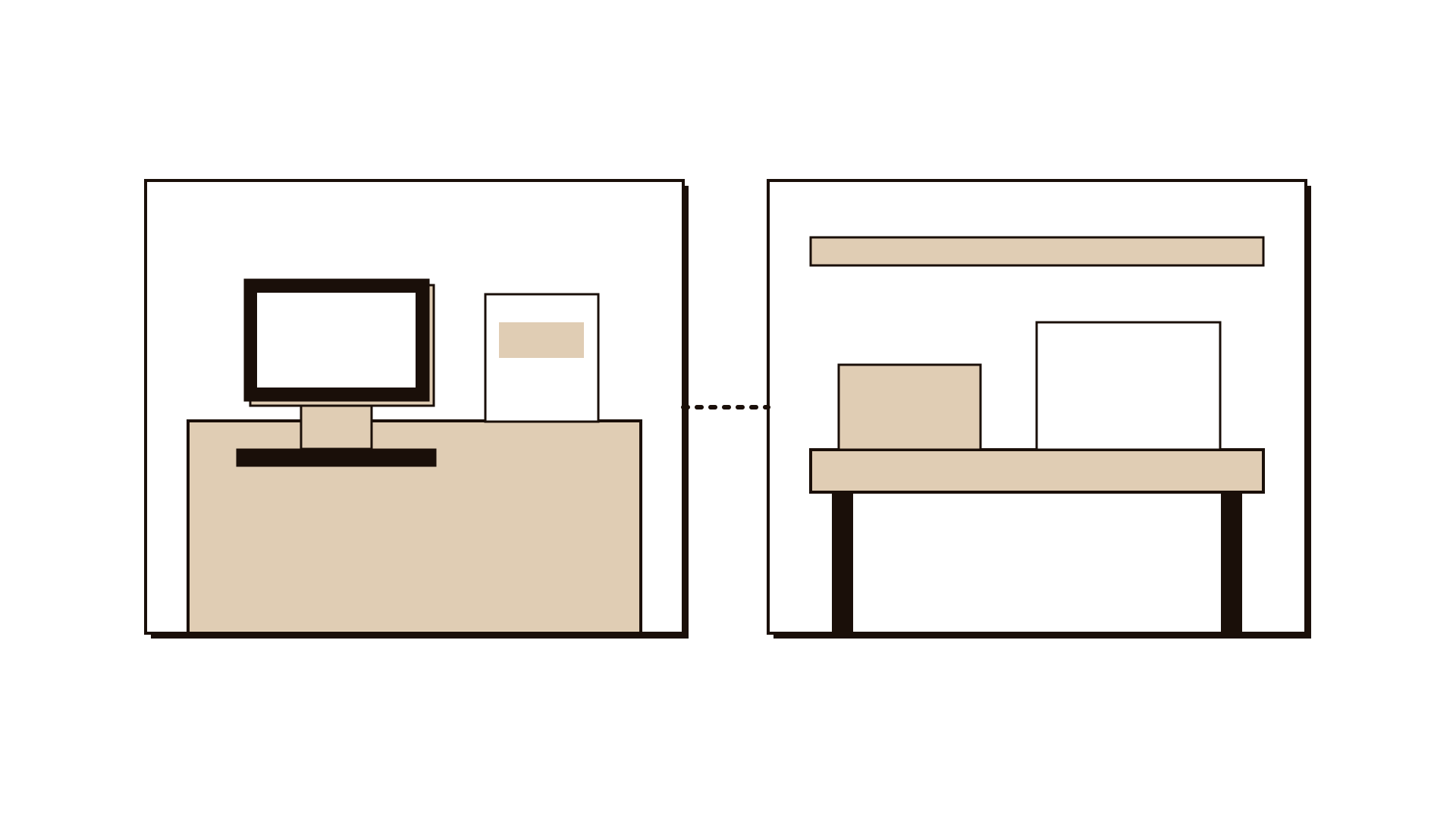
Spend about 10 minutes on the host strip: the service, the single moment you are working on, who it is for, and what has to feel different. Take the need straight from your research or your how might we question. Keep it to one moment. "The outpatient visit" is too big to blend into; "the wait between check-in and being called" is workable.
Step 3: Choose donors at three distances
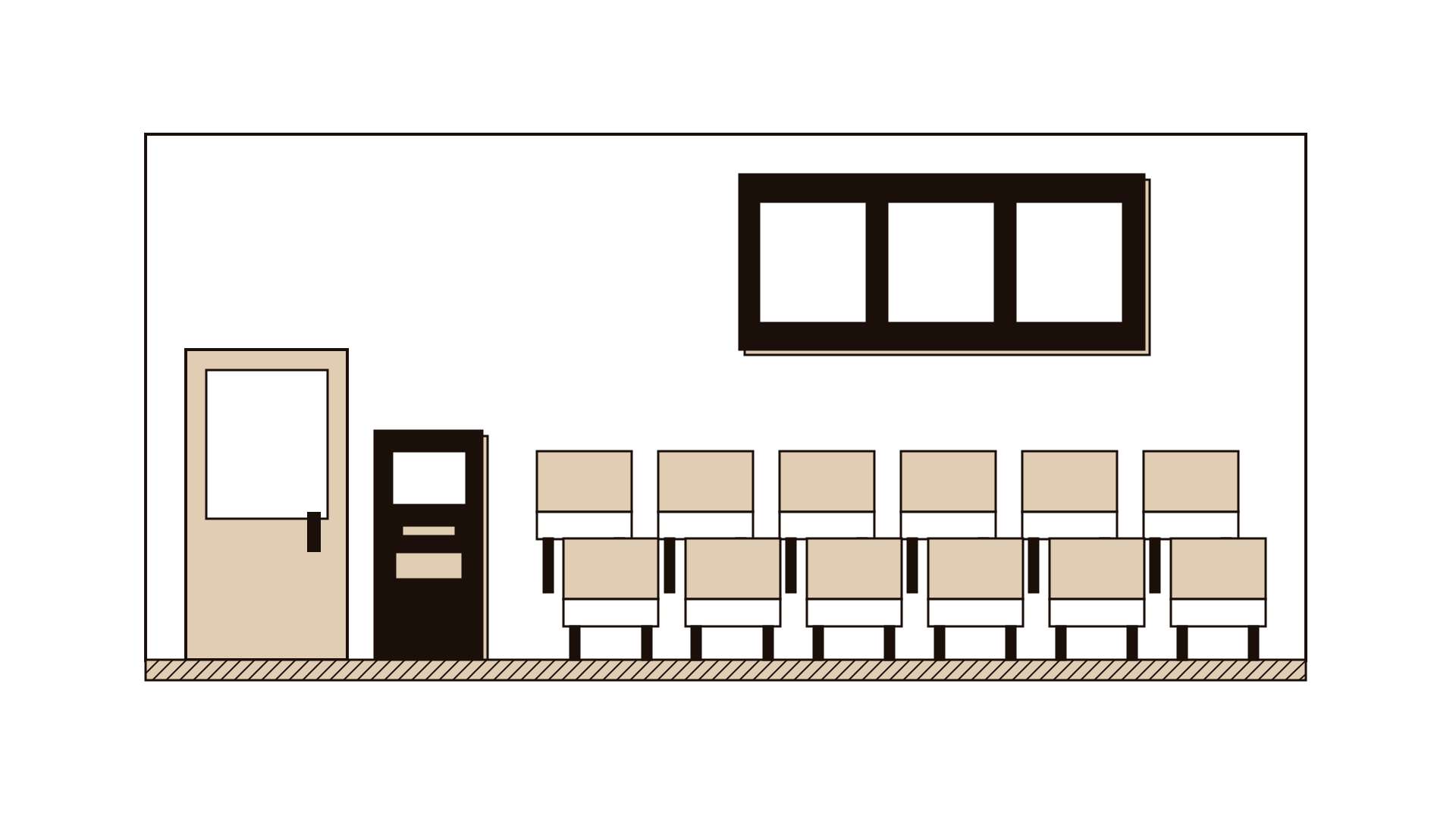
In about 10 minutes, settle on four services that handle this kind of moment brilliantly somewhere else: one near, two far and one wild. A near donor is a neighbouring service and gives feasible ideas. A far donor comes from another sector and gives fresher ones. A wild donor is not a service at all, but a game, a ritual or a place. Choose donors people genuinely love for a reason they can name, and include at least one from local life.
Step 4: Extract signatures through four lenses
For about 15 minutes, write what makes each donor unmistakable, one signature per note, using four lenses. Moments: what happens there that people remember? Roles: who does what, and how do they behave? Rules: how does it run, in access, pace, price and choice? Feelings: what does it leave people with? Write experiences, not features, and ask what people would miss if it disappeared. Aim for 12 to 20 signatures across the four donors.
Step 5: Blend: transplant, translate or twist
For about 20 minutes, force every signature into the host moment, one blend per note in the second colour, asking "what if our service worked like this?" Mark how each was borrowed: transplant it as it is, translate the principle into a new form, or twist it into its opposite. This move is for quantity, so hold every "but" until the next one. Aim for 15 to 30 blends.
Step 6: Distil on fit, freshness and feasibility
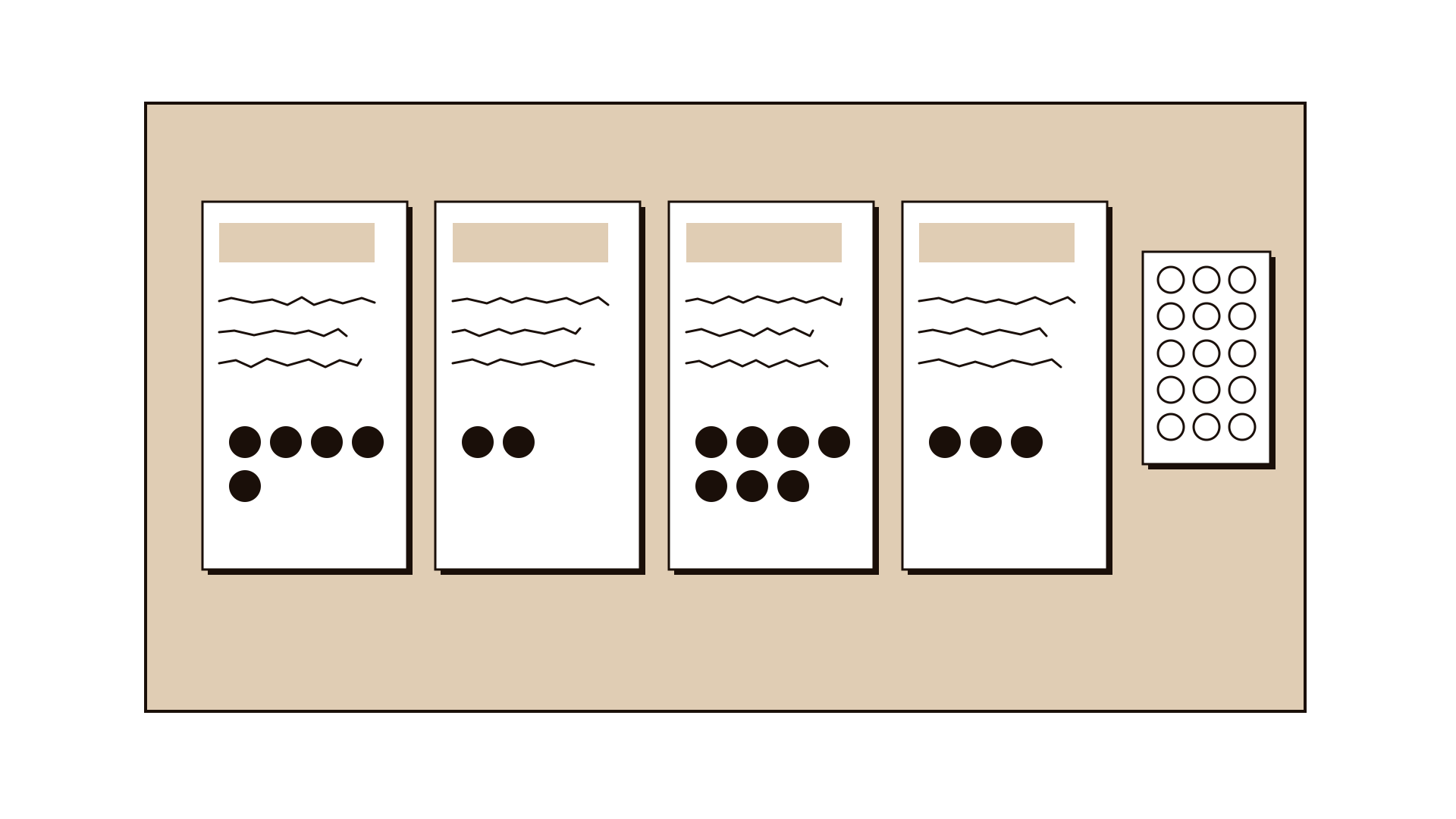
Spend about 15 minutes judging. Give each person up to three dots for each criterion. Fit asks whether the blend serves the people and the need in the host strip. Freshness asks whether it is genuinely new for this service. Feasibility asks whether it could be tried within current rules and resources. The owner has the final word on fit. Prefer blends that score on all three over the one with the most dots in a single column.
Step 7: Write three concepts with a first test
Turn the three strongest blends into short concepts: a name, one sentence on what changes for the person, the donor principle it borrows, and the first test you will run, with an owner and a date. Check each against the rule: borrow the why, not the what. Copying an object or a slogan is a surface blend; borrowing the principle behind it is a deep one. Keep the other blends on the canvas for later rounds.
Worked example
The outpatient department of a 600-bed public hospital sees about 1,900 patients a day. Patients wait an average of 52 minutes between check-in and being called, and a short survey found that 4 in 10 had asked the desk at least once how long they had left. Earlier ideas, such as more chairs and a larger number screen, had not changed how the wait felt.
Seven people met for 70 minutes: two nurses, a reception supervisor, the patient experience lead, an IT analyst, the outpatient manager as owner, and a facilitator. The host strip read: "The wait between check-in and being called, for adult patients at follow-up clinics, must feel known and less anxious."
The donors were a community pharmacy (near), airline boarding and a car service centre (far), and the majlis (wild). Each had a donor guide and three photographs.
The group wrote 17 signatures. Among them: the pharmacist explaining each medicine as it is handed over; boarding groups called in a visible order; the service centre's text message when the car is ready, so customers can leave and come back; and, in the majlis, guests seated as they arrive, with the host coming to them.
Blending produced 24 notes. Transplanting the service centre text gave "a message 15 minutes before you are called, so you can wait in the garden or the café". Translating boarding groups gave a screen showing which stage each patient has reached instead of a bare ticket number. Translating the majlis principle that the host comes to the guest gave "the nurse comes to your seat to take vital signs". Twisting the pharmacy gave the reverse of being explained to: a short card on which the patient writes, while waiting, what they most want from today's visit.
In the distil move, the message scored highest on fit and feasibility, because the hospital already sends appointment texts. The stage screen scored best on freshness. Seat-side vital signs split the group on feasibility, so the owner kept it as a small trial in one clinic, and the visit card was held for a later round.
The team wrote three concepts with first tests: messages sent by hand to 40 patients in one clinic for a week, a printed stage board beside the existing screen, and seat-side vital signs on two mornings. Each test had a named owner and a date within three weeks.
IllustrativeTips and mistakes
Tips
- Choose the donors before the session, so the group spends its time on signatures and blends rather than debating which services to pick.
- Ask donor guides to describe what people do and feel in their service, not what the service offers.
- Keep the two note colours strictly apart, one for signatures and one for blends, so the canvas stays readable.
- If time is short, run a solo sprint: one donor, two lenses, 15 minutes. It also works well as a workshop warm-up.
Common mistakes
- Copying the surface, such as a uniform or a menu on a counter, instead of borrowing what the thing does for people.
- Choosing donors that are too alike. Four retailers give the same idea four times.
- Judging ideas during the blend, which kills quantity before the distil move can do its work.
- Blending into the whole service at once instead of the one moment named in the host strip.
What you walk away with
You leave with three concepts for one moment, each tied to a donor principle and a named first test, plus a canvas of signatures and blends to return to. The next step is to make the concepts tangible and try them. A storyboard shows the new moment from the person's side, and a paper prototype or a concierge test lets you run it by hand before anything is built.
Questions people ask
What is the difference between Concept Blending and analogies?
Both borrow from other fields. Concept Blending adds a fixed structure: one host moment, donors chosen at three deliberate distances, four lenses for extracting signatures, three ways of borrowing and three criteria for choosing. That structure keeps the result from becoming a list of other organisations' features.
Can we use Concept Blending in our own training or projects?
Yes. It is licensed CC BY 4.0, so you can share and adapt it, including in paid work, as long as you credit it as Concept Blending, a method by Mahmoud Abdelrahman, and link to the licence.
How many donors should we use?
Four is the usual number: one near, two far and one wild. Fewer gives too few signatures to blend; more than five tends to run out of time before the blending is done.
Tool card
The worksheet your team fills in, one box per field.
- Host moment
- For whom
- What must change
- Donors and distance
- Signatures by lens
- Blends: transplant, translate, twist
- Fit, freshness, feasibility
- Three concepts and first tests