
Storyboard (service storyboarding)
Draw the new service as a sequence of moments in someone's real life, and see what the story takes for granted.
- Time
- 40 min
- People
- 3–6
- Kind of work
- Generate · Test
In short
A storyboard is a short sequence of drawn frames that shows how a person would experience a new service, from the moment a need appears to the result. You choose a real scenario, sketch 6 to 8 key moments in order, then list what each frame assumes. It takes about 40 minutes and works well for sharing and testing ideas.
What it is
Film makers use storyboards to plan a scene before shooting. Service teams use the same idea to plan an experience before building it. Each frame shows one moment: who is there, what they do and what happens as a result. Simple stick figures and a line of caption are enough.
A storyboard does two jobs. First, it makes an idea concrete enough for others to react to. A leader, a user or a colleague in another department can follow a story far more easily than a process diagram. Second, it exposes assumptions. When you draw 'she receives a text message', someone asks where her phone number came from. Each of those questions is a risk you can test before you spend money.
When to use it
Use it when
- You have a concept and need to explain it to leaders or partners in a few minutes.
- You want feedback from users on an idea that does not exist yet.
- A service crosses several channels or organisations and you need to see the whole sequence.
- Before building a prototype, to decide which moment is most worth testing.
Skip it when
- You are mapping how the current service works today. Use experience mapping, based on research.
- The idea is a single screen or form. A paper prototype tests it more directly.
You need
- Time
- 40 minutes for a team draft; add 15 minutes per user if you test it
- People
- 3 to 6 people, including someone who knows the service from the front line
- Materials
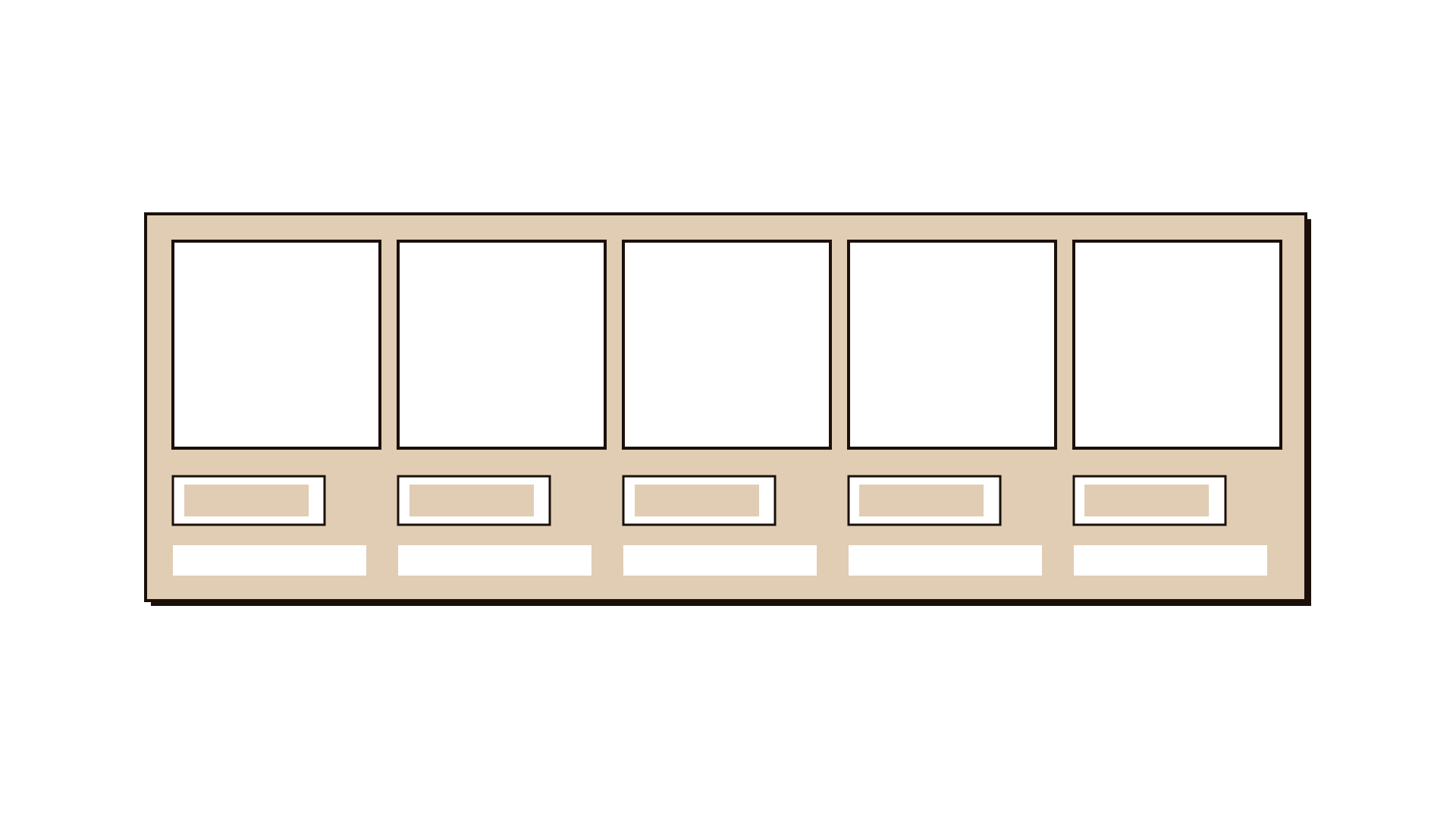
- A long sheet or a strip of 6 to 8 empty frames, pens, sticky notes in a second colour for assumptions
How to run it
Step 1: Choose a real scenario
Pick one person and one situation based on research, for example 'A wheelchair user's permit is about to expire and she needs to renew it before a hospital appointment.' Write who the person is, what triggers the need and what a good outcome looks like.
Step 2: List the key moments
Before drawing, write the moments on sticky notes in order: the trigger, the first contact, the main steps, the result, and what happens after. Keep it to 6 to 8. If you have more, merge some. If you have fewer, you may be skipping hard parts.
Step 3: Draw one moment per frame
Sketch each moment quickly: a figure, a place, an object. Under each frame, write one line of caption in plain words: 'Noura gets a reminder 30 days before expiry.' Spend no more than 2 minutes per frame. Stick figures are fine.
Step 4: Mark what each frame assumes
Go through the frames together. For each one, ask 'What has to be true for this moment to happen?' Write each assumption on a coloured note and stick it under the frame. Expect 2 to 4 assumptions per frame.
Step 5: Find the riskiest frame
Look at all the assumptions. Choose the one or two that, if wrong, would break the story. Circle the frame they belong to. That is the moment to test first.
Step 6: Walk a user through it
If time allows, show the storyboard to 3 to 5 people who match the scenario. Read it aloud frame by frame. Ask 'Is this how it would go for you? What would really happen here?' Note where they correct the story.
Step 7: Record and decide
Photograph the storyboard. Fill the worksheet for each frame: scene, person, action, expected result. Agree what to test next and how, such as a paper prototype of the riskiest frame.
Worked example
A government service agency wants to make it easier to renew disabled parking permits. Today, holders must visit an office with a recent medical report. The team sketches a storyboard for a new renewal service that uses records the health system already holds.
The scenario: Noura, a wheelchair user, has a permit on her car dashboard that expires in five weeks. She has a hospital appointment the week after expiry.
The team draws seven frames: a reminder arrives; Noura opens a link; she confirms her details; the system checks her eligibility with the health records; she pays a fee; the new permit is posted; she places it on her dashboard.
Assumptions pile up under frame four: that the agency can access health records, that her condition is recorded in a way the rule recognises, and that consent has been given. Under frame six: that post arrives in under a week.
Shown to four permit holders, the story changes. Two say they would rather download a digital permit while waiting for the card. One says her condition is permanent and asks why renewal is needed at all. The team circles frame four as the riskiest and books a meeting with the health data team, and adds 'permanent permits' as a How question for policy.
IllustrativeTips and mistakes
Tips
- Give the person a name and a life. It keeps the story honest and specific.
- Draw the moments after the service too. The result in someone's life matters more than the last screen.
- Include the staff side where it matters, such as a frame showing what the officer sees.
- Keep captions in the person's voice, not in system language.
Common mistakes
- Drawing an ideal journey where nothing goes wrong. Add at least one frame for a common problem.
- Spending the session on drawing quality instead of the story.
- Skipping the assumptions step, which is where most of the learning sits.
- Inventing the scenario without any research, so the story reflects the team, not users.
What you walk away with
You leave with a clear, shareable story of the new service, a list of assumptions under each moment, and the one or two frames that carry the most risk. Use the riskiest frame as the starting point for a paper prototype or a role play, and check the overall story against your experience map of the current service.
Questions people ask
How many frames should a storyboard have?
Six to eight frames is enough for most services. Fewer than five usually skips difficult moments; more than ten becomes hard to read and discuss in one session.
Storyboard or experience map?
An experience map describes how a service works today, based on research. A storyboard shows how a new service could work. Many teams map the current experience first, then storyboard the future one.
Do storyboards need to be well drawn?
No. Stick figures, boxes and clear captions work. If your team is nervous about drawing, cut simple figures and objects from paper in advance and arrange them in the frames.
Tool card
The worksheet your team fills in, one box per field.
- Scene
- Person
- Action
- Expected result