
Innovation lab vs centre of excellence vs innovation unit
Innovation lab, centre of excellence or innovation unit? A plain comparison of purpose, team, outputs and risks, and how to choose or combine them.

Innovation lab vs centre of excellence vs innovation unit
Choose an innovation lab when you need to test new answers to messy problems that nobody has solved yet. Choose a centre of excellence when you already know how something should be done and need it done consistently, to a standard, across the organisation. Choose an innovation unit when the organisation needs someone to own innovation as a system: strategy, governance, portfolio and reporting. Many mature organisations end up with a unit that runs a small lab and draws on one or more centres of excellence.
The names are used loosely, so the labels on your organisation chart matter less than the job each team is given. This article compares the jobs. For a full account of labs, see What an innovation lab is, and why most fail.
The three models side by side
| Innovation lab | Centre of excellence | Innovation unit | |
|---|---|---|---|
| Core job | Explore and test new answers to unsolved problems | Spread proven practice and standards in one discipline | Own innovation as an organisational system |
| Typical question | "Will this work for the people affected?" | "What is the right way to do this, and is everyone doing it?" | "Are we investing in the right innovation, and is it delivering?" |
| Work style | Challenge by challenge, experimental, time-boxed | Ongoing, advisory, standard-setting, training | Planning cycles, governance, portfolio reviews |
| Typical outputs | Tested concepts, prototypes, decisions to continue or stop | Playbooks, standards, training, reviews, expert support | Innovation strategy, portfolio, policies, reports to leadership |
| Team | Small, mixed: research, facilitation, prototyping | Specialists in one field, often senior | Managers and analysts, with links to all directorates |
| Measures of success | Decisions taken, ideas adopted or stopped with evidence | Adoption of standards, quality, reduced rework | Portfolio balance, outcomes delivered, maturity over time |
| Main risk | Results with nowhere to go | Becomes a bottleneck or a policing function | Becomes a reporting office far from real work |
When an innovation lab fits
A lab fits when the problem is genuinely uncertain. You do not yet know what the answer is, who it should serve, or whether people will use it. Typical signs:
- Repeated complaints or failures that previous projects did not fix.
- A new policy or service where nobody has a proven model.
- A need to involve users and frontline staff in designing the answer.
A lab is not suited to rolling out a known solution at scale, or to owning the whole organisation's innovation agenda. If you are setting one up in a ministry or authority, see How to set up an innovation lab in a government entity.
When a centre of excellence fits
A centre of excellence fits when the organisation already knows good practice in a discipline and needs it applied consistently. Examples include project management, data analytics, customer experience, procurement or process improvement. Its work is to set standards, build skills, review quality and give expert help.
A centre of excellence can support innovation well. For example, a customer experience centre of excellence may teach journey mapping across the organisation. But by design, it is about consistency rather than exploration. Asking it to run experiments that may break its own standards creates tension.
When an innovation unit fits
An innovation unit fits when innovation has become large enough to need management as a system. It answers questions such as: what is our innovation strategy, how much do we invest across short- and long-term horizons, which initiatives get funded or stopped, and how do we report progress.
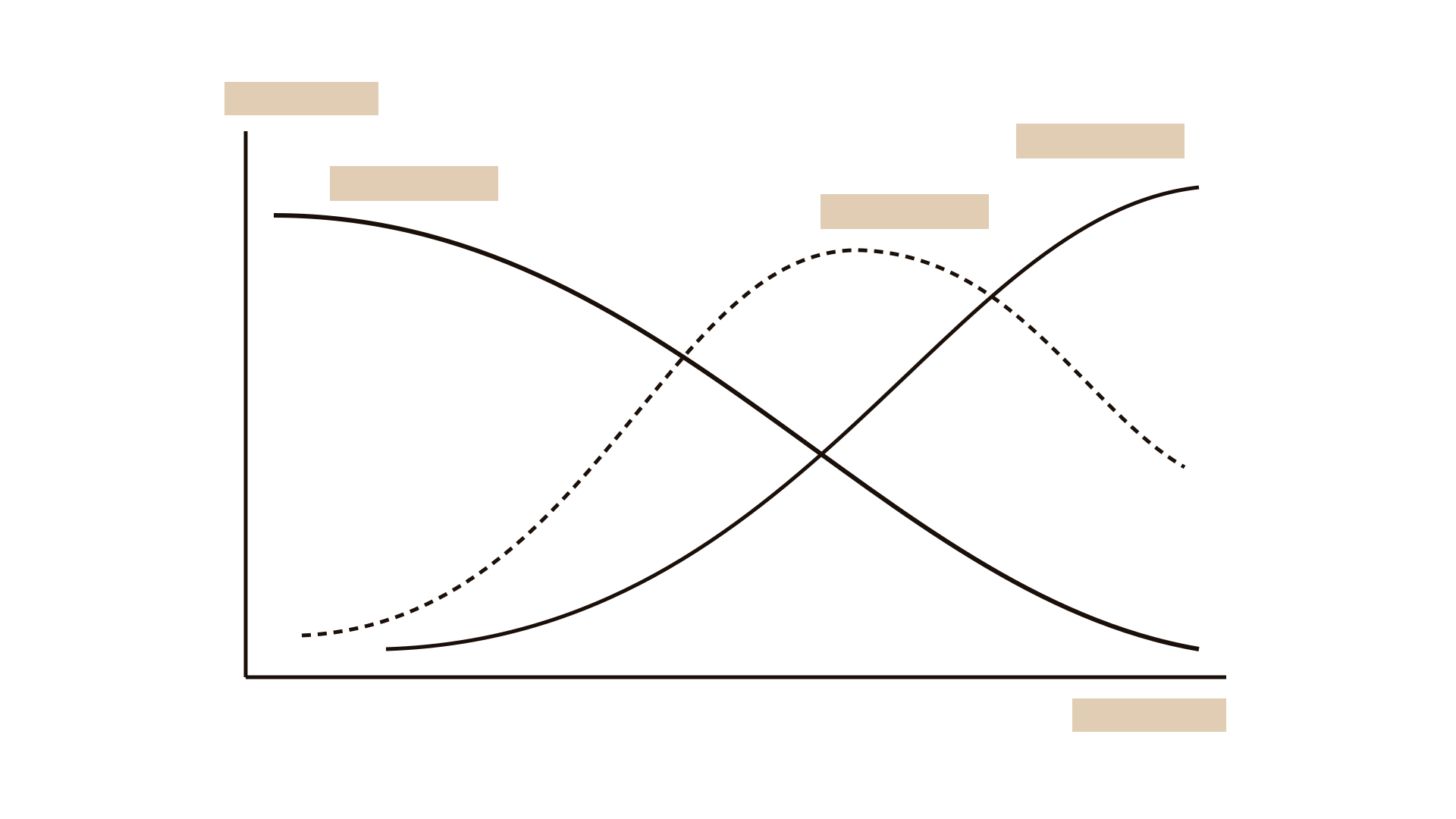
Tools like the three horizons model, credited to Baghai, Coley and White, and an OGSM plan help a unit link innovation work to strategy. Where organisations seek to align with a management system standard such as ISO 56001, published in 2024 as the requirements standard for innovation management systems, the unit is usually the team that owns that work. Our article ISO 56001 explained for practitioners covers it in detail.
The risk is distance. A unit that only plans, governs and reports, without anyone testing real ideas, becomes a paperwork office.
Mixing the models
The three models work best together, with clear roles:
- The unit sets direction. It owns strategy, portfolio and reporting, and decides which challenges matter most.
- The lab explores. It takes the most uncertain challenges, tests answers and returns evidence and decisions.
- Centres of excellence scale. Once an answer is proven, they help spread it to standard across the organisation.
Write down who does what with a RACI, and map relationships with a stakeholder map. The most common failure in mixed models is overlap: the unit starts running workshops, the lab starts writing policies, and centres of excellence feel their territory is being taken.

If you must choose only one to start, use a weighted decision matrix with criteria such as: how uncertain your main problems are, how much proven practice already exists, how large your innovation portfolio is, and what leadership expects to see in a year. Small organisations often start with a lab and add a unit role later. Large organisations with many initiatives often need the unit first.

Do's and don'ts
Do
- Define each team by its job, not its name.
- Give the lab a route to hand proven answers to a centre of excellence or operations team.
- Keep the unit close to real work by involving it in lab reviews.
- Agree roles in writing when more than one model exists.
- Revisit the structure as innovation matures.
Don't
- Rename an existing centre of excellence a "lab" and expect experimentation.
- Ask a lab to own the organisation's whole innovation strategy.
- Let an innovation unit become only a reporting office.
- Create all three at once in a small organisation.
- Let the teams compete for the same challenges.
An illustrative example
Illustrative: an invented organisation, described to show the pattern.
A national public transport operator in Europe had a customer experience centre of excellence, a busy strategy office and growing pressure to "innovate". Leadership first proposed renaming the centre of excellence as an innovation lab.
The head of strategy compared the options with a weighted decision matrix. The operator's biggest problems, such as crowding at peak times and confusing disruption information, had no proven answers. The centre of excellence was good at spreading standards, but not at experiments.
The operator kept the centre of excellence as it was, created a small lab of four people for uncertain challenges, and gave the strategy office a light innovation unit role: owning the portfolio and quarterly reviews. The first lab challenge tested new disruption announcements at a handful of stations. Once one version proved clearer to passengers, the centre of excellence turned it into a network-wide standard.
Questions people ask
Is an innovation centre of excellence the same as an innovation lab? Not usually. A centre of excellence spreads proven practice to a standard; a lab tests new answers where none is proven. Some organisations use the names interchangeably, so check what the team is actually asked to do.
Do we need an innovation unit if we already have a lab? Not at first. A lab can run with a strong sponsor. As the number of initiatives grows, someone needs to own strategy, portfolio decisions and reporting, and that is the innovation unit role.
Where should an innovation unit sit in the organisation? Usually close to strategy or the executive office, so it can influence investment decisions. It needs strong links to operations and to any lab, or it loses touch with real work.
Where to go next
The guides most useful in designing your structure are the RACI, stakeholder map, weighted decision matrix and three horizons. Then read What an innovation lab is, and why most fail and From lab to operations.