
Everything it takes to build an innovative, customer-centric organisation.
Guides to 75 innovation, design and strategy tools, 103 articles on culture, leadership, customer experience, labs, hackathons and transformation, and a short film for every method. When you’re ready to run it with your team, the Lab puts it all on one shared canvas.
 Method guides75method guides, each on its own canvasSWOTFive whysService blueprintHow might we+71 more
 Articles103articles on running the workStart hereCulture and leadershipMethodsCustomer experience and design+8 subjects
 Films120short method filmsEnglishArabica few minutes each
 Languages6languages, each written nativelyEnglishالعربيةEspañolFrançaisDeutschPortuguês
Start here.
Four reads, in order, take a team from a first question to its first week of real work.
Where to start with innovation in your team: the first 30 days
How to start innovation in a team: pick one real problem, listen to the people who live it, test a small change and decide what next, in 30 days.
02The first question to ask before any innovation project
The first question before any innovation project: what decision will this change, and who will make it? How to ask it, test the answer and act on it.
03Your team's first innovation week: a five-day plan
A five-day plan for a team's first innovation week: what to prepare, who attends and what comes out of each day, from problem to tested idea.
04The 5 methods every team should learn first
Five innovation methods to learn first: interviews, how might we, brainwriting, impact–effort and paper prototypes. Why each, and how to start.
Find it by the work you’re doing.
Pick the kind of work. Each guide says when to use the tool, how to run it step by step, and what good looks like.

Benchmarking
60 min · 3–6 people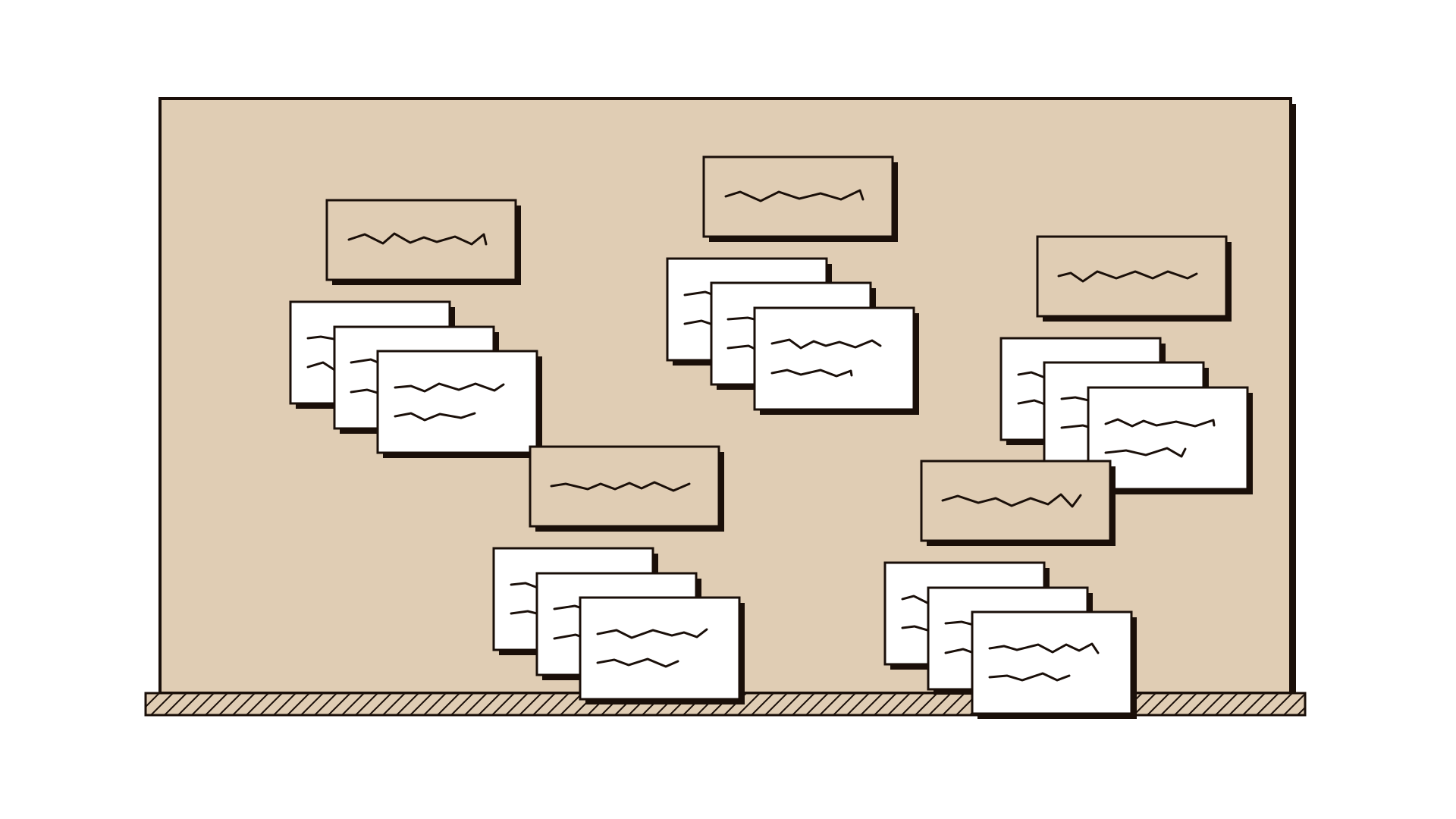
Card sorting
45 min · 3–15 people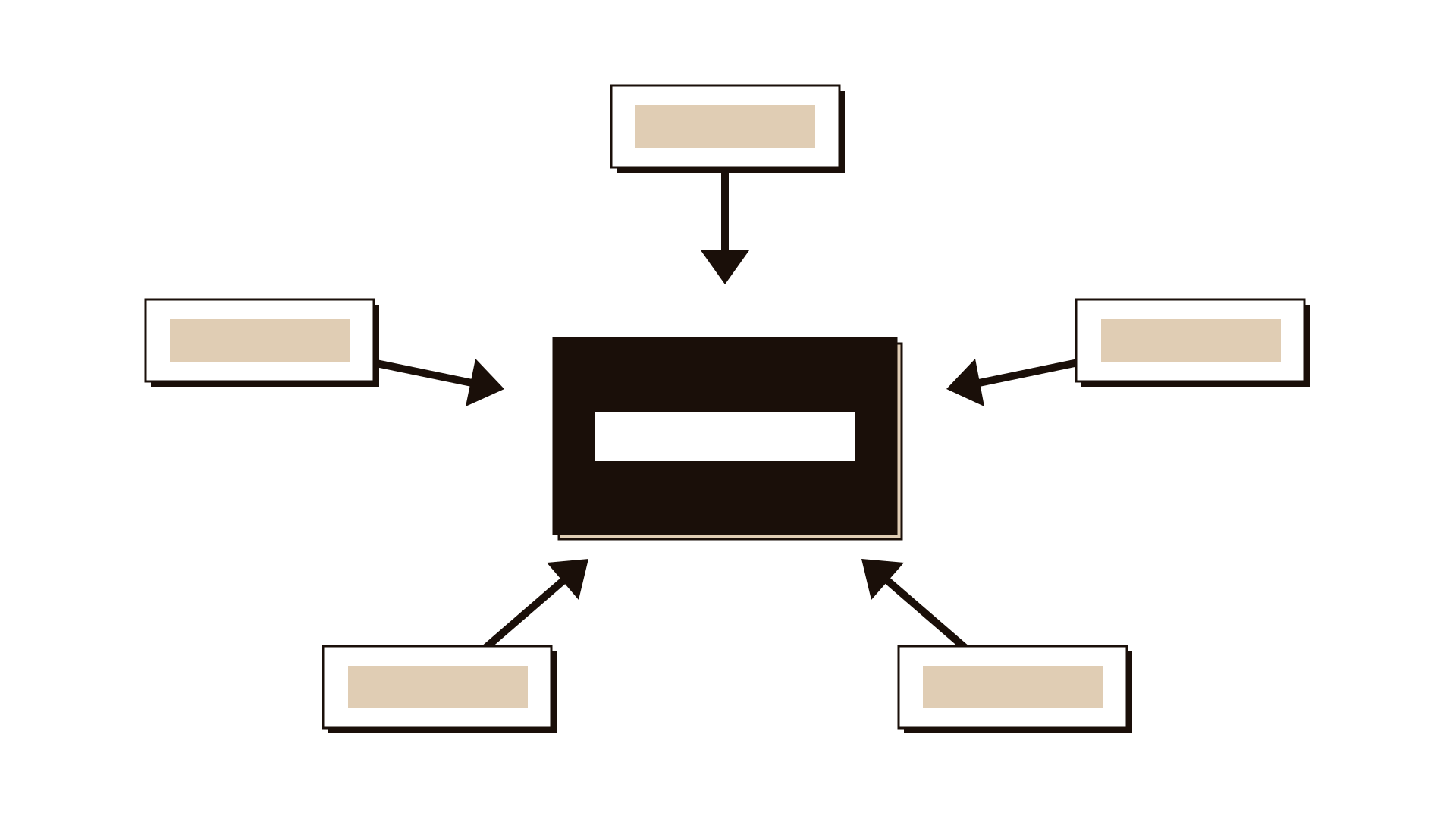
Competitive forces analysis (Five Forces)
60 min · 4–8 people
Contextual observation
60 min · 2 people
Diary study
30 min · 6–12 people
Ecosystem map
60 min · 4–8 people
Empathy map
30 min · 2–6 people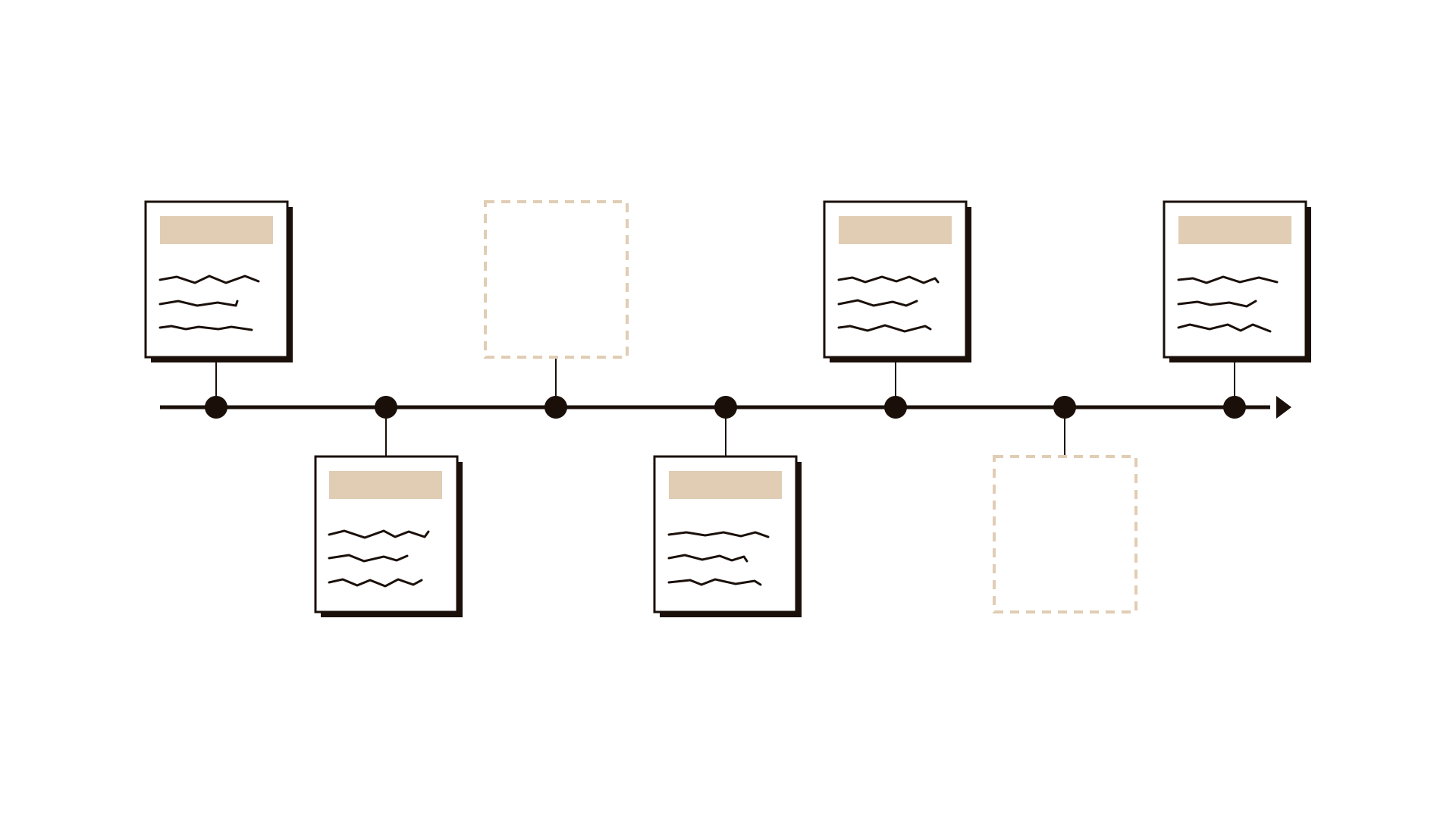
Experience mapping (journey map)
60 min · 4–6 people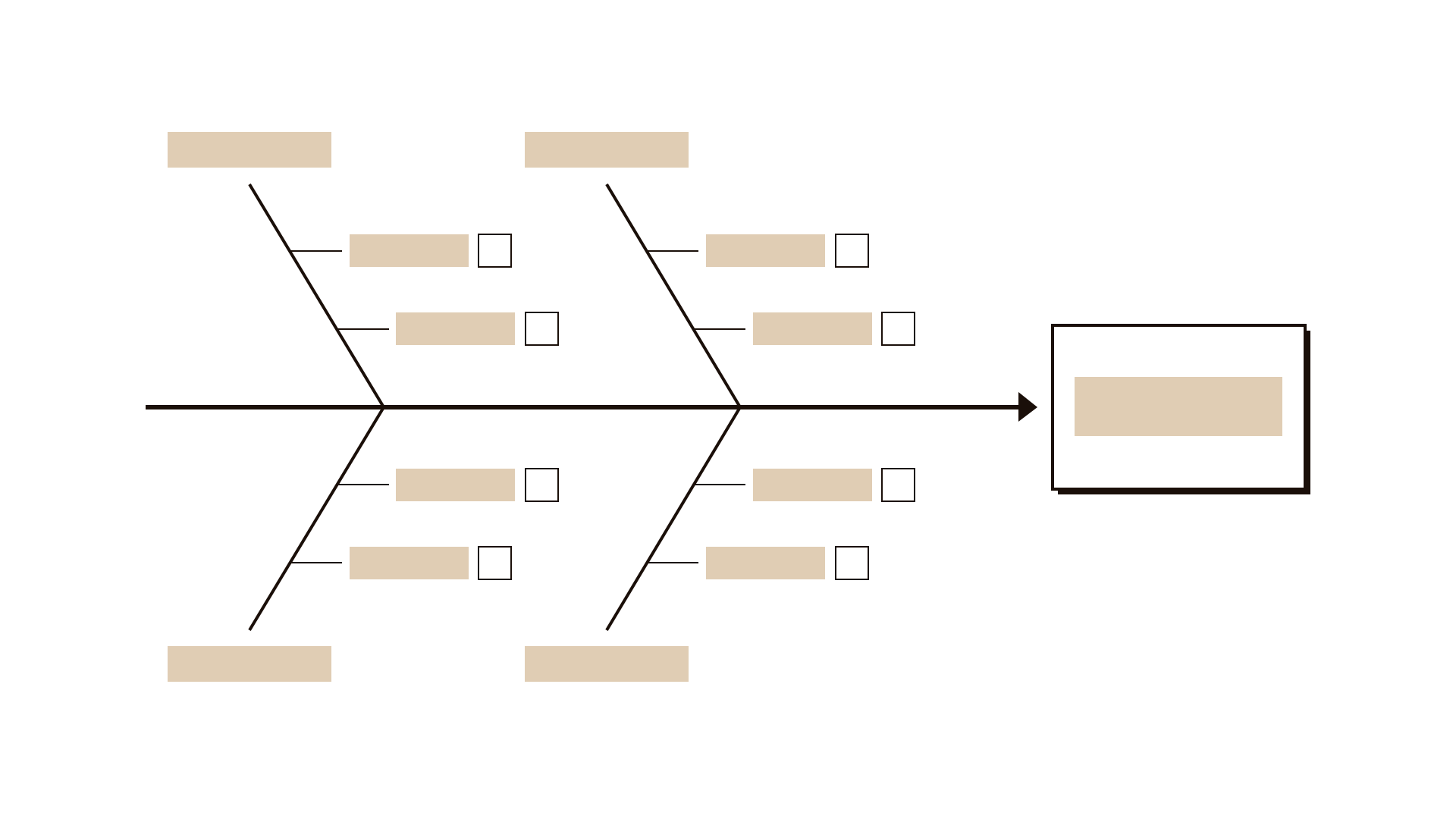
Fishbone diagram (Ishikawa)
45 min · 3–6 people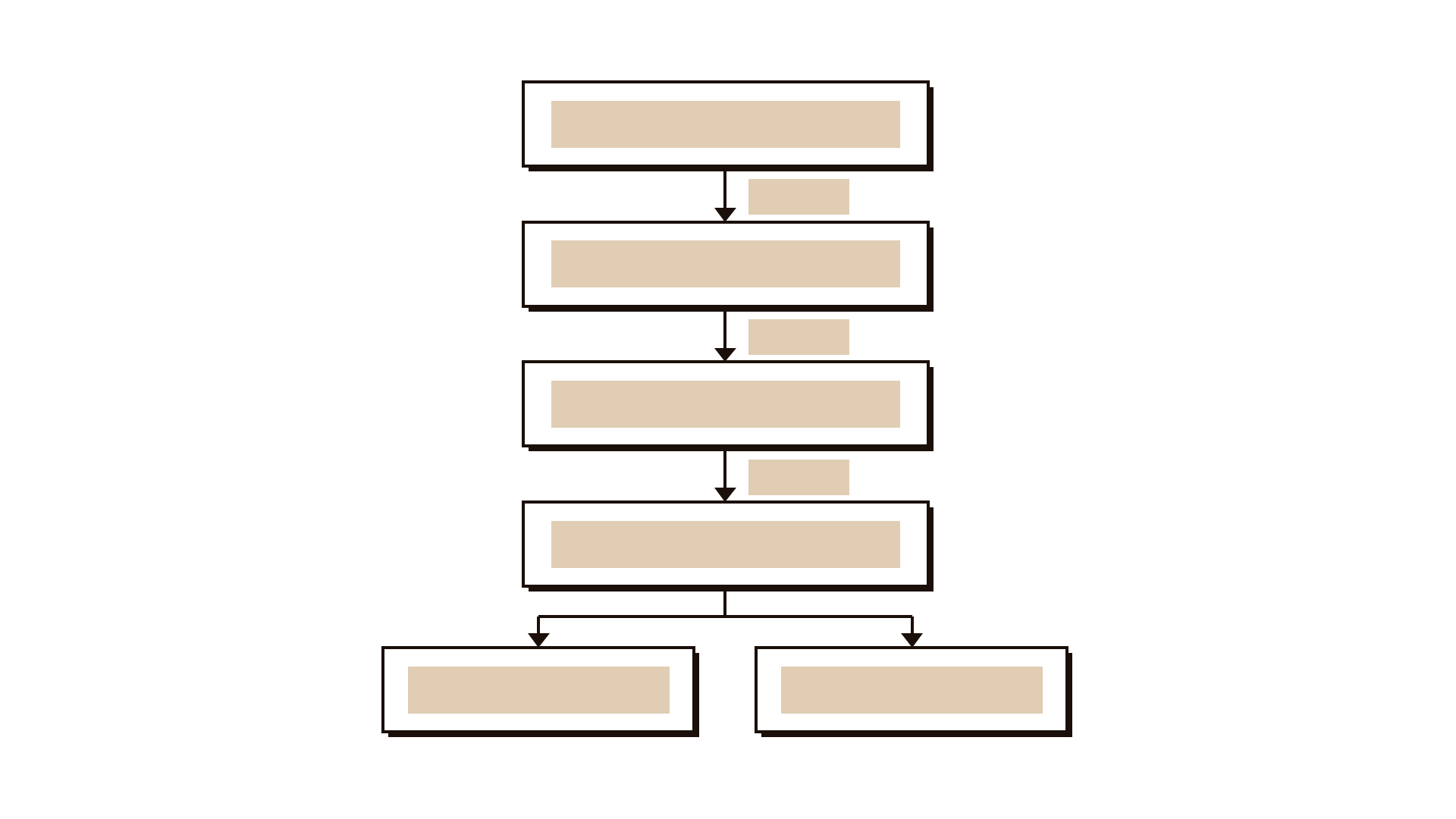
Five whys (5 whys)
30 min · 3–5 people
Mind map
20 min · 1–6 people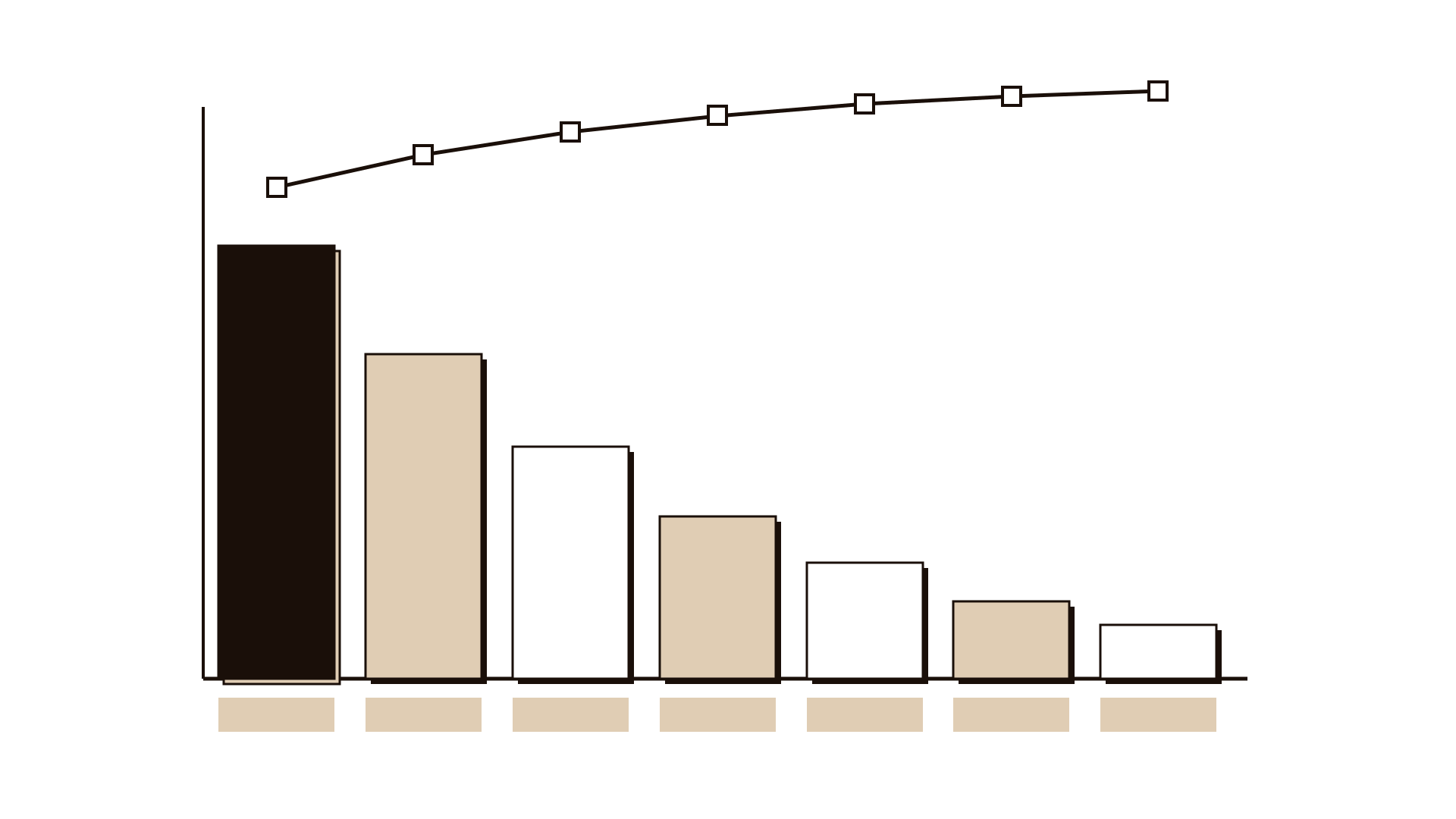
Pareto analysis (Pareto chart)
45 min · 3–5 people
PESTLE analysis
60 min · 4–8 people
Process flowchart (process map)
45 min · 3–6 people
Retrospective (team retro)
45 min · 4–8 people
Scenario matrix (2x2 scenarios)
60 min · 5–8 people
Service safari
120 min · 2–6 people
Stakeholder expectations map
40 min · 4–8 people
Stakeholder interviews
30 min · 2 people
Stakeholder map
30 min · 3–6 people
SWOT analysis (strengths, weaknesses, opportunities, threats)
45 min · 4–8 people
System map
60 min · 3–6 people
Value chain analysis
60 min · 4–8 people
Affinity grouping (affinity diagram)
45 min · 3–6 people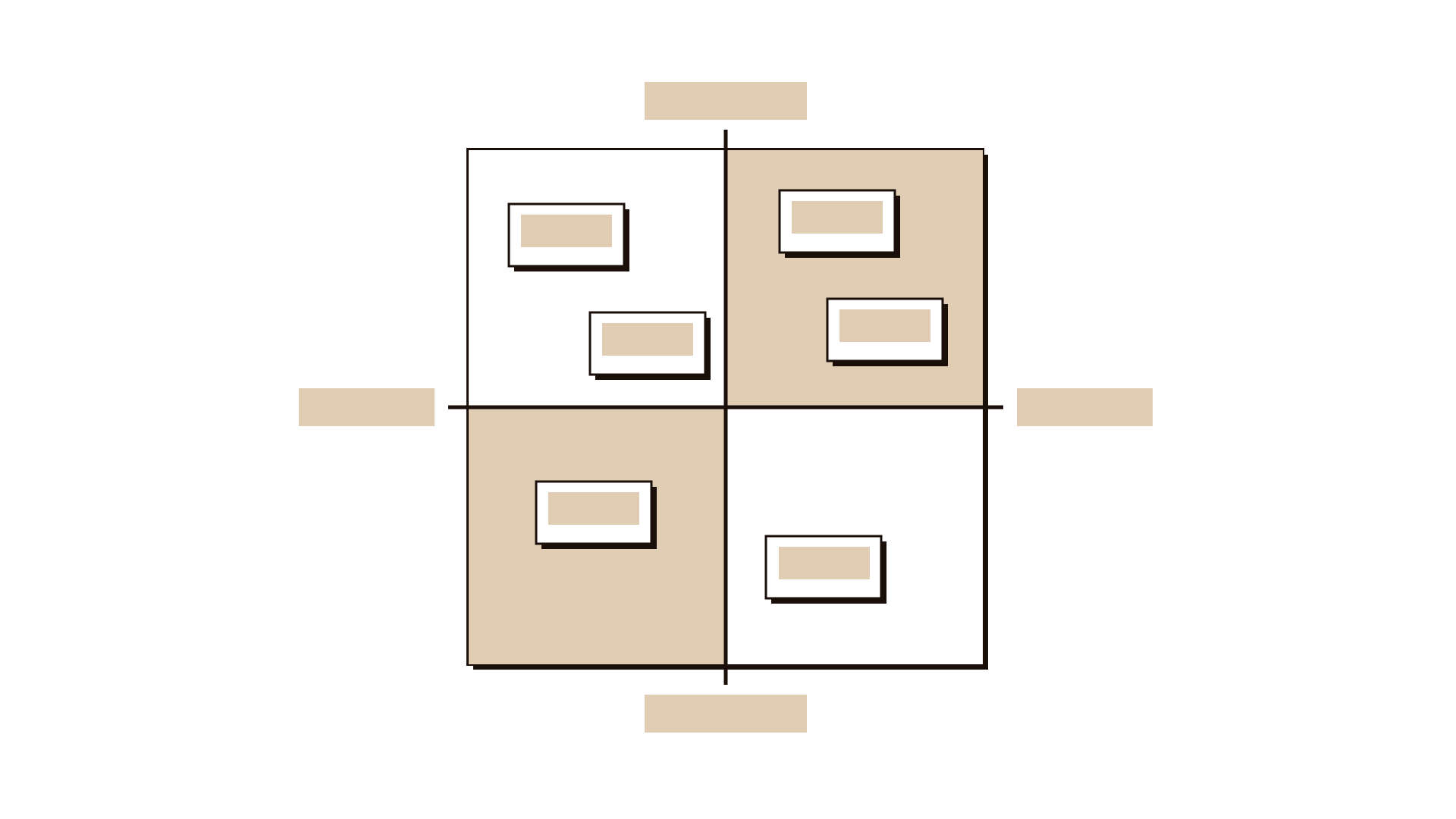
Assumption mapping
40 min · 4–6 people
Business Model Canvas
60 min · 3–6 peopleCard sorting
45 min · 3–15 peopleCompetitive forces analysis (Five Forces)
60 min · 4–8 peopleEmpathy map
30 min · 2–6 peopleExperience mapping (journey map)
60 min · 4–6 peopleFishbone diagram (Ishikawa)
45 min · 3–6 peopleFive whys (5 whys)
30 min · 3–5 people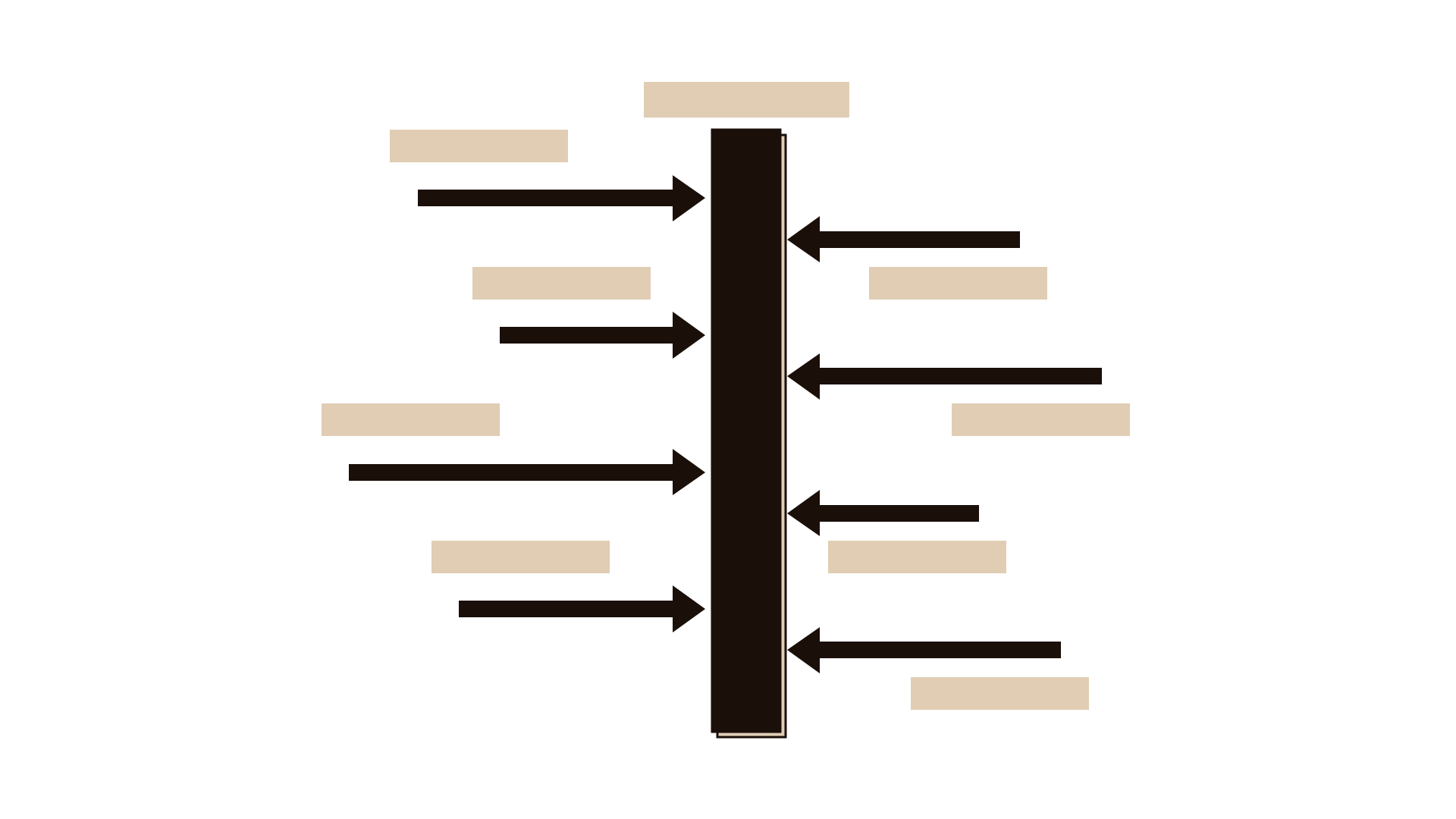
Force field analysis
40 min · 4–8 people
How might we questions
20 min · 3–6 people
OGSM (Objective, Goals, Strategies, Measures)
60 min · 4–8 people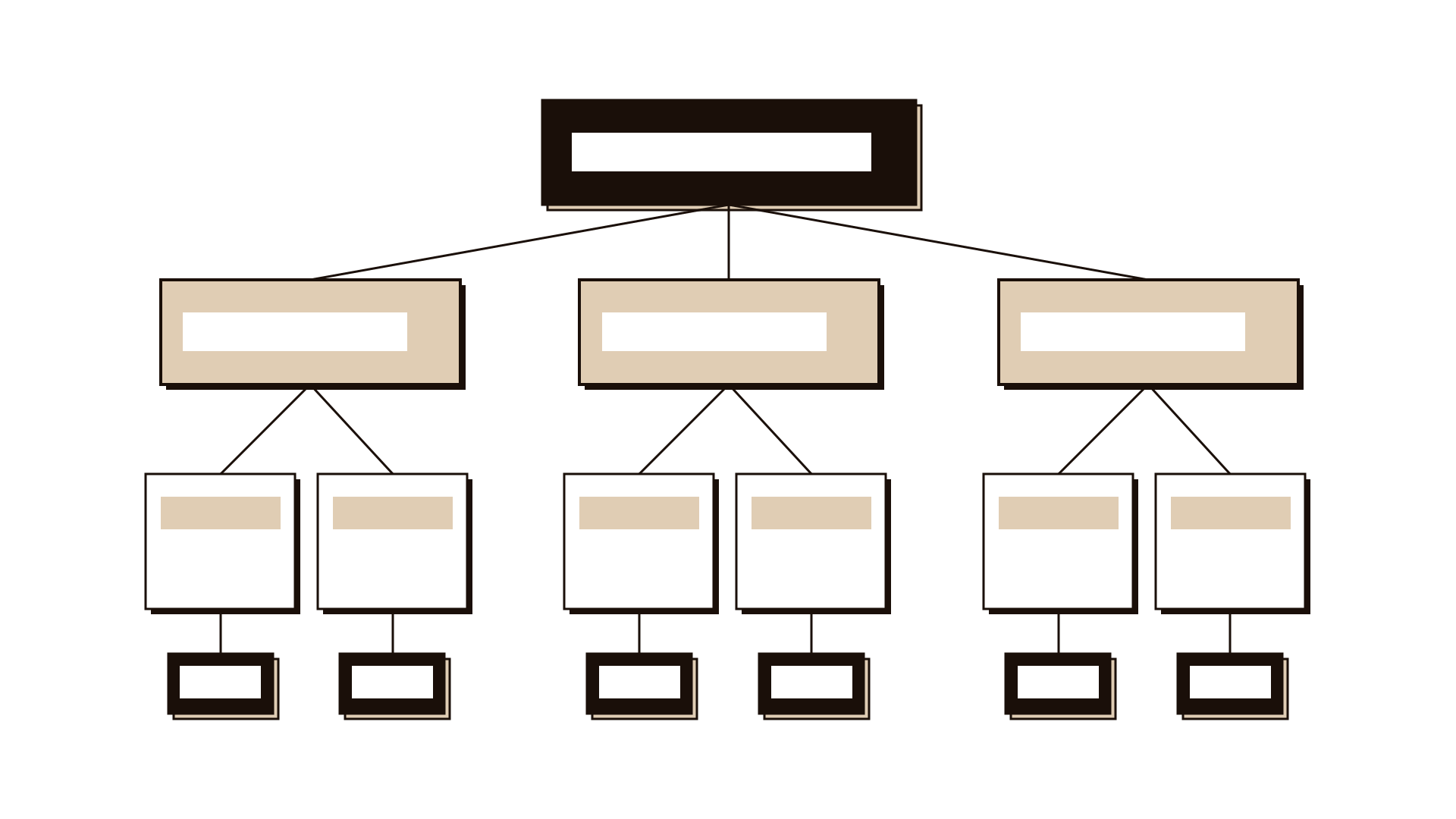
Opportunity solution tree
60 min · 3–6 people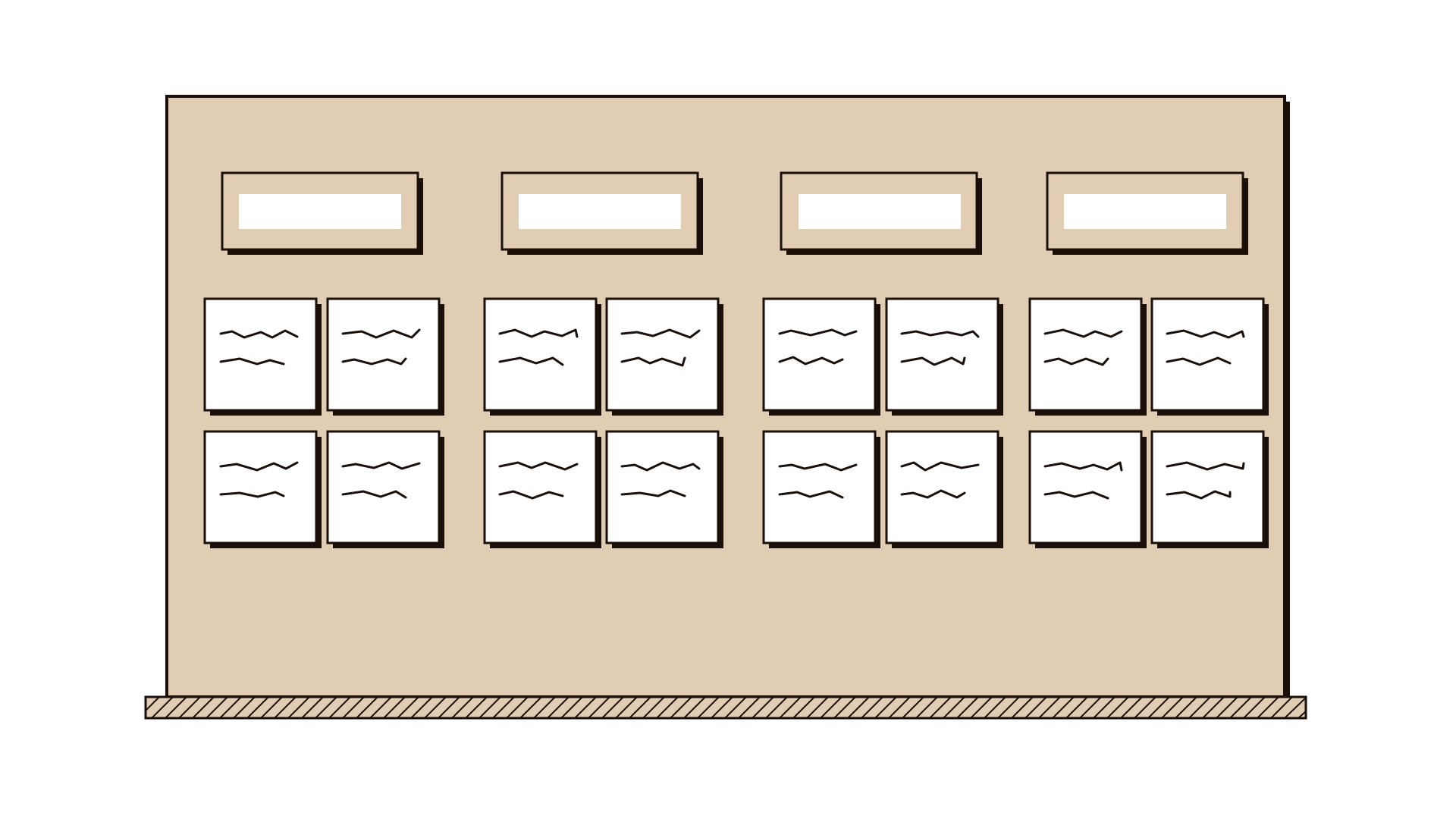
Personas (user personas)
45 min · 3–6 peoplePESTLE analysis
60 min · 4–8 people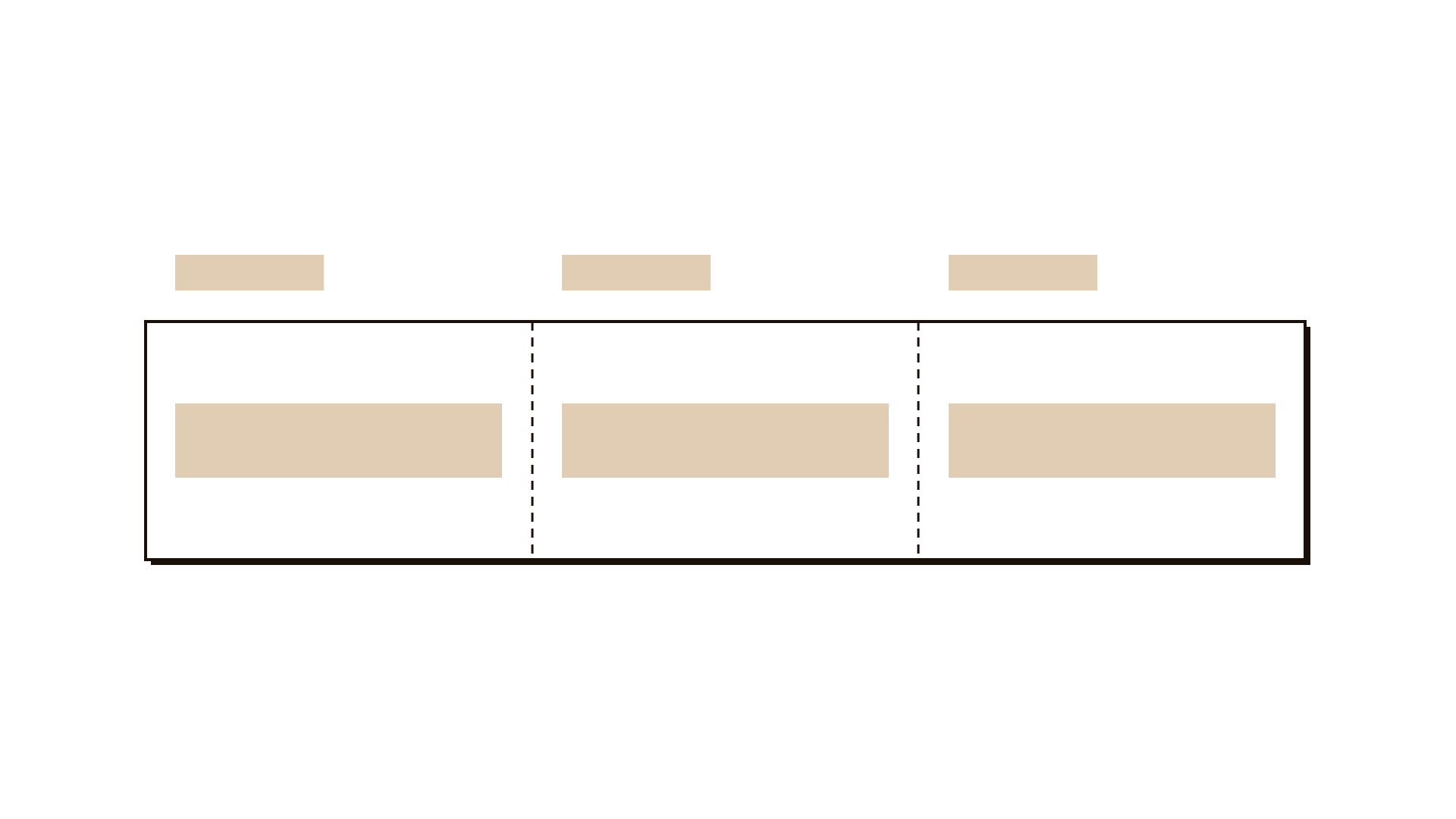
Point of view statement
20 min · 3–5 people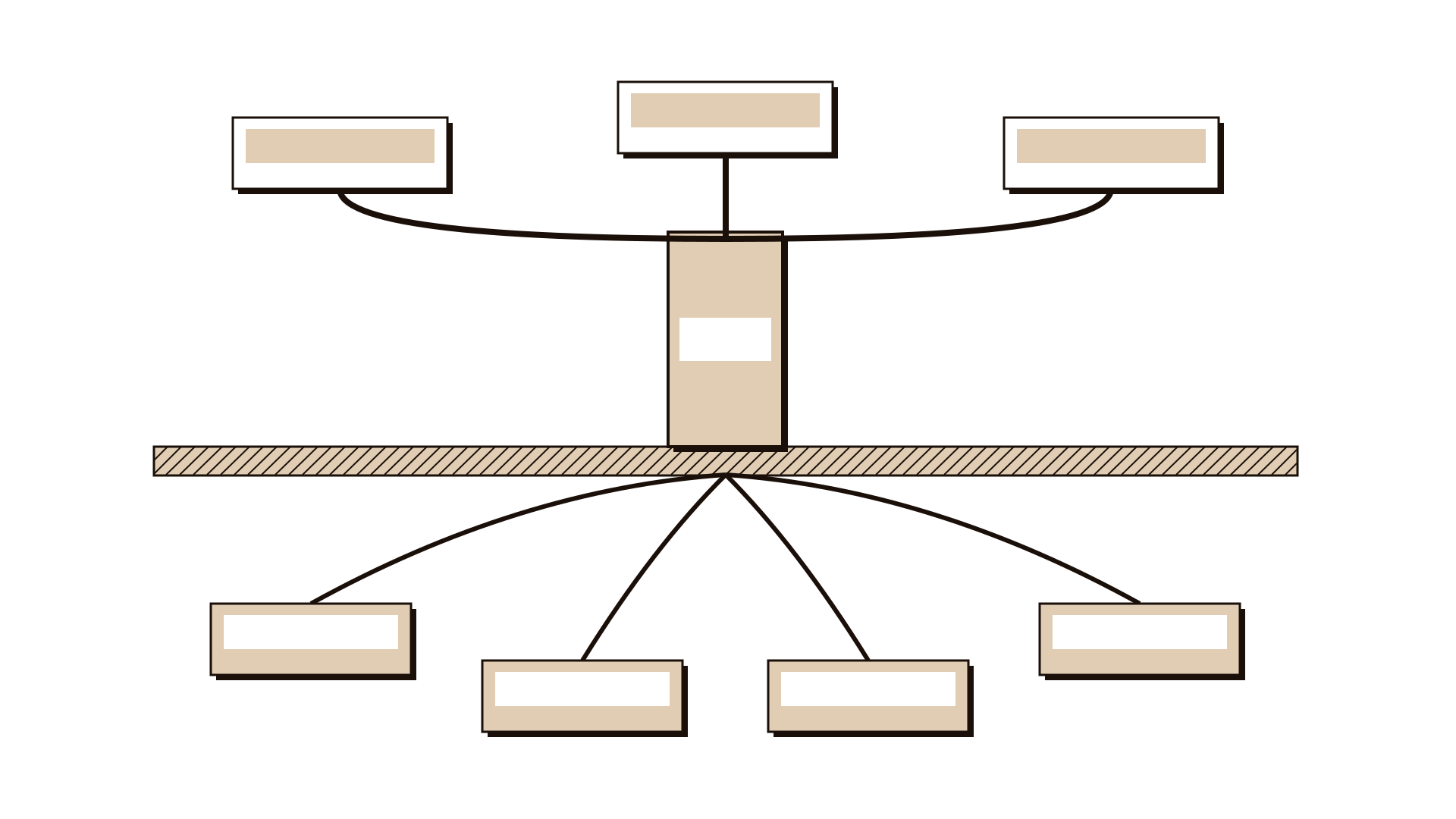
Problem tree analysis
45 min · 3–6 peopleScenario matrix (2x2 scenarios)
60 min · 5–8 people
Service blueprint
90 min · 4–8 peopleStakeholder expectations map
40 min · 4–8 people
Strategic choice cascade
60 min · 4–7 peopleSWOT analysis (strengths, weaknesses, opportunities, threats)
45 min · 4–8 peopleSystem map
60 min · 3–6 people
Three horizons
60 min · 5–8 peopleTouchpoint matrix
45 min · 3–6 peopleValue chain analysis
60 min · 4–8 people
Value Proposition Canvas
45 min · 3–6 people
Analogous inspiration (analogies)
30 min · 3–6 people
Brainwriting
30 min · 4–8 people
Change cards ("what if" questions)
30 min · 3–8 peopleConcept Blending
70 min · 3–8 people
Crazy 8s sketching
15 min · 4–8 people
Design studio (sketch, critique, revise)
60 min · 4–8 peopleHow might we questions
20 min · 3–6 people
Lotus blossom technique
45 min · 4–6 peopleMind map
20 min · 1–6 peopleOpportunity solution tree
60 min · 3–6 people
SCAMPER technique
40 min · 3–6 peopleService safari
120 min · 2–6 people
Storyboard (service storyboarding)
40 min · 3–6 people
Worst possible idea
20 min · 4–8 peopleBenchmarking
60 min · 3–6 peopleChange cards ("what if" questions)
30 min · 3–8 peopleDesign studio (sketch, critique, revise)
60 min · 4–8 people
Dot voting (dotmocracy)
15 min · 5–12 peopleForce field analysis
40 min · 4–8 peopleImpact effort matrix
30 min · 4–6 peopleNow, How, Wow matrix
30 min · 4–8 peoplePareto analysis (Pareto chart)
45 min · 3–5 people
Portfolio mapping (innovation portfolio map)
60 min · 5–8 people
Premortem (pre-mortem)
40 min · 4–8 people
Stop doing list
30 min · 4–8 peopleStrategic choice cascade
60 min · 4–7 peopleValue case
45 min · 3–6 people
Weighted decision matrix (weighted scoring model)
45 min · 4–7 peopleA/B experiment plan (A/B test plan)
45 min · 3–5 peopleAssumption mapping
40 min · 4–6 people
Challenge panel
90 min · 5–10 people
Concierge test (concierge MVP)
60 min · 2–4 people
Failure modes analysis (FMEA)
60 min · 4–8 peopleFeedback capture grid
25 min · 4–6 people
Hypothesis test
30 min · 3–5 people
Moderated usability test
45 min · 2–3 peopleOpportunity solution tree
60 min · 3–6 people
Paper prototype
45 min · 3–5 people
Role play (service role-playing)
40 min · 4–6 peopleStoryboard (service storyboarding)
40 min · 3–6 peopleValue Proposition Canvas
45 min · 3–6 people
Wizard of Oz test (Wizard of Oz prototyping)
60 min · 3–5 people
Balanced scorecard
60 min · 5–8 peopleBusiness Model Canvas
60 min · 3–6 peopleFailure modes analysis (FMEA)
60 min · 4–8 people
Hoshin-style annual alignment (Hoshin Kanri)
90 min · 6–10 peopleImpact effort matrix
30 min · 4–6 people
KPI tree (driver tree)
45 min · 4–8 people
Objectives and key results (OKRs)
45 min · 4–8 peopleOGSM (Objective, Goals, Strategies, Measures)
60 min · 4–8 peoplePortfolio mapping (innovation portfolio map)
60 min · 5–8 peoplePremortem (pre-mortem)
40 min · 4–8 peopleProcess flowchart (process map)
45 min · 3–6 people
RACI matrix (responsibility assignment)
40 min · 4–8 people
Roadmapping (outcome roadmap)
60 min · 4–8 people
Rollout checklist (launch readiness checklist)
45 min · 4–6 peopleService blueprint
90 min · 4–8 people
Stakeholder communication plan
30 min · 3–6 peopleStakeholder map
30 min · 3–6 peopleStop doing list
30 min · 4–8 peopleThree horizons
60 min · 5–8 peopleTouchpoint matrix
45 min · 3–6 peopleUser stories
45 min · 3–6 peopleBalanced scorecard
60 min · 5–8 peopleChallenge panel
90 min · 5–10 peopleEcosystem map
60 min · 4–8 peopleHoshin-style annual alignment (Hoshin Kanri)
90 min · 6–10 peopleKPI tree (driver tree)
45 min · 4–8 peopleObjectives and key results (OKRs)
45 min · 4–8 peopleRACI matrix (responsibility assignment)
40 min · 4–8 peopleRetrospective (team retro)
45 min · 4–8 peopleRoadmapping (outcome roadmap)
60 min · 4–8 peopleRollout checklist (launch readiness checklist)
45 min · 4–6 peopleStakeholder communication plan
30 min · 3–6 peopleValue case
45 min · 3–6 peopleHow to run the work.
Twelve subjects, from culture and customer experience to hackathons and transformation. Each opens with one deep piece, then the shorter ones people search for.

- List5 things great innovation leaders do that nobody talks about7 min
- MythEveryone says "fail fast". Why almost nobody does6 min
- MythWhy innovation culture dies after the launch event6 min
- How-toPsychological safety in innovation teams: what it looks like on an ordinary Tuesday7 min
All 11 in this subject
- How-toHow to get senior leadership to back an idea7 min
- How-toMiddle managers and innovation: the quiet blockers, and how to win them7 min
- How-toInnovation in hierarchical cultures: working with seniority, not around it7 min
- ListThe innovation leader's week: where the time should go7 min
- MythRewarding innovation without killing it with KPIs6 min
- How-toHow to talk about failure in a culture that punishes it7 min

- How-toDesign thinking, step by step, and where it goes wrong8 min
- VersusDesign thinking vs lean vs agile vs design sprint: which, when9 min
- How-toHow to prioritise ideas: five ways compared8 min
- How-toHow to find the root cause of a problem7 min
All 14 in this subject
- How-toHow to test an idea before you build it7 min
- MythBrainstorming doesn't work. Here is what does6 min
- MythWhy dot voting lies to you, and how to fix it6 min
- How-toYour problem statement is the whole project: how to write one7 min
- List10 "how might we" questions: five good, five bad, and why7 min
- List5 research mistakes that waste your interviews7 min
- How-toA journey map that leads to change, not a poster7 min
- ListThe 10 tools every innovation team should know7 min
- How-toThe cheapest prototype you can make this week7 min
Customer-centric is a practice, not a slogan: where to start
How to become customer-centric in practice: the six habits that turn a value statement into decisions, the methods behind each, and a six-week start.
- How-toHow to really understand your customers: interviews, observation and diary studies8 min
- VersusJourney map or service blueprint? When to use which8 min
- How-toPersonas that teams actually use (and the ones that rot in a drawer)7 min
- ListThe key 5 mistakes in customer journey mapping7 min
All 9 in this subject
- MythWhy everyone measures satisfaction and nobody fixes the moments that cause it7 min
- How-toDesigning a government service around the citizen, not the org chart7 min
- How-toFrom insight to change: turning customer research into decisions7 min
- How-toTesting an experience before you build it: role-play, Wizard of Oz and concierge tests8 min

How to run a workshop that ends in decisions
Workshop facilitation that ends in real decisions: frame the decision first, invite the right people, converge on criteria and close with owners and dates.


Hackathons, jams and challenges: every type explained
Corporate, civic and open hackathons, service jams, GovJam, game jams, ideathons, datathons and challenges: what each is for and when to use it.
- How-toHow to run a hackathon that produces something real7 min
- VersusHackathon, design jam or innovation challenge: which one fits your goal7 min
- MythWhy most hackathon winners never launch, and what to do after the hackathon6 min
- List9 hackathon mistakes organisers keep repeating7 min
All 12 in this subject
- How-toHow to write a challenge statement people want to solve7 min
- How-toJudging criteria that pick the right winner7 min
- How-toMentors at a hackathon: what good looks like7 min
- How-toRunning a jam: 48 hours, a secret theme and real services8 min
- How-toThe ecosystem hackathon: one challenge, several entities7 min
- VersusInternal hackathon or open to the public?7 min
- How-toHackathons for public good: running one for a cause6 min

- MythDigital transformation is a service design problem, not a technology one6 min
- MythWhy transformation programmes produce reports and nobody changes how they work6 min
- How-toMapping the system before you change it: a practitioner's how-to8 min
- How-toRunning a transformation roadmap that teams own8 min
All 6 in this subject

How to assess your organisation's innovation maturity
How to assess your organisation's innovation maturity: what to look at, which frameworks to use, how to gather evidence, and what to do with the result.



A few minutes, one canvas.
Each film walks through one method on its own canvas. In English and Arabic.
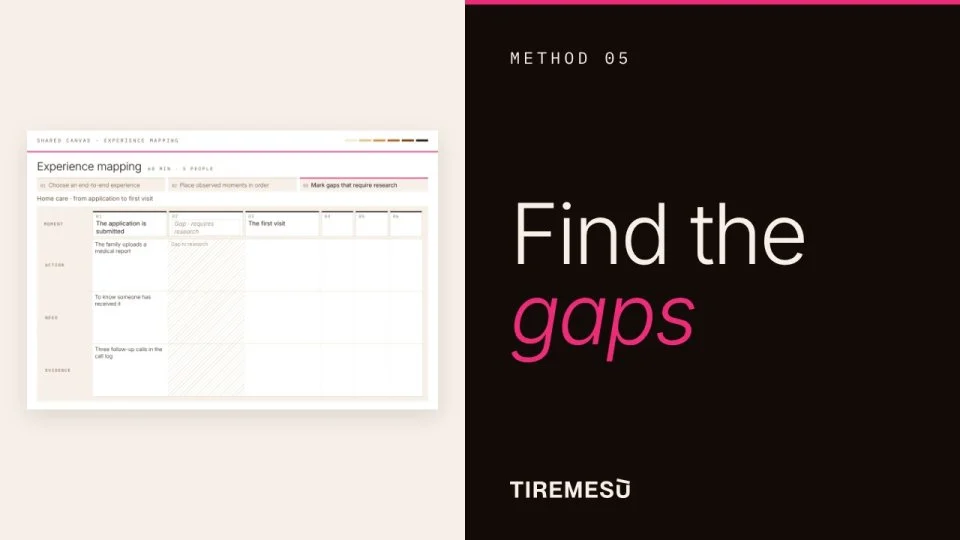 Experience mapping (journey map)
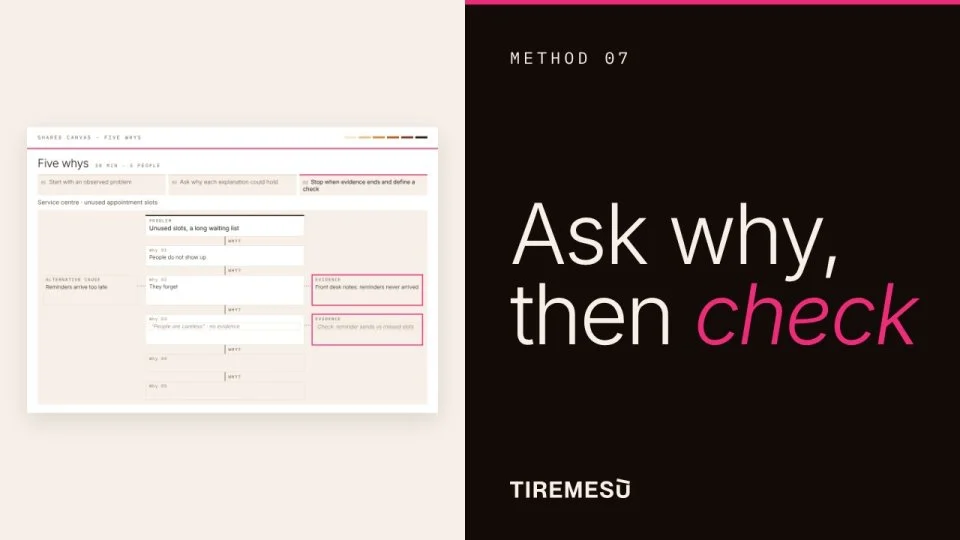 Five whys (5 whys)
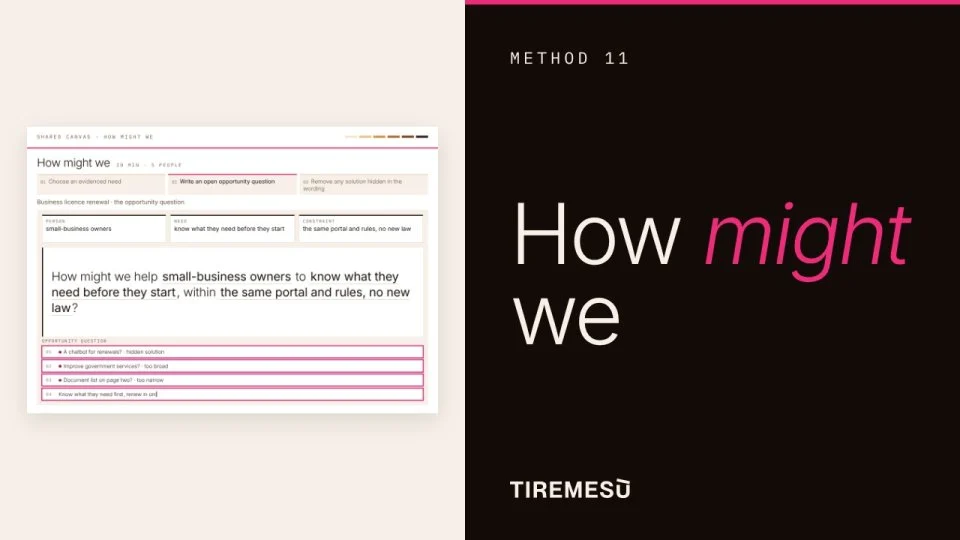 How might we questions
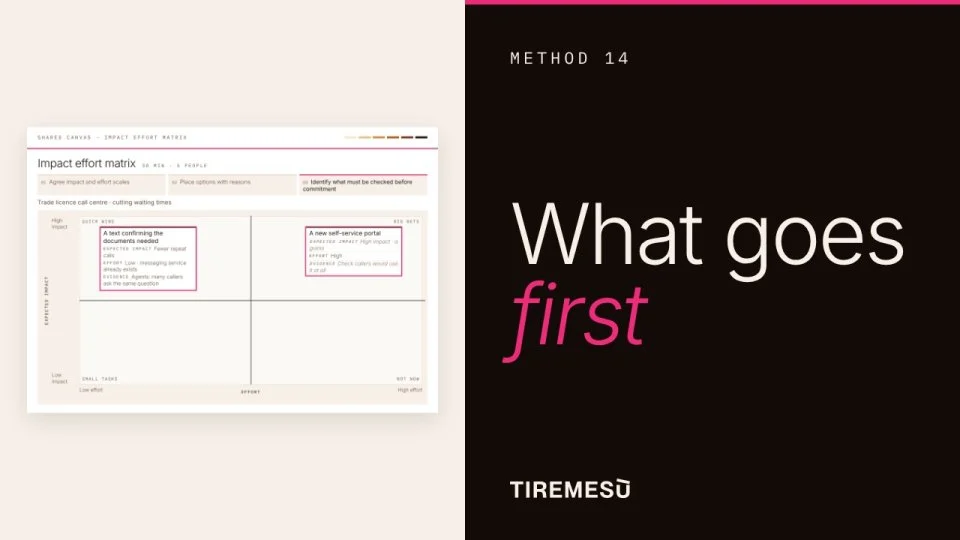 Impact effort matrix
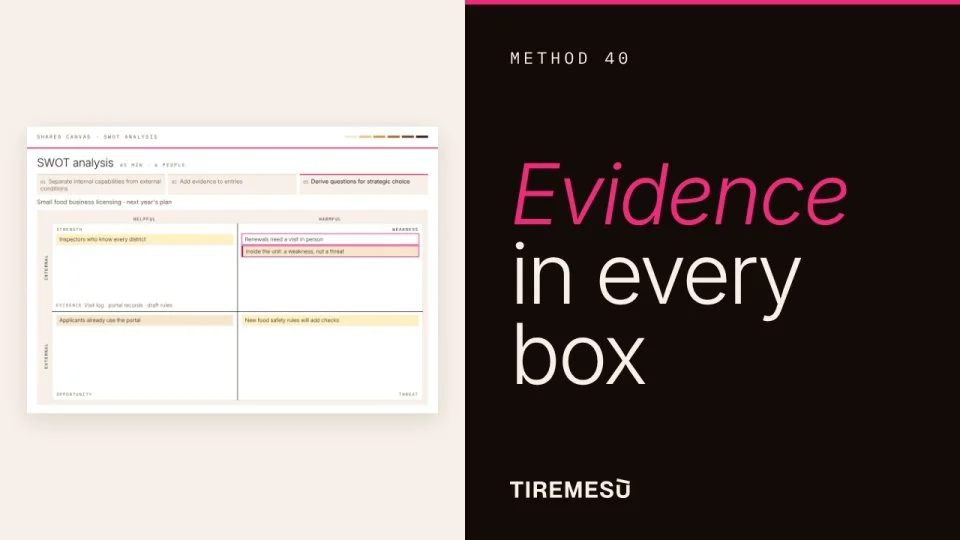 SWOT analysis (strengths, weaknesses, opportunities, threats)
Learn it here. Run it in the Lab.
The Tiremesù Lab puts these tools on one shared canvas for your whole team. Invitations go first to practitioners.
Join the waiting list