
Benchmarking
Compare one measure with a fair comparator, line up definitions and periods, and say what the comparison cannot tell you.
- Time
- 60 min
- People
- 3–6
- Kind of work
- Understand · Choose

In short
Benchmarking is the practice of comparing a measure of your performance with the same measure elsewhere, such as a peer organisation, another branch or a published standard. To run it, a team chooses a few comparable measures, aligns their definitions and time periods, calculates the gap, and writes down the limits of the comparison before drawing any conclusion.
What it is
Benchmarking answers a simple question: compared with whom, and on what? It is a long-standing quality practice, used by organisations to learn how others perform the same work and where they could improve. A benchmark can be external, such as a similar service in another city, or internal, such as another branch of your own organisation.
The hard part is not finding a number. It is making sure both numbers mean the same thing. One service may count processing time from the moment a form arrives, while another starts the clock when the file is complete. Good benchmarking spends most of its effort on definitions and limits, so the gap you find is real and the conclusions are honest.
When to use it
Use it when
- You need to judge whether a performance level is good, average or weak.
- You are setting a target and want it grounded in what others have achieved.
- You want to learn from a peer that does the same work differently.
- Leaders are quoting a comparison and you need to check it is fair.
- You are choosing between options and need a common measure to weigh them.
Skip it when
- There is no comparator doing genuinely similar work, so any number would mislead.
- Your own measure is not counted consistently yet; fix your data first.
- The comparison would be used to rank individual staff, which this method is not for.
You need
- Time
- 60 minutes to agree measures and review results, plus data gathering time between sessions.
- People
- 3–6 people: someone who owns the data, someone who runs the service, and a sceptical reviewer.
- Materials
- A table with columns for measure, comparator, definition, gap and limit; your data and the comparator's published or shared figures.
How to run it
Step 1: State the question
Write down the decision the benchmark will support. For example: should we set a 5-day target for building permits? A clear question keeps you from collecting numbers you will never use.

Step 2: Choose a few measures
Pick two to four measures that matter to users and to the decision. Fewer is better. For each, write exactly what is counted, from when to when, and in what unit.
Step 3: Pick fair comparators
Choose organisations or units that do similar work at a similar scale. Note any big differences, such as volume, legal rules or the mix of cases. One good comparator beats five poor ones.
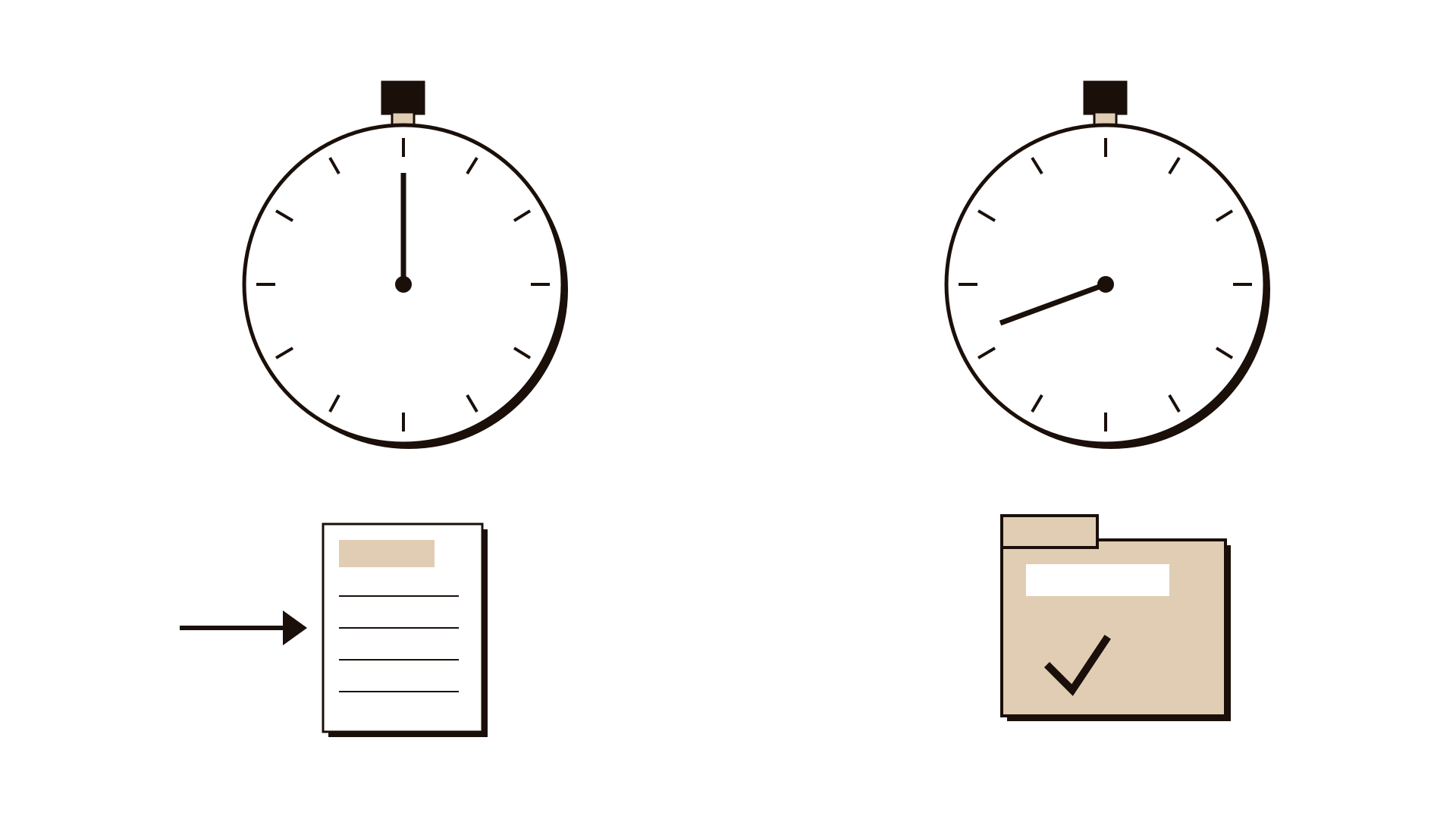
Step 4: Align definitions and periods
Check how the comparator defines each measure. If its clock starts at a different point, adjust or note it. Use the same time period for both sides, ideally a full year to smooth out seasons.
Step 5: Calculate the gap
Put both figures side by side and write the gap in plain terms, such as 3 days slower on the median case. Use medians as well as averages, since a few long cases can distort an average.

Step 6: Write the limits
Before anyone draws a conclusion, list what the comparison cannot show. Different case mix, missing months, self-reported data. Read the limits aloud and agree how much weight the gap can carry.
Step 7: Decide and learn
Agree what the gap means for the decision. If it is large and the limits are small, ask the comparator how they work. Record the decision and the evidence together.
Worked example
A municipal building department wanted to set a target for issuing building completion certificates.
The team of five chose one measure: working days from application to certificate. A neighbouring municipality published a median of 4 days; their own median was 9.
When they checked definitions, they found the neighbour started counting only once the file was complete and the inspection booked. The department counted from the day the form was handed in, including days waiting for missing documents.
They recalculated their own figure using the neighbour's start point. The median fell to 5 days. Most of the gap had been waiting for applicants to supply documents.
The limits they wrote down: the neighbour handled fewer large projects, and its figures covered only nine months.
The department set a target of 5 working days from complete file to certificate, and opened a separate piece of work on helping applicants submit complete files the first time.
IllustrativeTips and mistakes
Tips
- Always ask when the clock starts and stops; most unfair comparisons fail on this.
- Prefer medians for time measures and show the spread, not only one number.
- Talk to the comparator if you can; a short call explains more than a spreadsheet.
- Keep the limits column on every chart you share, not in a separate note.
- Benchmark processes and services, never individual people.
Common mistakes
- Comparing figures with different definitions and treating the gap as real.
- Choosing a famous comparator with very different scale or rules.
- Using a benchmark as a target without asking whether it suits your users.
- Hiding the limits so the conclusion looks stronger than it is.
What you walk away with
You leave with a short table showing each measure, the comparator, the aligned definition, the gap and its limits, plus an agreed decision. Use a KPI tree to connect the measure to the outcomes it serves, or a process flowchart to find where in your process the gap arises.
Questions people ask
How long does benchmarking take?
The workshop takes about an hour. Gathering and aligning data can take one to three weeks, depending on how easy it is to get the comparator's figures.
What is the difference between internal and external benchmarking?
Internal benchmarking compares units inside your own organisation, where data is easier to align. External benchmarking compares you with other organisations and is often more revealing but harder to make fair.
How many measures should we benchmark?
Start with two to four measures tied to one decision. More measures spread your effort thin and make definitions harder to check.
Tool card
The worksheet your team fills in, one box per field.
- Measure
- Comparator
- Definition
- Gap
- Limit