
Competitive forces analysis (Five Forces)
Look at the five sources of pressure around your service, back each one with evidence, and leave with the strategic questions that matter.
- Time
- 60 min
- People
- 4–8
- Kind of work
- Understand · Frame

In short
Competitive forces analysis is a strategy method that examines five pressures on a market: rivalry, new entrants, substitutes, buyer power and supplier power. To run it, a small team takes one service or market, gathers evidence for each force, agrees how strong each pressure is, and turns the strongest ones into questions leaders must answer.
What it is
Competitive forces analysis is a way to see the pressures that shape what your service can charge, offer and keep. The framework is widely known as Porter's Five Forces, after Michael Porter at Harvard Business School. It asks you to look past the obvious rival and notice four other sources of pressure: organisations that could enter, alternatives that do the same job differently, buyers who can push terms, and suppliers who can raise costs or withhold what you need.
It works for public bodies as well as companies. A government service has substitutes (a private office that fills in the form for a fee), buyers with power (large corporate applicants), and suppliers who matter (the vendor behind a core system). The method gives you a shared picture of these pressures, based on evidence rather than impressions, so that strategy talk starts from the same facts.
When to use it
Use it when
- You are setting strategy for a service, product line or market and need a clear outside-in view.
- Leaders disagree about where the real threat comes from and the debate keeps circling.
- You are considering entering a new market or launching a new offer and want to know how hard it will be.
- A substitute or a new type of provider has appeared and you need to judge how serious it is.
- You are preparing for a supplier renegotiation or a major procurement.
Skip it when
- You need to understand your own internal activities and costs; use a value chain analysis instead.
- There is no agreed scope, such as a single service or market, so every force becomes everything.
- You have no time to gather any evidence and would only be recording opinions.
You need
- Time
- 60 minutes for the workshop, plus one to two hours of evidence gathering beforehand.
- People
- 4–8 people: strategy, operations, finance or procurement, and someone close to customers.
- Materials
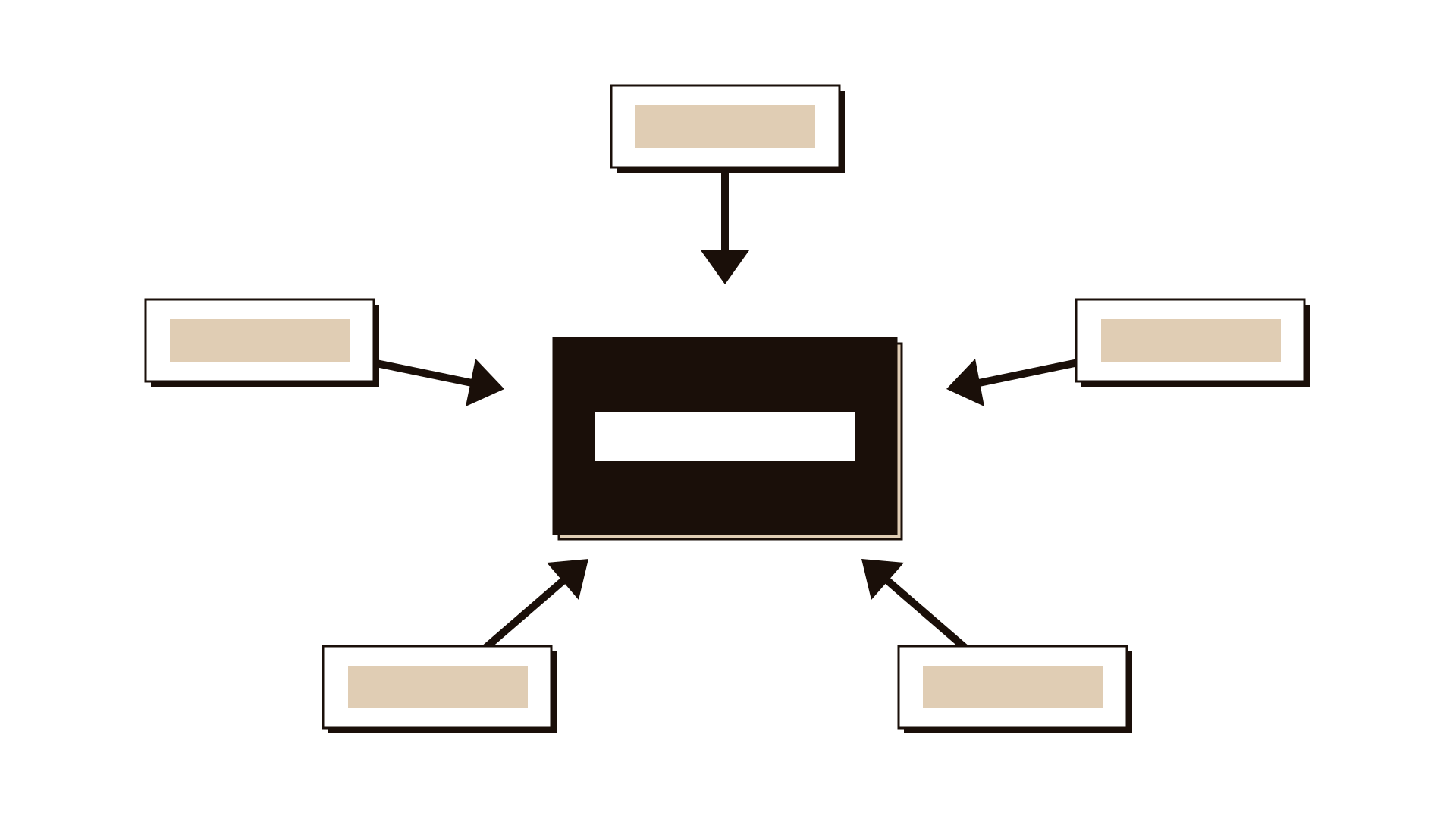
- A wall or digital board with five labelled areas around a central box, sticky notes in two colours, and a short evidence pack.
How to run it
Step 1: Fix the scope
Write the service or market in the centre box in one line, with a time frame. For example: business licence renewals for small firms, next three years. A narrow scope gives sharper answers.
Step 2: Prepare an evidence pack
Before the session, collect market data, complaint themes, contract terms, price lists and any recent entrants. One page per force is enough. Share it 48 hours ahead so people arrive informed.
Step 3: Capture pressures for each force
Give the group 15 minutes. Each person writes one pressure per sticky note and places it on the right force: rivalry, new entrants, substitutes, buyer power or supplier power. Ask for one note per idea, written as a short sentence.
Step 4: Attach evidence
Go force by force. For every note, ask: what tells us this is true? Write the evidence on a second colour note beside it. Notes with no evidence stay on the board and are marked as assumptions to check.

Step 5: Agree the pressure level
For each force, agree whether pressure is low, medium or high, based on the evidence. Spend about five minutes per force. Record the reason in a sentence, so the rating can be challenged later.
Step 6: Turn pressure into questions
For the two or three strongest forces, write a response question that leaders must answer. Good questions start with how or whether, such as: how do we keep large applicants from moving to a private agent?
Step 7: Assign follow-up
Give each open assumption and each response question to a role, with a date. Close by reading the questions aloud and confirming which one goes to the next leadership meeting.
Worked example
A government licensing agency wanted to understand why renewals through its own portal had fallen over two years while total renewals stayed steady.
The team of six set the scope as online renewals for small businesses over the next three years. The evidence pack included portal data, a list of private service offices near the main centres, and the contract with the portal vendor.
Substitutes stood out. Private service offices were completing renewals for a fee, and businesses liked the single visit. The evidence was a sample of 200 renewals, of which 70 came through agents.
Buyer power was medium. Large firms renewing many licences had asked for bulk handling and were starting to use agents for that. Supplier power was high: changes to the portal required the vendor, and the contract allowed only two releases a year.
Rivalry and new entrants were low, since the agency is the only issuer. The team noted this did not mean pressure was low overall.
Two response questions went to the leadership meeting: how could bulk renewals be offered directly, and how could the next vendor contract allow faster changes. The agency ran a small bulk-renewal pilot within the quarter.
IllustrativeTips and mistakes
Tips
- Keep one service per analysis. If you want three markets, run three short sessions.
- Name substitutes by the job they do for the user, not by the sector they come from.
- Ask finance or procurement to bring supplier contracts; supplier power is often underestimated.
- Write the reason next to every pressure level so the board still makes sense a month later.
- Use the same five-force layout every year so changes are easy to see.
Common mistakes
- Listing every competitor by name and stopping there. The value is in the strength of each pressure.
- Treating a public monopoly as free of pressure. Substitutes and suppliers still shape outcomes.
- Rating forces on gut feeling with no evidence attached.
- Ending with a full board and no questions for anyone to answer.
What you walk away with
You leave with a one-page map of the five forces around a single service, a pressure level and reason for each, a list of assumptions to check, and two or three response questions with owners. Take the strongest pressures into a SWOT analysis to weigh them against your strengths, or use a value chain analysis to find where inside the organisation you can respond.
Questions people ask
How long does a Five Forces analysis take?
The workshop takes about 60 minutes once the evidence is ready. Allow one to two hours beforehand to build the evidence pack. Without it, the session turns into opinions.
Does Five Forces work for government organisations?
Yes. Rivalry may be low, but substitutes, demanding buyers and powerful suppliers still affect what a public service can deliver and at what cost.
Five Forces vs SWOT: which should I use?
Five Forces looks only at the outside pressures in a market. SWOT combines outside opportunities and threats with your own strengths and weaknesses. Many teams run Five Forces first and feed its results into a SWOT.
Tool card
The worksheet your team fills in, one box per field.
- Force
- Evidence
- Pressure
- Response question