
Crazy 8s sketching
Fold a sheet into eight, sketch eight different answers in eight minutes, then share them without selling.
- Time
- 15 min
- People
- 4–8
- Kind of work
- Generate
In short
Crazy 8s is a timed sketching exercise where each person folds a sheet into eight panels and draws eight different ideas for one challenge, about one minute each. You then share sketches without pitching them and combine the useful differences into a few concepts you can test. A full round, including sharing, fits in about 15 minutes.
What it is
Crazy 8s is a quick way to get past the first idea. Most people arrive at a session with one solution already in mind. By asking for eight different ones in eight minutes, the exercise uses time pressure to push people beyond their favourite. The sketches are rough by design. Boxes, arrows and a few words are enough.
The method is well known from design sprints, where it is used to explore many directions before a team commits to one. Because everyone sketches alone and at the same time, it also gives quiet people the same space as confident ones. This worksheet adds four fields for each sketch you want to keep: the idea, the user need it serves, how it differs from the others, and the question it raises.
When to use it
Use it when
- You have a clear how might we question and want many different answers quickly.
- A team keeps circling one solution and you want to widen the options.
- You are designing a screen, form, notice or other visual thing where drawing helps.
- A group includes people who rarely speak up in open discussion.
- You need raw material for a design studio or concept review later in the day.
Skip it when
- The challenge is still unclear. Frame it first, or the eight sketches will answer eight different questions.
- The problem is mainly about policy, money or structure, where drawing adds little. Try brainwriting instead.
- Participants have no shared understanding of the users. Give them a short research summary first.
You need
- Time
- About 15 minutes for one round, including sharing. Eight of those minutes are sketching.
- People
- 4 to 8 people. Mixed roles work best.
- Materials
- One A4 or A3 sheet per person, thick pens, a visible timer and the challenge question written large.
How to run it
Step 1: Put the challenge where everyone can see it
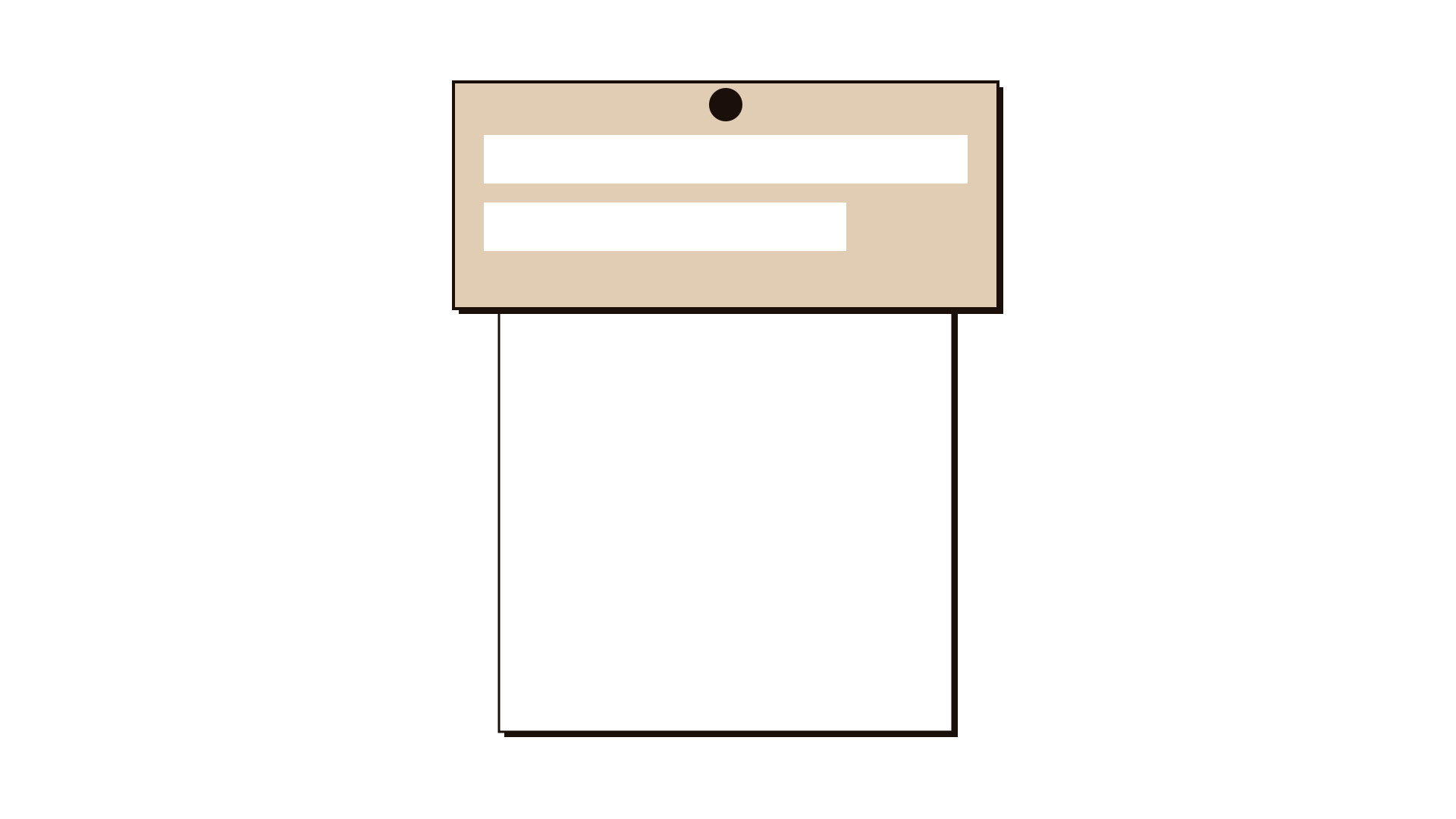
Write the how might we question on a card and pin it above the sketching area. Remind people of the user and the need in one or two sentences. Everyone should be answering the same question.
Step 2: Fold the sheet into eight panels
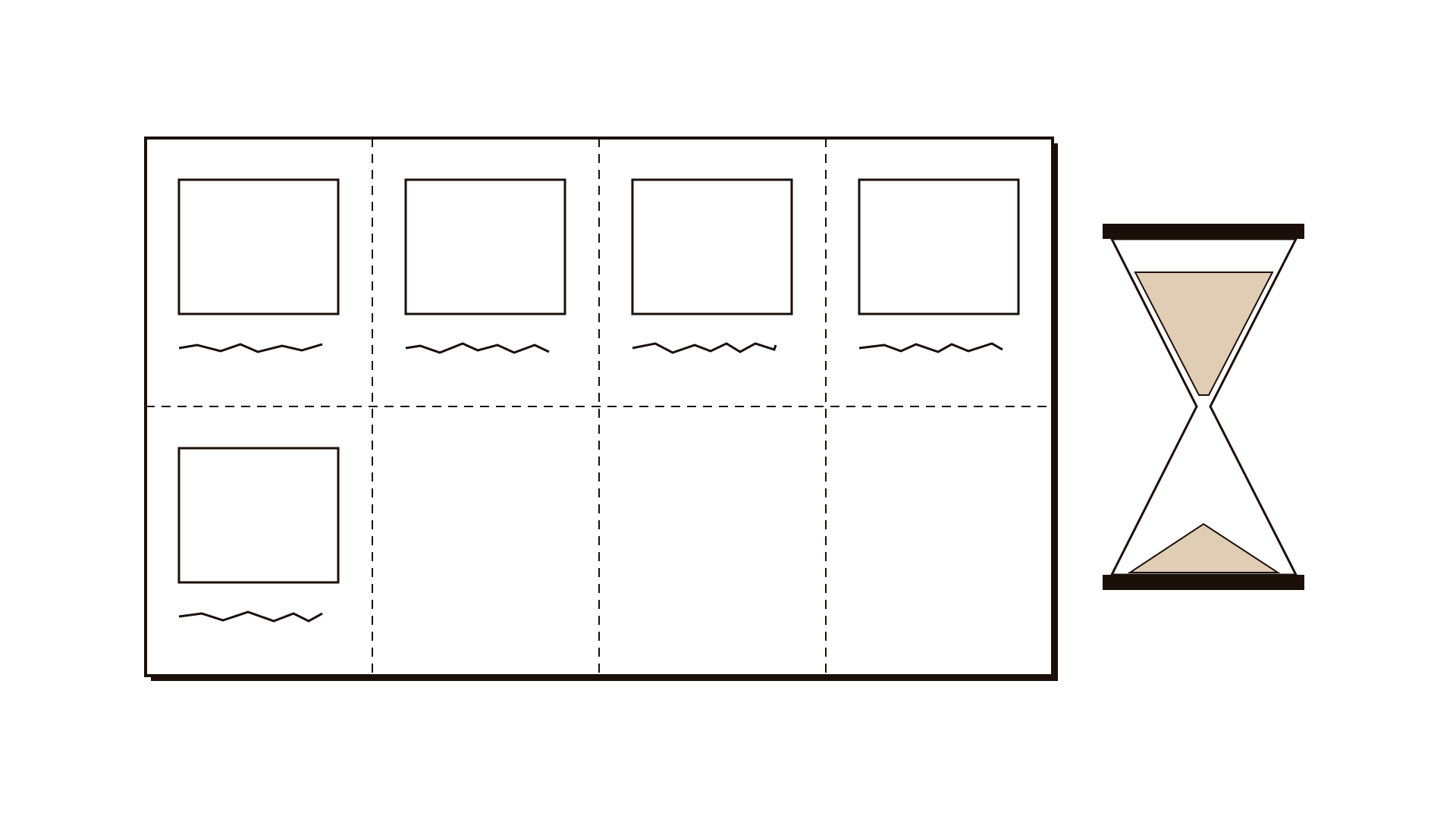
Ask each person to fold their sheet in half three times, then open it to show eight panels. Hand out thick pens. Thick lines stop people from adding too much detail.
Step 3: Warm up for one minute
Let people jot notes or doodles for a minute before the clock starts. Say clearly that rough is the goal and nobody will be judged on drawing.
Step 4: Sketch for eight minutes
Start the timer and call out each minute so people move to the next panel. Ask for eight different ideas, not eight versions of one. If someone gets stuck, suggest they change one thing: the moment in the journey, the channel, who does the work, or what the person sees first.
Step 5: Share without selling
Go round the group. Each person holds up their sheet and gives one sentence per panel, describing what it is. No pitching, no defending. Others only ask questions to understand. Allow about 30 seconds per person per sheet.
Step 6: Mark the useful differences
Give everyone three small stickers to place on the panels, from any sheet, that contain something worth keeping. Look for parts that differ in an interesting way.
Step 7: Combine into testable concepts
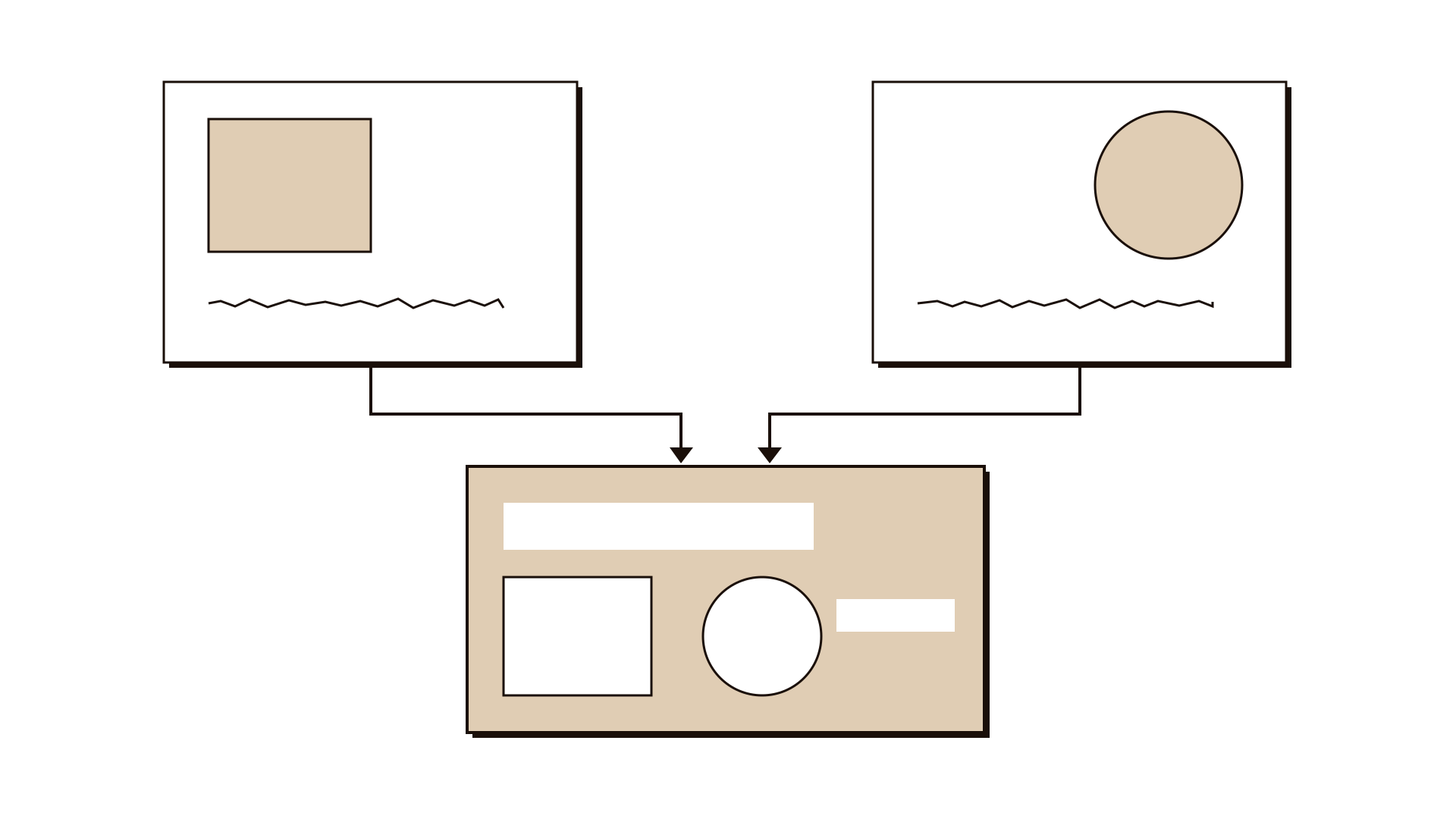
Pull the marked panels together and look for parts that fit. Join two or three into a concept and fill in the worksheet: the idea, the user need, what makes it different and the question you would need to test.
Worked example
A government passport and civil records office wanted to cut the number of applications rejected for unsuitable photos. The team's how might we question was "How might we help applicants know their photo will be accepted before they submit it?"
Six people took part: two case officers, a service designer, a developer, a contact centre agent and a policy adviser. The full round took 16 minutes.
The policy adviser said she had never sketched at work. Her panels included a printed photo ruler that shops could hand out, which nobody else had thought of.
Other panels included a live camera check on the upload page, a page showing three rejected photos with reasons, and a short text message before the appointment listing the photo rules.
In the sticker round, marks clustered on two parts: showing real rejected examples, and checking the photo at the moment of taking it.
The team joined these into one concept, a photo checker page with examples and a simple pass or retry message, and wrote down the question to test: would applicants trust an automatic check enough to retake a photo before paying?
IllustrativeTips and mistakes
Tips
- Use a thick marker, not a pen. It keeps sketches simple and readable from across the table.
- Call out the minutes. Hearing "next panel" keeps people moving and stops them polishing one idea.
- It is fine if the last two or three panels look odd. Those are often where the surprises are.
- Run a second round of Crazy 8s on the best concept if you want to explore variations of it.
Common mistakes
- Letting people draw eight versions of the same idea.
- Turning the sharing round into a pitch competition.
- Starting without a clear question, which produces sketches that cannot be compared.
- Throwing the sheets away after voting. Keep them, since unmarked panels are often useful later.
What you walk away with
The team leaves with dozens of rough sketches, a set of marked parts worth keeping, and one to three combined concepts each tied to a user need and a test question. From here you can refine the concepts in a design studio session, or use dot voting to agree which one to prototype first.
Questions people ask
How long does Crazy 8s take?
The sketching itself is eight minutes. With setup, sharing and marking, plan about 15 minutes for one round with a small group, or 25 minutes with eight people.
Do I need to be good at drawing?
No. Boxes, stick figures, arrows and a few words are enough. The point is to show an idea quickly, not to make a picture.
Crazy 8s vs brainwriting: which should I use?
Use Crazy 8s when the answer is something people will see, such as a screen, form or space. Use brainwriting when ideas are easier to describe in words, such as a policy change or a new process.
Tool card
The worksheet your team fills in, one box per field.
- Idea
- User need
- Difference
- Question