
Force field analysis
Put a proposed change in the middle, list what pushes it forward and what holds it back, and act on the barriers that matter most.
- Time
- 40 min
- People
- 4–8
- Kind of work
- Frame · Choose

In short
Force field analysis is a method for planning change by listing the forces that support it and the forces that resist it. To run it, a team defines the change in one sentence, writes supporting forces on one side and resisting forces on the other, rates their strength with evidence, and chooses actions that weaken the strongest barriers.
What it is
Force field analysis comes from the work of the social psychologist Kurt Lewin in the 1940s. His idea was that any situation stays as it is because forces pushing for change are balanced by forces holding it back. To move, you can strengthen the push or weaken the resistance. Lewin observed that reducing resistance often works better, because pushing harder tends to create more pushback.
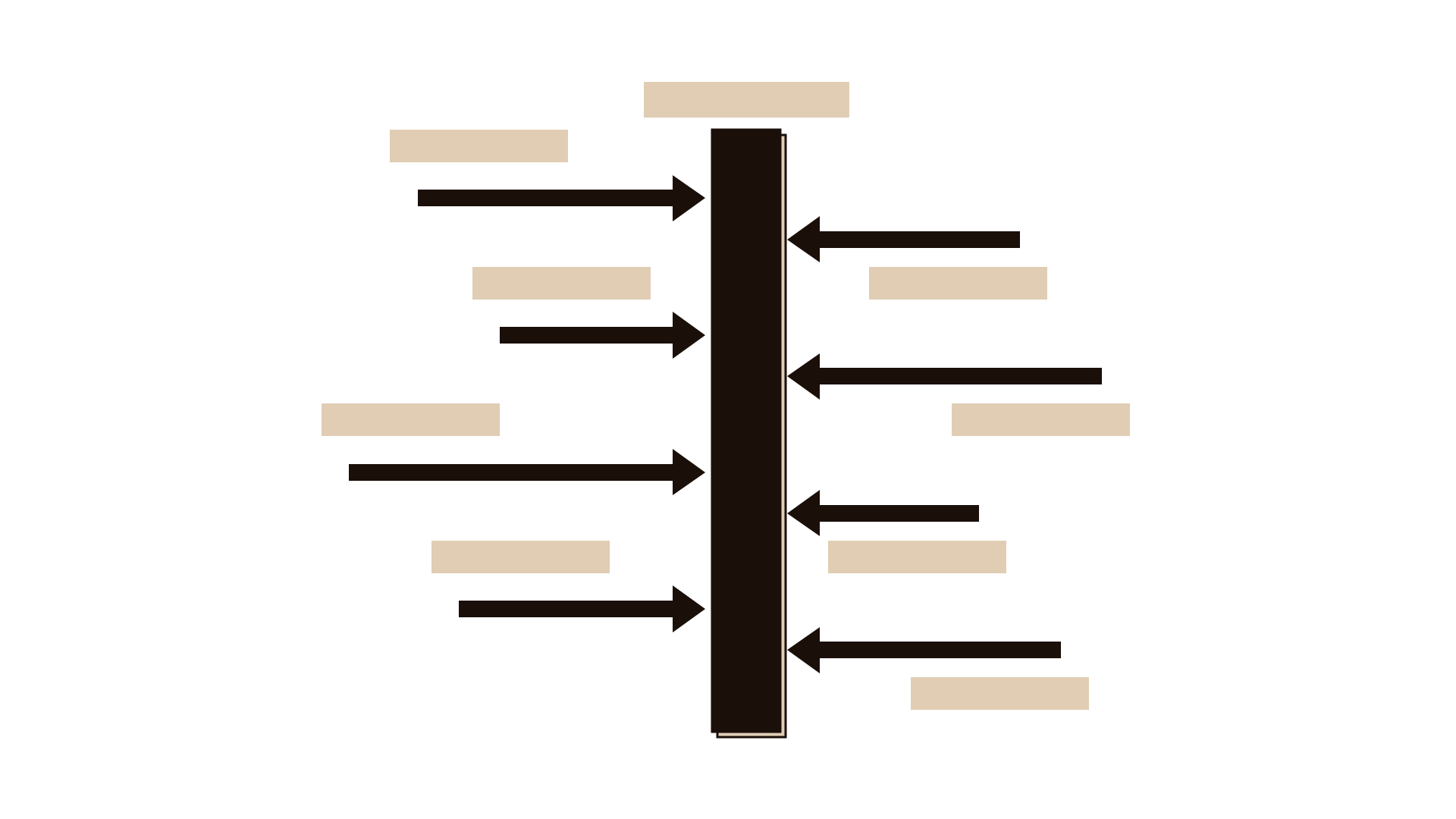
In practice, the method is a simple picture: the change in the middle, arrows on one side for support, arrows on the other for resistance, each arrow sized by how strong it is. It helps a team stop arguing about whether a change is good and start talking about what will make it happen. It is also a respectful way to take objections seriously, since every resisting force gets a place on the board.
When to use it
Use it when
- You have chosen a change and need to plan how to make it stick.
- A previous attempt at the same change stalled and you want to understand why.
- Opinions about a change are strong and you need a calm, structured conversation.
- You are deciding between two or three ways to introduce a change.
- You want to prepare for objections before presenting a proposal to leaders.
Skip it when
- The change itself is still unclear; frame the problem first.
- You need to find the root cause of a problem; use a fishbone or five whys.
- The decision is already made and nothing about its delivery can change.
You need
- Time
- 40 minutes for a focused session; 60 minutes if the change is contested.
- People
- 4–8 people, including at least one person who will be affected by the change and is unsure about it.
- Materials
- A board with a vertical bar in the centre, sticky notes in two colours, and markers to draw arrows of different lengths.
How to run it
Step 1: Define the change
Write the proposed change in the centre bar as one concrete sentence. For example: all branch staff use the new appointment system from 1 March. Vague changes produce vague forces.
Step 2: List supporting forces
Give the group 7 minutes to write forces that push the change forward, one per note. These can be people, rules, money, user demand or past success. Place them on the left.
Step 3: List resisting forces
Give another 7 minutes for forces that hold the change back: habits, workload, missing skills, cost, fear of mistakes. Place them on the right. Treat every note as valid at this point.
Step 4: Add evidence
For each force, ask what tells us this is real. Write the evidence briefly on the note or beside it. Forces without evidence stay, but are marked as assumptions.
Step 5: Rate strength
Agree a simple scale from 1 to 5 for how strong each force is. Draw the arrow length to match. Discuss the strongest forces first and spend less time on weak ones.
Step 6: Choose actions
Pick the two or three strongest resisting forces that have good evidence. For each, write one action that reduces it. Then ask whether one supporting force can be strengthened cheaply.
Step 7: Assign and check
Give each action an owner role and a date. Agree when you will look at the board again to see whether the forces have shifted.
Worked example
A retail bank planned to move branch staff from paper queue tickets to a digital appointment system across 40 branches.
Seven people met, including two branch supervisors who had doubts. The change was written as: all branch staff use digital appointments from the start of the second quarter.
Supporting forces included customer complaints about queues, a regional director who backed the change, and a pilot branch where waiting time had dropped.
Resisting forces included staff worry about older customers without smartphones, a tablet shortage in smaller branches, and no time for training during the month-end peak.
The group rated the older-customer concern at 5, backed by branch visit data showing a large share of walk-in customers over 60. The tablet shortage was a 4, confirmed by the asset list.
They chose three actions: keep a staffed walk-in desk for customers who prefer it, move the start date past month end for training, and redirect budget to buy tablets for 12 branches. The rollout went ahead with fewer complaints than the pilot.
IllustrativeTips and mistakes
Tips
- Invite someone who doubts the change; their forces are often the most useful ones.
- Write forces as specific facts, such as no tablets in 12 branches, not general moods.
- Focus actions on resistance before adding more push.
- Keep the arrow lengths visible so the group can see the balance at a glance.
- Revisit the board after a month; forces change as the work moves.
Common mistakes
- Listing forces and never rating them, so every barrier looks equal.
- Dismissing resisting forces as people being negative.
- Choosing actions for weak forces because they are easy.
- Writing the change so broadly that the forces apply to anything.
What you walk away with
You leave with a clear picture of the forces for and against one change, each backed by evidence and rated for strength, plus a few owned actions that target the strongest barriers. Use a stakeholder map to see who sits behind each force, or a stakeholder communication plan to carry the actions to the people affected.
Questions people ask
How long does a force field analysis take?
About 40 minutes for a clear change with a small group. Allow up to an hour if the change is contested or many teams are affected.
Who created force field analysis?
It comes from the work of social psychologist Kurt Lewin in the 1940s, as part of his thinking about how groups and organisations change.
Force field analysis vs SWOT: which is better?
They answer different questions. SWOT reviews a whole organisation or strategy. Force field analysis focuses on one specific change and what helps or blocks it.
Tool card
The worksheet your team fills in, one box per field.
- Change
- Supporting force
- Resisting force
- Evidence
- Action