
Diary study
Choose one activity that keeps happening, ask a small group to log every occurrence for a few weeks, and compare the entries to find the pattern.
- Time
- 30 min
- People
- 6–12
- Kind of work
- Understand

In short
A diary study is a research method in which a small group of participants record each occurrence of a recurring activity over one to four weeks. Each entry captures the date, what triggered it, what they did and how it ended. You then compare entries across people and days to find patterns that one conversation would miss.
What it is
A diary study spreads research across time. Instead of asking people to remember how something usually goes, you ask them to write a short entry each time it happens: every time they raise a purchase request, chase an approval or book a clinic appointment. Each entry takes a few minutes, and over two to four weeks you collect dozens of small, dated records.
The strength of the method is that memory is fresh. People write within hours of the event, so the details survive: what set it off, what they tried, who they had to call, how long it took. Laid side by side, the entries show rhythms and repeats that nobody would describe in an interview, such as the same delay every month-end or the same workaround every Sunday.
When to use it
Use it when
- When the activity happens repeatedly over days or weeks, not in one sitting.
- When you suspect the experience changes with timing, such as month-end, weekends or peak season.
- When you cannot be there to observe, because the activity happens at home, on the move or at odd hours.
- When you want to understand how a habit forms or breaks over time.
- After interviews, to check whether what people described holds up in daily life.
Skip it when
- When the activity happens once or very rarely. Interview people about the last time instead.
- When you need an answer this week. A diary study needs at least ten days to be worth it.
- When participants have little time or energy for writing, unless you can make entries very short or allow voice notes.
You need
- Time
- About 30 minutes to brief each participant, 2–5 minutes per entry, one to four weeks of logging, and half a day to compare entries.
- People
- One researcher to run it and 6 to 12 participants, each keeping their own diary.
- Materials
- A simple entry template with the four fields, a channel people already use (paper card, form or messaging app), and a reminder schedule.
How to run it
Step 1: Choose one recurring activity
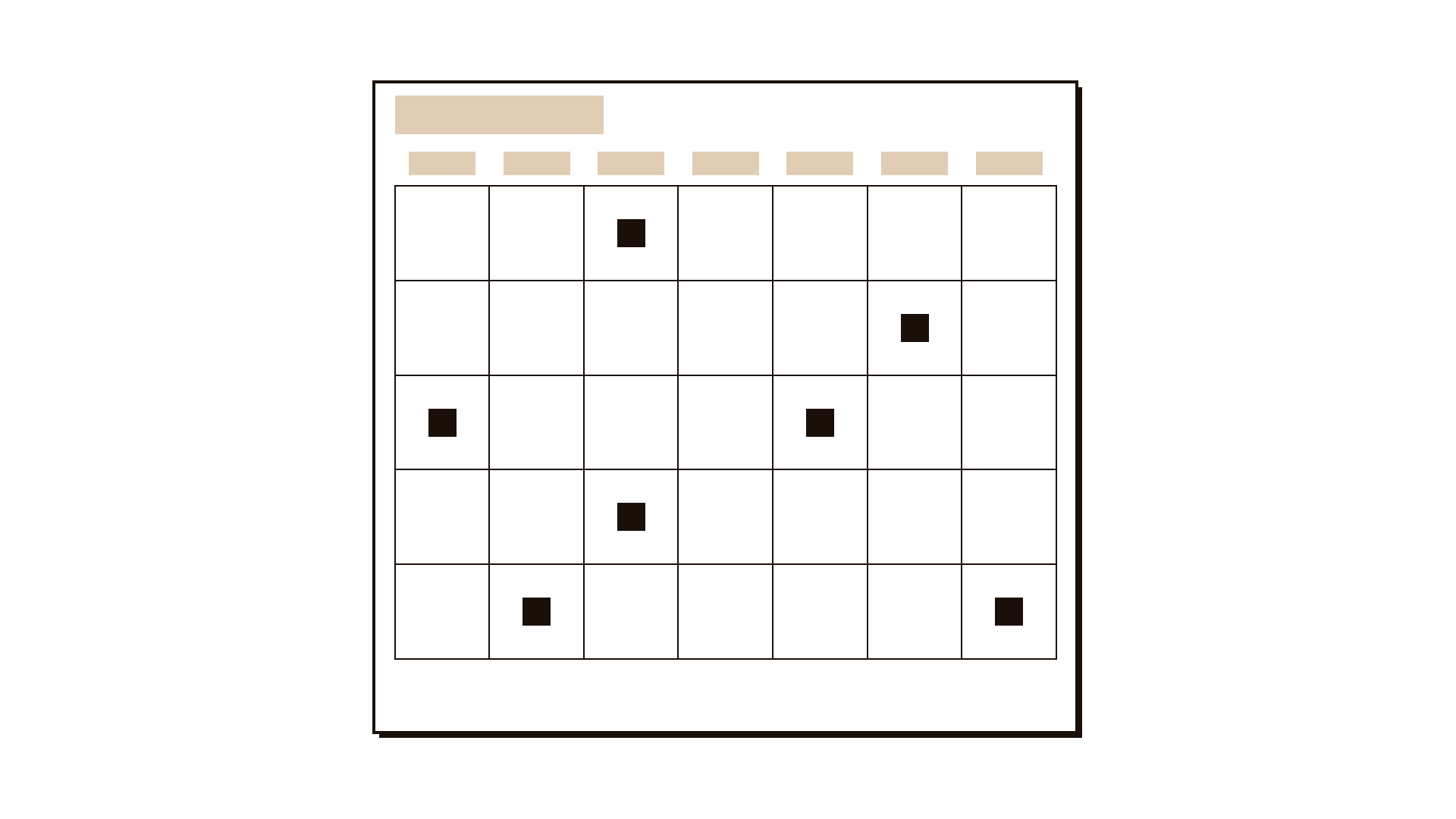
Name the activity in plain words that participants will recognise, for example: every time you raise or chase a purchase request. Pick something that happens at least two or three times a week, so a two-week diary yields enough entries.
Step 2: Design a four-field entry
Keep each entry to four fields: Date, Trigger (what started it), Activity (what you did) and Outcome (how it ended and how long it took). Test the template yourself for two days. If an entry takes more than five minutes, cut it down.
Step 3: Recruit and brief participants
Choose 6 to 12 people who do the activity regularly, from more than one team or location. Brief each one for about 30 minutes: what to log, an example entry, how their notes will be used and that they can stop at any time.
Step 4: Ask for each occurrence, as it happens
Participants log every time the activity occurs, ideally within the same day. Send a short, friendly reminder at a fixed time, such as late afternoon. Read the first entries within 48 hours and give quick feedback if anyone is writing too little.
Step 5: Check in at the midpoint
Halfway through, have a ten-minute call with each participant. Ask about one or two entries that stood out. This keeps people engaged and lets you add a follow-up question for the second half if needed.

Step 6: Line up the entries and compare
Put all entries in one table or on one wall, sorted by date. Align them by Trigger, then look across people for repeats: the same trigger, the same delay, the same outcome. Note where entries differ and ask why.
Step 7: Close with a short debrief
End with a 20-minute conversation with each participant to check your reading of their entries. Thank them and tell them what you learned. People who see their diary used are far more willing to take part again.
Worked example
A university's finance office wants to understand why departments complain that purchase requests take weeks. Eight administrators across four faculties keep a diary for three weeks, logging each time they raise, chase or receive a response on a request.
In week one, entries show a steady pattern. A typical Trigger reads: a lecturer needs lab supplies. Activity: filled the request form, attached two quotes, sent it to the department head. Outcome: approved two days later, forwarded to finance.
By week two a different pattern appears. Five of the eight diarists log entries where the outcome is: returned, supplier quote expired. Several note that quotes are valid for 14 days, while the request passed through three approval stamps.
The researcher lines up the entries by Trigger and sees that the expired-quote returns cluster around the middle of the month, when department heads are away for faculty boards. The approval chain stops for a week at a time.
The finding is specific: requests do not fail at finance, they fail because quotes expire during approval gaps. That gives the team two concrete questions to explore: longer quote validity, or a delegate approver during board weeks.
IllustrativeTips and mistakes
Tips
- Use the channel people already have open all day. A short form or a message is more likely to be filled in than a separate notebook.
- Allow voice notes or photos for people who find writing a burden.
- Give one example entry of good length so people know what enough looks like.
- Recruit a few more people than you need. One or two will drop out.
- Read entries as they arrive. Waiting until the end means you cannot fix a confusing template.
Common mistakes
- Asking for too much per entry. Long templates produce fewer, thinner entries by week two.
- Running the diary for only three or four days, which is too short to see a pattern.
- Treating the diary as a survey and counting answers, while ignoring the stories inside the entries.
- Forgetting to close the loop with participants, which makes the next study harder to recruit.
What you walk away with
You end with a dated record of real occurrences, aligned by what triggered them, and a short list of patterns that repeat across people and time. Each pattern points back to specific entries you can quote. Next, place the patterns on an experience map to see where they sit in the wider journey, or cluster the entries with affinity grouping if the patterns are not yet clear.
Questions people ask
How long should a diary study last?
Two to four weeks suits most activities that happen several times a week. Shorter than ten days rarely shows a pattern; longer than a month tends to lose participants.
How many participants does a diary study need?
Six to twelve is usually enough. Fewer than six makes it hard to tell a personal habit from a shared pattern, and more than twelve creates more entries than you can read carefully.
Diary study or interviews?
Interviews give depth on one recent event in one sitting. A diary captures many events as they happen. Many teams interview first to choose the activity, then run a diary to see how it behaves over time.
Tool card
The worksheet your team fills in, one box per field.
- Date
- Trigger
- Activity
- Outcome