
How to really understand your customers: interviews, observation and diary studies
How to really understand your customers: when to interview, when to observe, when to run a diary study, and how to turn what you see into shared insight.

How to really understand your customers: interviews, observation and diary studies
To understand your customers, go to them: interview them about specific recent episodes, watch them do the task where it actually happens, and when the experience stretches over days or weeks, ask them to keep a short diary. Each method sees something the others miss. Interviews give you reasons, observation gives you behaviour, diaries give you time. Choose by the question you need answered, not by the method your team happens to know.
Start with the question, not the method
Before you book a single conversation, write down what you need to learn in one sentence, and what decision it will inform. "Understand our customers better" is not a question. "Why do new account holders stop using the app after the first month, so we can decide where to spend next quarter's budget" is.
Then match the method to the shape of the question:
- If you need reasons, motives and the story behind a choice, interview. People can explain what they wanted, what they feared and what they compared you with.
- If you need to see what people actually do, including the workarounds they no longer notice, observe. People are poor reporters of their own habits; they skip the steps that have become automatic.
- If the experience unfolds over time, such as onboarding, a claim, a course, a treatment or a renovation, run a diary study. Memory flattens long experiences into a few highlights, and diaries catch the middle that nobody remembers.
Most good projects use two: observe first so your interview questions are grounded in what you saw, then interview to understand why.
Step 1: Recruit the right people
Who you talk to decides what you learn. Write a short recruitment profile before you start:
- Name the behaviour, not the demographic. "People who applied for a business licence in the last three months" beats "SME owners aged 30–45".
- Include the edges. Add people who gave up halfway, people who complained, people who use a competitor and heavy users who bend the service to fit them. Edges show you where the experience breaks.
- Plan for five to eight per group. For qualitative work, patterns tend to repeat quickly within a group. If you have three distinct groups, you need three small samples, not one big one.
- Recruit through more than one channel. Customers who answer your newsletter are already your fans.
Step 2: Run interviews about real episodes
An interview is a guided conversation about something the person actually did, not a survey read aloud or a pitch.
- Anchor on a recent, specific episode. "Tell me about the last time you renewed your insurance. Where were you when you started?" Specific episodes produce specific detail; general questions produce opinions.
- Follow the timeline. Ask what happened next, and next, until the end. Then go back to the moments where their voice changed.
- Ask for the evidence. "Can you show me the message they sent?" Screenshots, letters and folders on the kitchen table are worth more than descriptions.
- Pair up. One person leads, one takes notes in the participant's own words. Swap roles between sessions.
- Debrief within the hour. Each of you writes the three things that surprised you most before you compare notes.
The stakeholder interviews guide has a ready question structure. For the traps that waste interviews, such as leading questions and asking people to predict the future, see 5 research mistakes that waste your interviews.
Step 3: Observe where the work happens
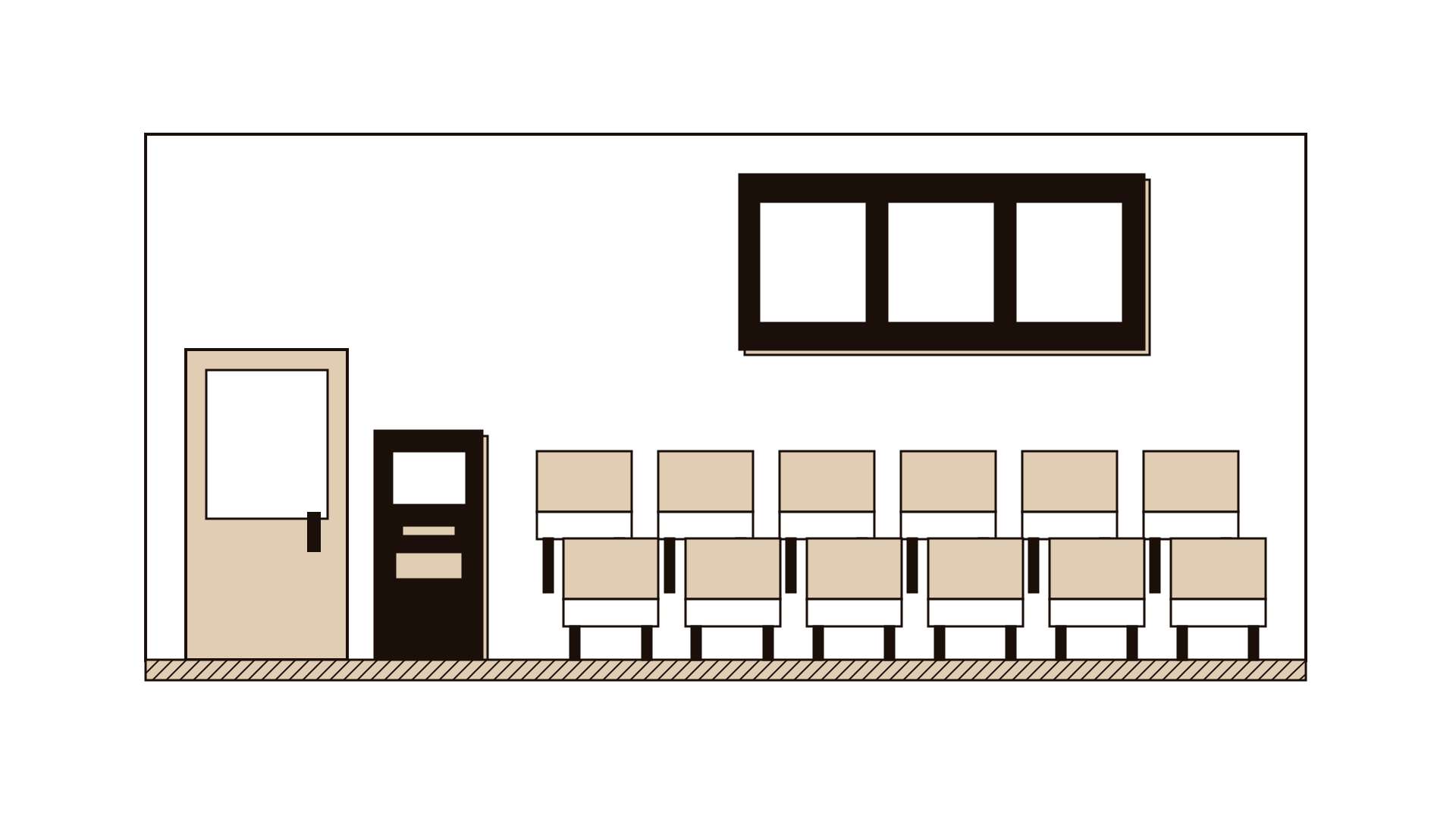
Observation means watching someone do the real task in the real setting: the branch, the clinic waiting room, the warehouse, the family laptop. Hugh Beyer and Karen Holtzblatt formalised one version of this as contextual inquiry: you work alongside the person as an apprentice, watching and asking about what you see as it happens.
- Explain the purpose plainly. You are studying the service, not judging the person.
- Stay quiet longer than feels comfortable. Let people get stuck. The moment of hesitation is the finding.
- Note the environment, not just the steps. Queues, noise, who else is present, what they had to bring, which screen they kept switching to.
- Ask "what just happened there?" at natural pauses, not in the middle of a task.
- Photograph objects, not faces, unless you have clear consent.
You can also observe the service as a customer would. A service safari sends your own team through the experience, yours and others', to notice what customers notice. It does not replace watching real customers, but it makes your team far better at it. The contextual observation guide covers what to record.
Step 4: Run a diary study for experiences that take time
A diary study asks a small group to record moments of an experience as they happen, over days or weeks. It suits anything where the important parts are spread out or private.
- Keep each entry under five minutes. A photo, a voice note and two short questions is plenty. Long diaries die by day four.
- Prompt at the right moments. Send a short prompt at fixed times, and ask for an extra entry whenever a specific trigger happens ("whenever you contact us", "whenever you feel stuck").
- Run one to four weeks. Long enough to catch the middle of the experience, short enough to keep people engaged.
- Check in early. Review the first two days of entries and fix unclear prompts quickly.
- Close with an interview. Walk through the diary with each participant. Their entries become the episodes you anchor on.
Thank or pay participants properly. The diary study guide has a prompt template.
Step 5: Make sense of it together
Raw notes are not insight. Within a week of your last session, bring the people who did the research into one room, and invite at least one person who will have to act on the findings.
- One observation per note, written as close to the customer's words as possible.
- Group by meaning, not by method or by question. Affinity grouping works well: cluster silently first, then name each cluster as a sentence ("People don't trust the first email because it looks like a scam"), not a label ("Trust").
- Build an empathy map per group so the team holds a shared picture of what customers say, do, think and feel.
- Keep evidence beside every conclusion, so anyone can trace an insight back to real people.
What you do with those insights next is its own discipline. From insight to change: turning customer research into decisions picks up from here.
Illustrative example
Illustrative: an invented organisation, for explanation only.
A mid-sized utilities company in a European city saw new customers phoning far more than expected in their first two months. The survey said "satisfied". The call logs said "billing questions".
The team chose two methods. First, observation: two team members sat with six new customers at home while they set up their online account and read their first bill. Second, a three-week diary study with ten new customers, prompted every time they opened a letter, email or app notification from the company.
Observation showed something nobody had predicted: people kept the paper welcome pack open beside the laptop, because the account number on the pack was formatted differently from the one the website asked for. The diaries showed the real spike: the first estimated bill arrived before the meter reading was recorded, and almost every participant assumed it was a mistake. Follow-up interviews explained why they phoned rather than read the FAQ: they wanted a person to confirm they would not be overcharged.
None of this was in the survey. The team changed the account number format and rewrote the first bill in plain words.
Do's and don'ts
Do
- Write the research question and the decision it serves before you recruit.
- Combine at least two methods when the stakes are high.
- Bring the people who will act on the findings into at least one session.
- Keep evidence attached to every insight.
Don't
- Interview only the customers who are easy to reach or already loyal.
- Ask people what they would want in the future and treat the answer as a requirement.
- Run a diary study with long, open questions every day.
- Hand the synthesis to one analyst and present a deck three weeks later.
- Wait for a perfect sample. Six good conversations this month beat sixty next year.
Questions people ask
What is the best way to understand customer needs? Watch people do the task and ask them about specific recent episodes. Needs show up in workarounds, hesitations and complaints about real moments, not in answers to "what do you need?".
How many customers should I interview? For qualitative work, start with five to eight per distinct group. Stop when new sessions stop surprising you, and add a group if a new type of customer appears.
What is the difference between a diary study and an interview? An interview captures one conversation about the past. A diary study captures many small moments as they happen over days or weeks, so it catches the parts of an experience people forget.
Where to go next
Start with the method that matches your question: stakeholder interviews for reasons, contextual observation for behaviour, and a diary study for experiences that take time. When the notes are in, use affinity grouping to make sense of them together. For the bigger picture, read Customer-centric is a practice, not a slogan: where to start, and to turn what you learned into something your team will use, see Personas that teams actually use.