
Empathy map
Straight after an interview, sort what you heard and saw into what the person says, thinks, does and feels.
- Time
- 30 min
- People
- 2–6
- Kind of work
- Understand · Frame
In short
An empathy map is a one-page summary of a person's experience in four parts: what they say, think, do and feel. To make one, sit down right after an interview or observation, write each note into the right part, look for contradictions between what was said and what was done, and finish with the needs those reveal.
What it is
An empathy map helps a team step into one person's shoes before moving on to the next interview. You take your notes and sort them into four parts. Says holds direct quotes. Thinks holds what the person seems to believe or worry about but may not say aloud, inferred from tone, hesitation or later remarks. Does holds actions, workarounds and behaviour you saw or were told about. Feels holds emotions, such as anxious, relieved or embarrassed. The value comes from the gaps between the parts, for example when someone says a process is easy but has visited the office three times.
The empathy map was created by Dave Gray at the visual thinking company XPLANE and is now widely used in design practice. It works best for one person or one tightly defined type of person, filled in soon after the conversation while memory is fresh. A good map ends with a short list of needs, written as things the person is trying to achieve, which can then feed a point of view statement, a persona or affinity grouping across many interviews.
When to use it
Use it when
- You have just finished an interview or observation session and want to capture it before details fade.
- Several team members took part in research and you want everyone to share what they noticed about one person.
- You are building personas and need a consistent summary of each interview first.
- A team talks about users in general terms and you want to bring one real person's experience into the room.
- Interviews produced a lot of notes and you want to separate what people said from what they actually did.
Skip it when
- You have not spoken to or observed anyone. A map filled from imagination only records the team's assumptions.
- You need to understand a whole sequence of steps over time. A journey map or experience map shows order; an empathy map does not.
- You are trying to combine dozens of interviews at once. Use affinity grouping, and use empathy maps for the individual interviews first.
You need
- Time
- About 30 minutes per interview, ideally within a few hours of it.
- People
- 2 to 6 people, ideally everyone who was in the interview plus one person who was not, to ask naive questions.
- Materials
- Interview notes or a recording summary, the empathy map worksheet printed or on a shared board, sticky notes and markers.
How to run it
Step 1: Name the person and the moment
At the top of the sheet, write who the map is about and the situation you are focusing on, such as "Reem, 34, making her first motor claim after a minor collision". Keep the focus on the part of their experience that relates to your service, not their whole life.
Step 2: Write what they said
Go through your notes and write direct quotes, one per sticky note, under Says. Use the person's exact words, including the ones that sound odd or unflattering. If several people took notes, each writes their own quotes first, then you remove duplicates.
Step 3: Write what they did
Under Does, note actions and behaviour: what they did during the session, what they said they did, and any workaround you saw, such as keeping photos of every document on their phone. Separate what you observed directly from what was reported, for example with a small mark on reported actions.
Step 4: Infer what they think
Under Thinks, write what the person seems to believe, assume or worry about. These are interpretations, so base each one on something specific: a pause, a repeated question, a remark made later. Write the evidence on the note in brackets, so others can challenge it.
Step 5: Name what they feel
Under Feels, write the emotions you saw or heard, using plain words such as worried, frustrated, relieved or embarrassed. Note what triggered each feeling. Strong feelings attached to a small step are often a sign of something worth designing for.
Step 6: Look for tensions
Step back and compare the four parts. Where does what they say conflict with what they do? Where does what they think explain how they feel? Circle two or three tensions. These are usually where the most useful insight lies, because they show a gap between how the service is meant to work and how it is lived.
Step 7: Write the needs
Finish by writing the person's needs below the map, each as something they are trying to achieve, such as "know the claim is moving without having to chase it". Use verbs, not solutions. Aim for three to five needs, and mark which tension each one comes from.
Worked example
A general insurer handles about 48,000 motor claims a year. Its average claim took 19 days to settle, and 27% of claimants called the contact centre three or more times before receiving a decision. The customer experience team interviewed 12 recent claimants, and two researchers filled in an empathy map after each conversation.
After the fourth interview, three people spent 30 minutes on the map: the two researchers and a claims handler who had not attended. The focus was "Reem, making her first motor claim after a minor collision in a car park".
Says included "The app made it look simple" and "I just wanted someone to tell me it was fine". Does included uploading the same photos twice, calling the contact centre four times in ten days, and keeping a written log of every call.
Thinks was inferred from repeated questions about the other driver: she seemed to believe that if the other driver's story differed, her claim would be refused. The researchers noted the evidence beside it: she asked about this three times.
Feels included anxious after each call, embarrassed to ask her husband to call for her, and relieved when a handler finally used her name.
The clearest tension was between "the app made it look simple" and four calls in ten days. The claims handler explained that the app showed no status between submission and the decision, so every call was simply to check that the claim was still active.
The team wrote three needs: know the claim is moving without having to chase it; understand what the other party's statement means for her; and speak to the same person each time. After all 12 maps, the first need appeared in nine of them.
IllustrativeTips and mistakes
Tips
- Fill the map in the same day as the interview. After a few days, memory turns observations into opinions.
- Invite one person who was not in the interview. Their questions expose assumptions the interviewers no longer notice.
- Keep Says to real quotes only. If you are paraphrasing, it belongs in another part.
- Use a different note colour for each team member, so you can see whose observations agree and where they differ.
Common mistakes
- Filling in Thinks and Feels with guesses that have no link to anything the person said or did.
- Mixing several very different people into one map, which blurs the tensions that make it useful.
- Stopping at the four parts without writing the needs, so the map becomes a record rather than a step forward.
- Writing solutions as needs, such as "needs a status tracker", instead of what the person is trying to achieve.
What you walk away with
You leave with a one-page map of one person's experience, two or three tensions circled, and three to five needs written in their terms. The next step depends on how many interviews you have. After several, affinity grouping brings the needs together across people, and personas turn the recurring patterns into profiles. For a single strong need, a point of view statement makes it ready for idea generation.
Questions people ask
What are the four parts of an empathy map?
Says, thinks, does and feels. Says holds direct quotes, thinks holds inferred beliefs and worries, does holds actions and behaviour, and feels holds emotions. Many teams add a section for needs below the map.
When should we make an empathy map?
As soon as possible after an interview or observation, ideally the same day. It is a way of capturing and making sense of one person's experience while the details are fresh.
What is the difference between an empathy map and a persona?
An empathy map usually describes one interview or one person. A persona combines patterns from many interviews into a profile of a recurring type of user. Empathy maps are often a building block for personas.
Tool card
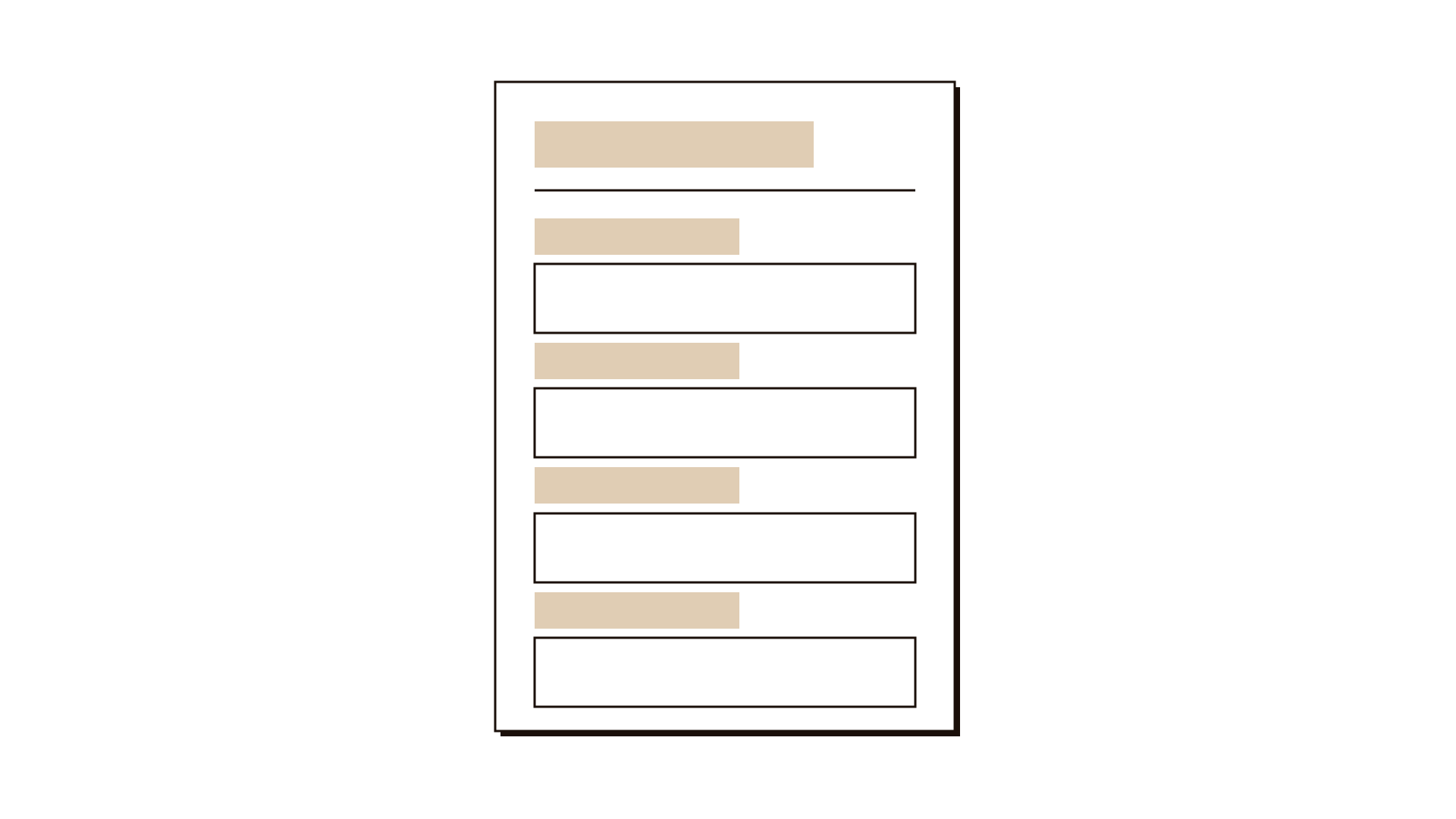
The worksheet your team fills in, one box per field.
- Person and moment
- Says
- Thinks
- Does
- Feels
- Tensions
- Needs