
From insight to change: turning customer research into decisions
Why customer research ends in reports nobody acts on, and seven steps to turn interviews and observation into insights, owners and dated decisions.
From insight to change: turning customer research into decisions
Customer research changes nothing until someone with authority decides something, on a date, with their name against it. To turn research into decisions, name the decision and the person who will take it before fieldwork starts, synthesise within days rather than weeks, write insights that explain why customers behave as they do, and put the decision-maker in a working session with the evidence instead of sending them a report. Then write each decision down with an owner and a date to check whether it worked.
This article starts where How to really understand your customers ends: you have done the interviews and the observation, and now you have a wall of notes. It is part of the hub led by Customer-centric is a practice, not a slogan: where to start.
Why good research ends up in a drawer
Most research doesn't fail in the field. It fails in the weeks after. The team comes back with rich material, spends a month writing a 60-slide deck, presents it to a steering committee that has twenty minutes, and everyone agrees it is "very insightful". Nothing has an owner, so nothing happens.
Three things cause this. The research was not tied to a decision anyone had to take. The findings describe what customers do but not why, so they give no clear direction. And the people who could act were never close to the evidence, so they have nothing to argue from when budgets are set. Each step below deals with one of these.
Step 1: Name the decision before you do the research
Write a one-page research brief before the first interview. It answers four questions:
- What decision will this research inform? "Whether to redesign the claims process or the claims letter first" is a decision. "Understand our customers better" is not.
- Who takes that decision, and by when? A named person and a real date, usually tied to a budget cycle or a planning meeting.
- What do we currently believe? Write the team's assumptions down now. You will need them later to see what the research actually changed.
- What would change our mind? If no possible finding would change the plan, you don't need the research.
Show the brief to the decision-maker and get their agreement. That conversation is the first step in getting them to act.
Step 2: Debrief within 24 hours
Memory fades fast and turns into opinion. After every interview or observation session, spend 20 minutes as a pair capturing what you saw and heard: direct quotes, what the person did, the context around it. Keep observation and interpretation apart. "She printed the email and wrote on it" is an observation. "She doesn't trust the portal" is an interpretation, and it goes in a separate column.
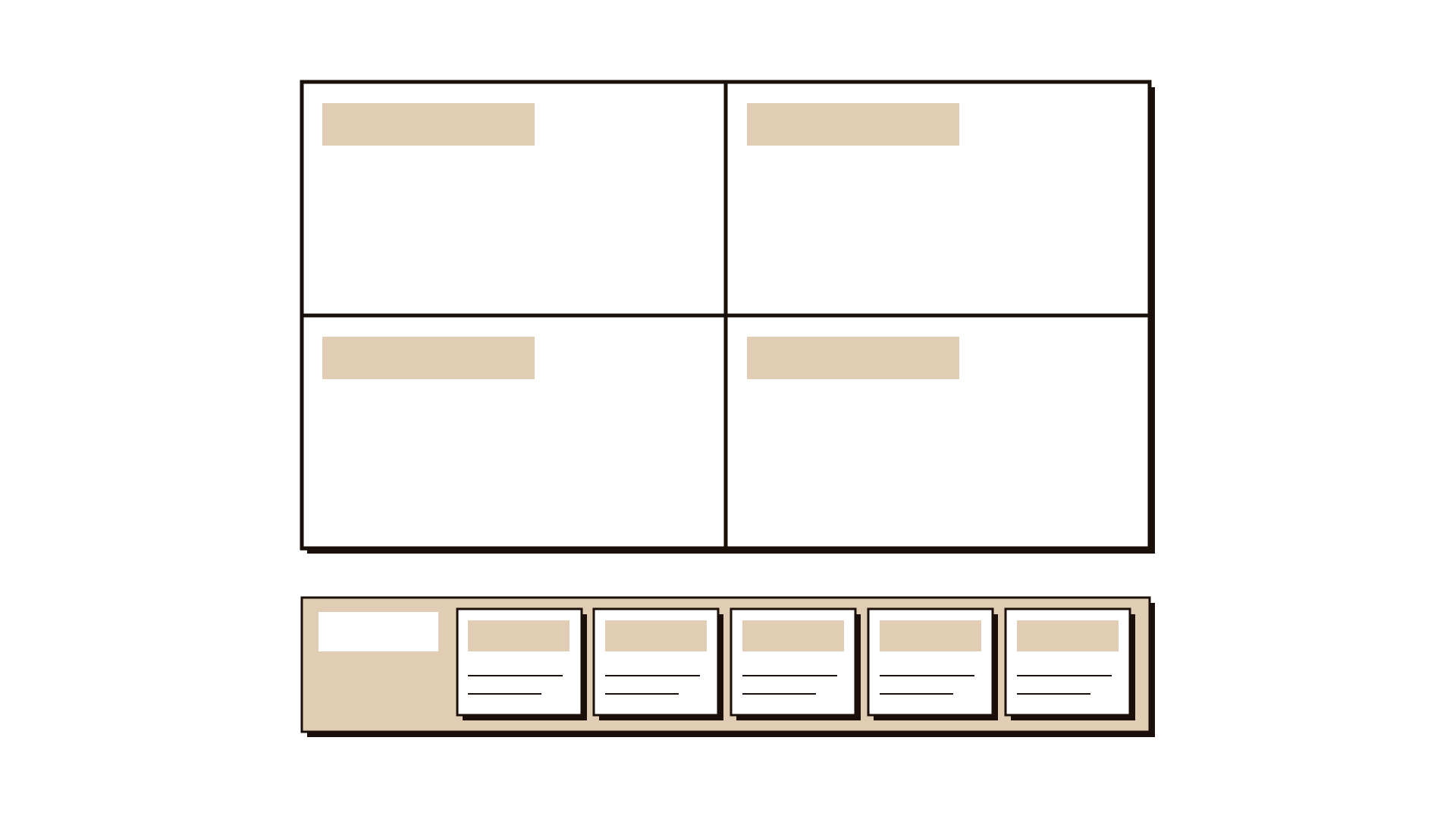
A feedback capture grid works well for this: what people liked, what bothered them, the questions they raised and the ideas they offered, one quadrant each.
Step 3: Cluster the evidence, then write insights, not findings
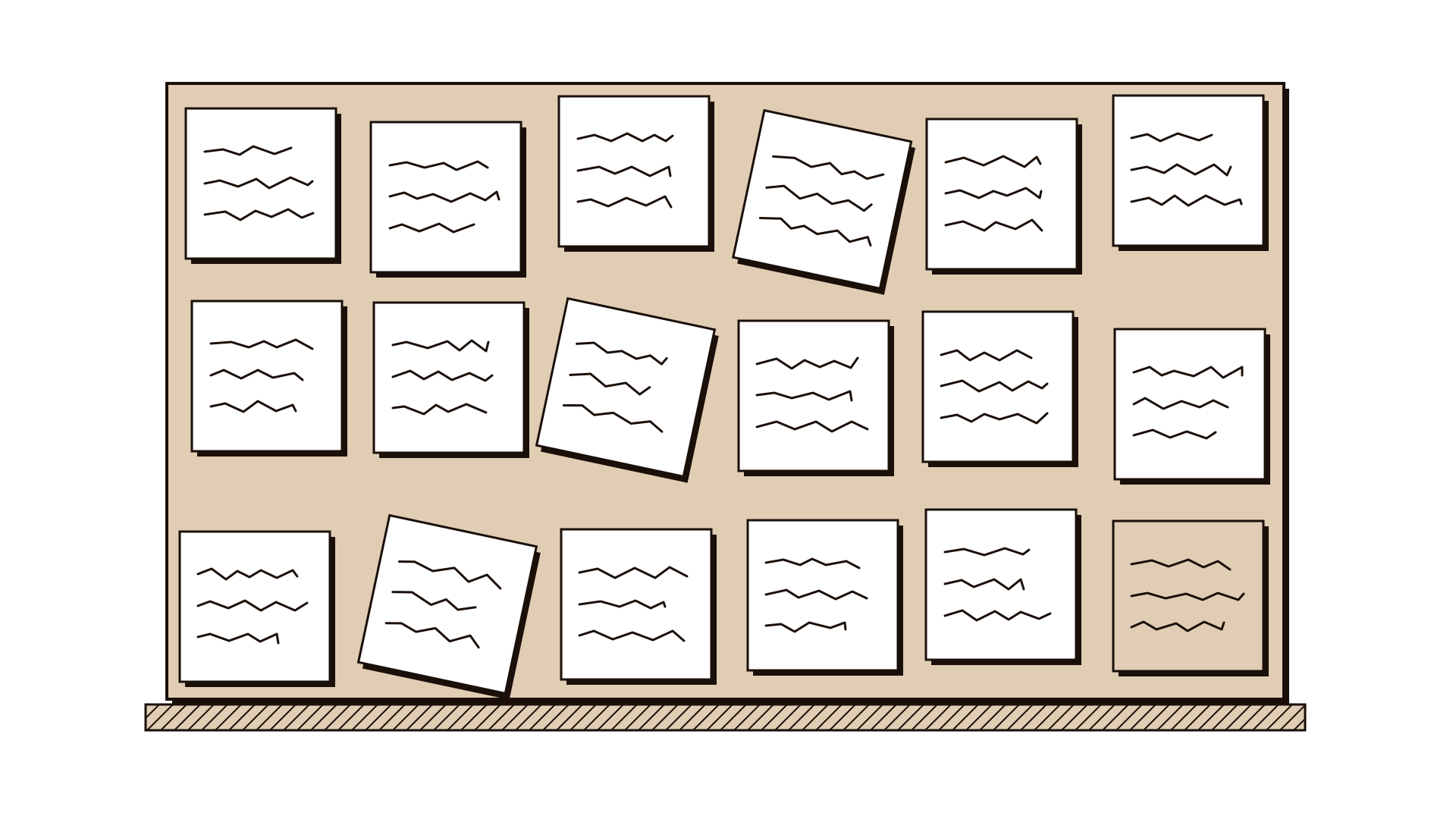
Put every observation on its own note and group them with affinity grouping, a technique that grew out of the KJ method developed by the Japanese anthropologist Jiro Kawakita. Let the groups emerge from the notes rather than sorting into categories you decided beforehand. Do it silently first, then talk.
Then turn each strong cluster into an insight. Take an insurance claims process as an example; the difference matters:
- Finding: "Most of the people we interviewed phoned the helpline after submitting a claim."
- Insight: "People phone after submitting because the confirmation doesn't tell them what happens next or when. The call is a request for reassurance, not information."
A finding tells you what happened. An insight tells you why, and that is what points to a change. A useful pattern is observation, because reason, which means implication. If you cannot complete the "because", you need more evidence or a sharper reading of what you have.
Aim for five to eight insights. Twenty insights is a list, and nobody acts on a list.
Step 4: Turn insights into opportunities
An insight still isn't something you can act on. Convert each one into a point-of-view statement (who, what they need, and the surprising reason) and then into one or more how might we questions. "How might we make the moment after submission feel finished?" opens up options a team can work on.
When there are several insights pointing at one outcome, lay them out with an opportunity solution tree, the method popularised by product coach Teresa Torres: the desired outcome at the top, the opportunities the research revealed beneath it, and candidate solutions beneath those. It shows the decision-maker how each proposed change connects to evidence and to the result they care about.
Step 5: Put the decision-maker in the room
Replace the presentation with a 90-minute decision session. Invite the decision-maker and the people who would have to carry out the changes. Bring:
- The five to eight insights, each with two short quotes or a photo from the field.
- The assumptions you wrote in Step 1, marked confirmed, contradicted or still unknown.
- The opportunities from Step 4.
Spend the first half hour letting people walk the wall and read the evidence. Then, for each opportunity, decide one of four things: act now, test first, park with a date to look again, or drop with a reason. Use assumption mapping on anything marked "test first" to see which belief is riskiest and should be tested before money is spent.
Step 6: Choose with stated criteria
When several opportunities compete for the same people and budget, make the criteria visible. An impact-effort matrix is enough for most sessions; a weighted decision matrix suits bigger trade-offs. Agree the criteria before scoring, not after. How to prioritise ideas: five ways compared covers the options.
Step 7: Write the decision down and come back to it
End the session with a decision log on one page. For each decision: the insight it came from, what was decided, the owner, the date, and what you will look at to know whether it worked. Agree who does what with a RACI where more than one team is involved.
Book the follow-up before anyone leaves: six to eight weeks later, same people, same log. That second meeting is what turns research from an event into a practice.
Worked example
Illustrative. A regional rail operator in Northern Europe interviews fifteen passengers and observes two stations to understand complaints about refunds for delayed journeys. The research brief names the customer director as decision-maker and the next quarterly planning meeting as the deadline. The team's assumption is that the refund form is too long.
Synthesis produces six insights. The strongest contradicts the assumption: passengers abandon the refund not because the form is long but because they don't know they are entitled to one until days later, when the ticket is lost. The form was never the main problem.
In the decision session, the director decides to act now on a message to affected passengers on the day of the delay, to test first an automatic refund for season-ticket holders, and to drop the form redesign for this quarter. Each has an owner and a date. Eight weeks later the team reviews the first results against the log.
Common mistakes
- Researching without a decision. The work is interesting and changes nothing.
- Writing findings and calling them insights. Without the "because", nobody knows what to change.
- Synthesising alone. If the people who must act didn't help make sense of the evidence, they won't believe the conclusions.
- Burying contradictions. The finding that overturns the team's assumption is often the most valuable one. Lead with it.
- Ending with "next steps" instead of decisions. A next step without an owner and a date is a wish.
- Never going back. Without a follow-up, nobody learns whether the decision was right.
Questions people ask
How do you turn customer research into actionable insights? Cluster observations into themes, then write each theme as an insight that explains why customers behave as they do and what that means for you. Turn each insight into a "how might we" question, then into options a decision-maker can choose between.
What is the difference between a finding and an insight? A finding describes what happened. An insight explains why it happened and points to what should change. Findings are data; insights are the reading of that data.
How do you present research to senior leadership? Don't present it, work through it with them. A short decision session with the evidence on the wall, a few direct quotes and clear options gets further than a long report. Agree the decision and its owner before the session ends.
Where to go next
Start your synthesis with affinity grouping, sharpen the results into point-of-view statements, connect them to outcomes with an opportunity solution tree, and check what you still don't know with assumption mapping. When a decision needs a test before you commit, read Testing an experience before you build it.