
Three horizons in practice: how to balance today and tomorrow
How to use the three horizons model in a real organisation: place projects, set a balance, protect horizon three and avoid the common distortions.

Three horizons in practice: how to balance today and tomorrow
The three horizons model helps you check whether your organisation is investing only in today's business or also in what comes next. Horizon one is the core business you run now, horizon two is the emerging business that extends it, and horizon three is the set of options that could become future businesses. In practice, it is useful as a balance check across your portfolio, and harmful when treated as a timetable or a way to label people. Below are the steps to use it well.
Where the model comes from, and what it actually says
The model was set out in The Alchemy of Growth (1999) by Mehrdad Baghai, Stephen Coley and David White, then at McKinsey. Their argument was that companies sustain growth by managing three horizons at the same time, not one after another:
- Horizon one: the core business that brings in most of today's revenue or service delivery. The work is to defend and extend it.
- Horizon two: emerging businesses with real customers and growing momentum, which need investment to scale.
- Horizon three: ideas, research, pilots and small ventures that might become horizon-two businesses later. Most will not.
Two other uses of the name are worth knowing so you are not confused by them. Bill Sharpe and colleagues at the International Futures Forum developed a separate Three Horizons method for futures thinking and system change, described in Sharpe's book Three Horizons: The Patterning of Hope. And many innovation teams now use "horizon" loosely to mean time: one to two years, two to five, five or more. That time-based reading is common, but it drops the original point, which was about the maturity of the business, not the calendar.
Step 1: Agree what each horizon means for you
Write one sentence per horizon in your own terms before placing anything. A government entity might define them as:
- H1: improving services we already deliver, for people we already serve.
- H2: new services or channels for existing groups, or existing services for new groups.
- H3: different ways of meeting the mandate that, if they worked, would change how the entity operates.
Without this step, every project owner will place their project wherever it looks most important.
Step 2: Place every initiative honestly
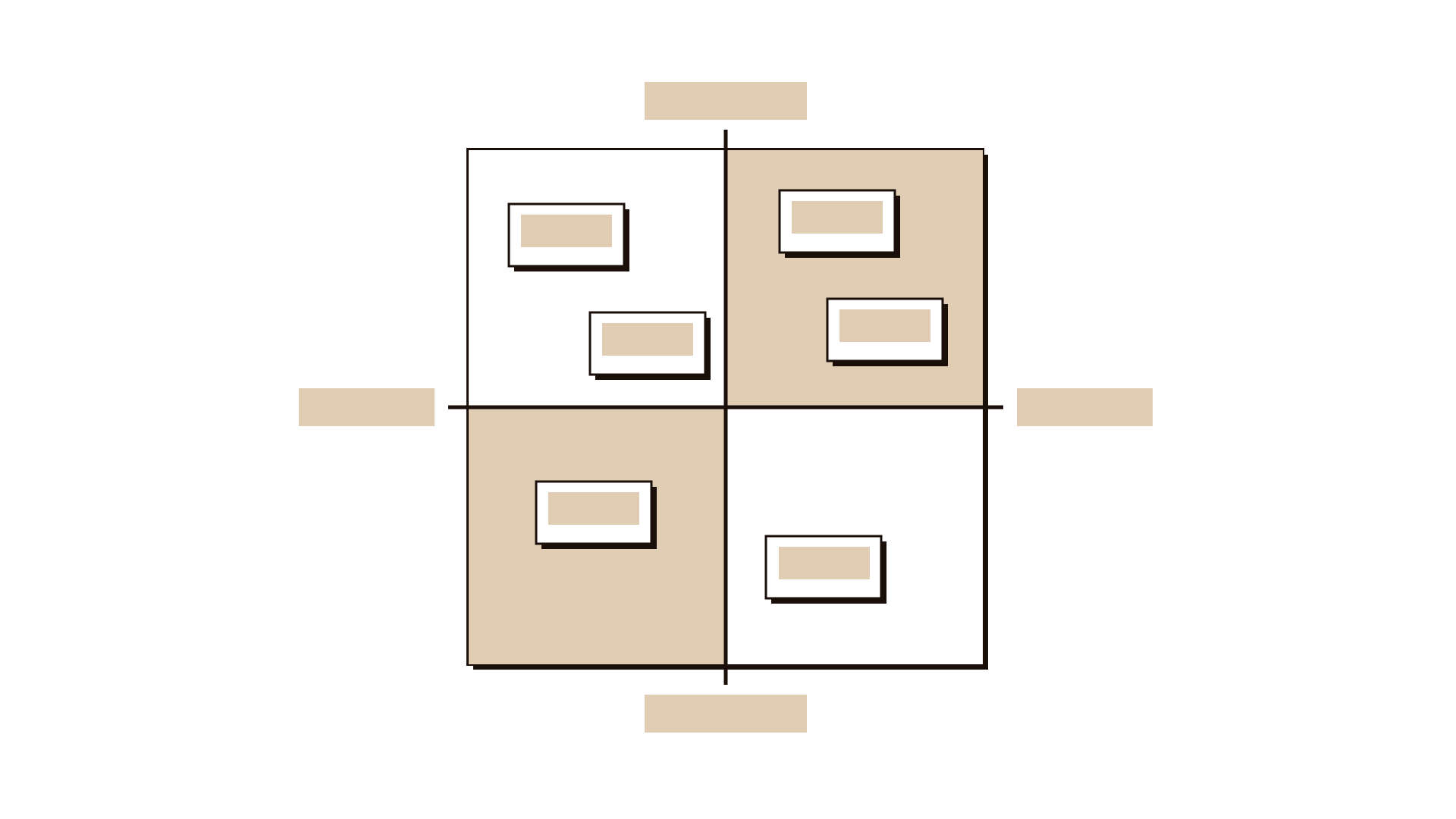
Put each project on a portfolio map, using three tests to decide its horizon:
- Who is it for? Existing users or customers, or new ones?
- What does it change? How we deliver today, or what we deliver?
- How much do we know? Is the main uncertainty in execution, or in whether anyone wants it at all?
A digital form replacing a paper one is horizon one, even if it uses new technology. Technology does not make a project horizon three; a change in what the organisation offers, or to whom, does.
Step 3: Set a balance, not a formula
Decide what share of innovation effort goes to each horizon. Bansi Nagji and Geoff Tuff's 2012 Harvard Business Review article "Managing Your Innovation Portfolio" described a split of roughly 70 per cent core, 20 per cent adjacent and 10 per cent transformational among the companies they studied, but they were clear that the right ratio depends on industry, competitive position and stage. A regulator and a consumer technology firm should not share a ratio.
Set bands rather than exact percentages, and revisit them yearly. The point is to notice when one horizon has quietly swallowed everything.
Step 4: Manage each horizon differently
The most common mistake is to run all three horizons with the same rules. They need different things:
| Horizon one | Horizon two | Horizon three | |
|---|---|---|---|
| Main question | Are we executing well? | Can this grow? | Is this worth learning more about? |
| Measures | Efficiency, quality, satisfaction | Adoption, growth, unit cost | Assumptions tested, learning speed |
| Funding | Annual budget | Staged, tied to milestones | Small, frequent, easy to stop |
| Who leads | Line managers | Dedicated teams with a sponsor | Small exploratory teams |
| Failure means | Something went wrong | The growth case did not hold | A question got answered |
Use assumption mapping for horizon three and a KPI tree for horizons one and two. Judging horizon-three work with horizon-one measures is the fastest way to kill it.
Step 5: Protect horizon three without isolating it
Horizon-three work loses every budget fight against the core, because the core always has an urgent, certain need. Protect it by:
- Ring-fencing a small budget that can only be spent on horizon three, reviewed quarterly.
- Giving it a senior sponsor who is not also responsible for horizon-one targets.
- Keeping links to the core. Isolated labs often explore things the organisation can never absorb. Each horizon-three project should name the horizon-one or horizon-two owner who would take it on if it worked.
Step 6: Plan the transitions
Projects should move: from horizon three to two when they find real demand, from two to one when they become part of business as usual. Most organisations never plan these moves, so promising projects stall at the boundary. Put transition points on your roadmap and in the portfolio review, described in Innovation portfolio management: fund, scale, pause or stop.
Illustrative example
Illustrative. A public library service in a large Dutch city mapped its 14 innovation projects. All 14 were placed by their owners in horizon two or three. After applying the three tests, ten moved to horizon one: they improved existing services for existing users, mostly through better digital booking and catalogue search.
The leadership team chose a band of about two-thirds horizon one, a quarter horizon two and the rest horizon three. Horizon three had only one real project, so they ran a scenario matrix to generate options and funded three small explorations: libraries as neighbourhood workspaces, lending of tools and equipment, and support for residents dealing with online government services. Each was given a named branch manager who would take it on if it worked, and a three-month learning goal instead of a usage target.
Do's and don'ts
Do
- Define each horizon in your own words before mapping.
- Place projects by what they change, not by how new the technology is.
- Use different measures and funding rules per horizon.
- Name the future owner of every horizon-three project.
- Review the balance at least once a year.
Don't
- Don't treat the horizons as a fixed sequence. In his 2019 Harvard Business Review article on the model, Steve Blank argued that disruption now moves so quickly that horizon-three threats can arrive on a horizon-one timescale. Watch all three at once.
- Don't copy a ratio from another organisation.
- Don't label people or teams as "horizon one people". The model describes work, not individuals.
- Don't let horizon three become a home for projects nobody will stop. It needs the toughest stopping rules, not the softest; see How to stop a project well.
- Don't report horizon three with revenue targets.
Questions people ask
What is an example of a horizon 3 innovation? An initiative that tests a different way of delivering the organisation's purpose, for example a bank exploring services for people who have never had an account, or a utility testing a model where customers produce and trade their own energy. It is small, uncertain and could change what the organisation does if it works.
Is the three horizons model still relevant? As a balance check across a portfolio, yes. As a timeline that assumes horizon three is years away, it has been rightly criticised, notably by Steve Blank. Use it to see what you are investing in, not to predict when change will arrive.
What is the difference between the three horizons and 70-20-10? The three horizons describe types of business by maturity; 70-20-10 is one suggested allocation of effort across core, adjacent and transformational work. They are often combined, but the ratio is a rule of thumb, not part of the original model.
Where to go next
For the strategy this balance serves, see the pillar article How to build an innovation strategy in a few workshops. The guides used here are free: three horizons, portfolio mapping, assumption mapping and scenario matrix.