
How to build an innovation strategy in a few workshops
Build an innovation strategy in four focused workshops: ambition, where to play, the portfolio and the first 90 days. Steps, examples and common mistakes.

How to build an innovation strategy in a few workshops
An innovation strategy is a short set of choices: why your organisation needs to innovate, where it will look, how much effort goes to each kind of bet, and how those bets will be judged and stopped. You can build a usable one in four half-day workshops with the right twelve people in the room, provided you prepare the evidence beforehand and leave each session with decisions rather than a wall of ideas. What follows is the full route, from preparation to the first 90 days, with the traps that turn most innovation strategies into documents nobody opens.
What an innovation strategy is, and what it is not
Most documents titled "innovation strategy" are one of three things: a list of values ("we are bold, we are curious"), a list of projects, or a description of an innovation team. None of them is a strategy, because none of them forces a choice.
A working innovation strategy answers five questions, and every answer excludes something:
- Why innovate? The specific pressure or opportunity the organisation faces, in one or two sentences. "To stay competitive" is not an answer. "Half our service requests still need a branch visit, and our customers' patience for that is running out" is.
- Where will we look? Two to four search fields: customer groups, services, capabilities or problems where you will actively seek new ideas. Everything outside them gets a polite no.
- What mix of bets? How effort and money split between improving what exists, extending into neighbouring areas and building something genuinely new.
- How will bets be judged? The stages an idea moves through, who decides at each stage, and on what evidence.
- What will we stop? The projects, habits or committees that make room for the above.
An innovation strategy sits beneath the organisation's overall strategy. It does not replace it, and if the two disagree, the corporate strategy wins and the innovation strategy must change. If your organisation has no clear overall strategy, say so in the first workshop; you will be building on sand otherwise.
Why a few workshops beat a six-month consulting project
Long strategy projects produce polished documents and very little ownership. The people who must live with the choices see them for the first time in a final presentation and treat them as somebody else's work.
Workshops do the opposite. The decisions are made by the people who will fund, staff and defend them. The price is discipline: workshops only work when the evidence is ready before people arrive, when the questions are narrow, and when someone with authority is willing to close each debate.
Four sessions is a realistic minimum for a mid-sized organisation or a large department. A small team can compress them into two days. A large group with several business units may need to run sessions one and two per unit and sessions three and four once, together.
Before the first workshop: prepare the evidence
Allow two to three weeks. Skipping this step is the single most common reason strategy workshops collapse into opinion.
- Collect the corporate strategy and its targets. Highlight every objective innovation could plausibly serve.
- Scan the outside world. A PESTLE analysis of political, economic, social, technological, legal and environmental shifts, and, for competitive markets, Michael Porter's five forces. Keep each to one page of claims with sources.
- Interview ten to fifteen people. Senior leaders, a few frontline staff and, if you can, a handful of customers or service users. Ask what keeps them up at night, not what innovation should be.
- Inventory current projects. Every initiative already labelled innovation, transformation or pilot, with its owner, stage and spend. Most organisations are surprised by the length of this list.
- Choose the room. Ten to fourteen people: the sponsor (who can make funding decisions), heads of the main business areas, finance, technology, and two or three people who actually run projects. Add one outsider who will ask awkward questions.
Send a four-page pre-read three days before the first session. If people have not read it, spend the first twenty minutes reading it together in silence. That is not wasted time.
Workshop 1: ambition and the reason to innovate
Goal: agree why the organisation needs innovation and what success would look like in three to five years.
Running order (half a day):
- Walk through the evidence pack in thirty minutes. Facts only, no proposals yet.
- Build a scenario matrix: pick the two most uncertain and most important forces from the scan, cross them, and describe four plausible futures. This stops the room planning for a single future it assumes will arrive.
- Ask each person to write, silently, one sentence completing: "In five years we will have failed if…". Read them out. The failure sentences are usually sharper than any vision statement.
- Draft the innovation ambition: one or two sentences that link a named pressure to a named outcome.

What comes out: a draft ambition statement, the four scenarios, and a short list of the pressures the strategy must answer.
Watch for: the ambition drifting into generic language. If a competitor could sign the same sentence, it is not yet specific enough.
Workshop 2: where to play and how to win
Goal: choose two to four search fields and the capabilities you will need to win in them.
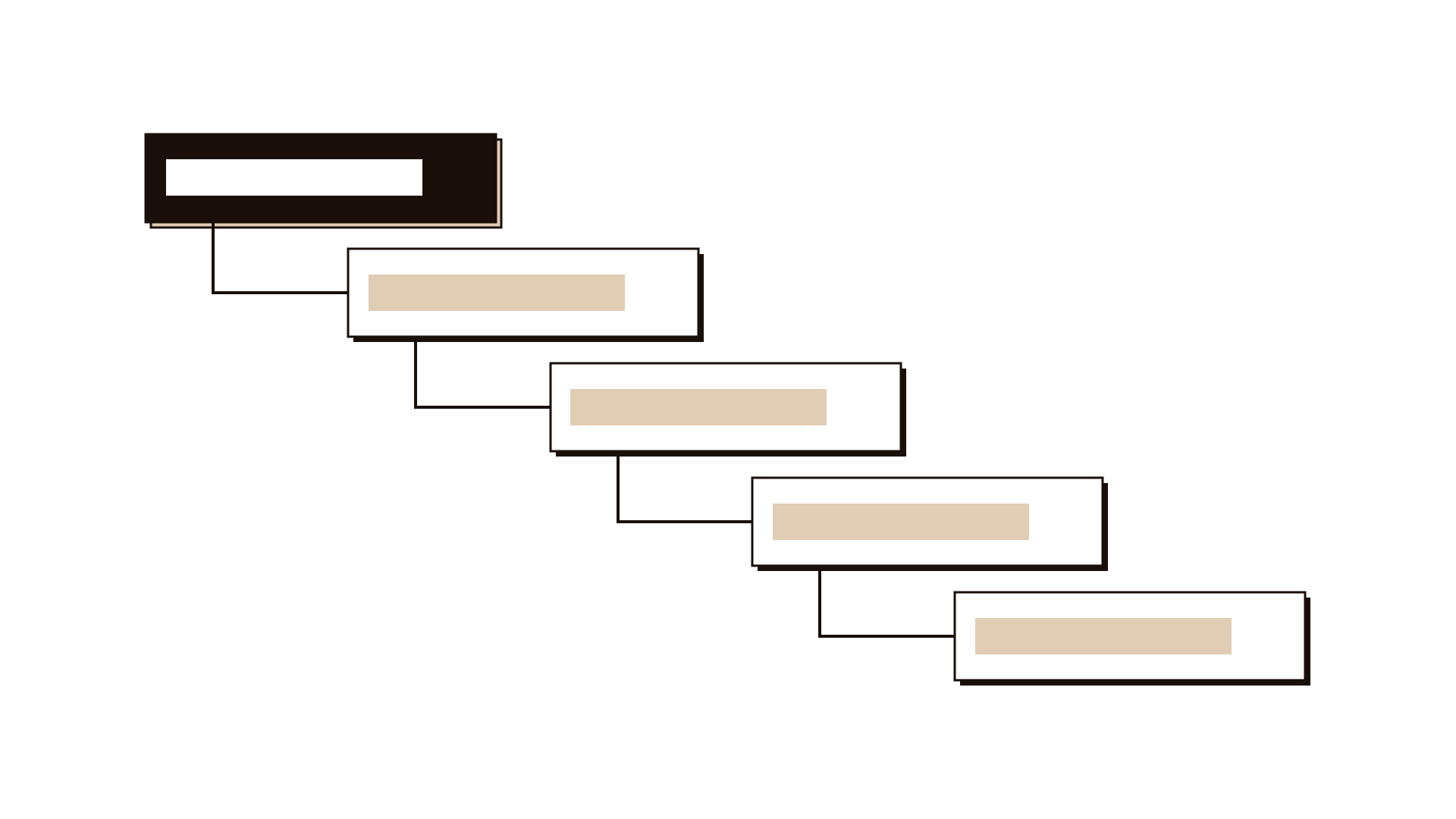
A. G. Lafley and Roger Martin's strategic choice cascade, from Playing to Win, is the most useful frame here. Its five linked questions (winning aspiration, where to play, how to win, required capabilities, management systems) translate directly into innovation terms. The strategic choice cascade guide walks through it step by step.
Running order:
- Generate candidate search fields from the evidence: customer groups underserved today, services with obvious friction, capabilities you have that others lack, regulatory changes that open new space. Aim for fifteen to twenty.
- Test each against three filters: does it serve the ambition, do we have the right to play here, and is it large enough to matter?
- Narrow to two to four. Write, for each, what is in and what is explicitly out.
- For each search field, list the capabilities you lack. This becomes input for hiring, partnerships and training.
- Run a quick assumption mapping on the chosen fields: what must be true for each to pay off, and which of those beliefs is both important and least proven?
What comes out: two to four search fields with boundaries, the riskiest assumptions behind each, and a capability gap list.
Watch for: the urge to keep ten fields "just in case". Every extra field halves the attention on the others.
Workshop 3: the portfolio and the rules of the game
Goal: decide the mix of bets, place existing projects in it, and agree how ideas will be judged and stopped.
Running order:
- Introduce the three horizons: horizon one improves today's core, horizon two extends into adjacent areas, horizon three explores what could replace or reinvent the core. The model comes from The Alchemy of Growth (1999) by Mehrdad Baghai, Stephen Coley and David White of McKinsey. A related frame, from Bansi Nagji and Geoff Tuff's 2012 Harvard Business Review article "Managing Your Innovation Portfolio", splits effort between core, adjacent and transformational innovation; the authors stressed that the right split depends on industry and competitive position.
- Agree a target mix in broad bands. Do not argue about single percentage points.
- Place every project from the inventory on a portfolio map. The gap between the target mix and today's reality is usually the most important slide of the whole exercise.
- Agree the stages ideas pass through, the evidence needed at each, and who decides. Write down the stopping rules now, while nobody's project is on the table.
- Fill a stop-doing list: projects that fall outside every search field, duplicate committees, reports nobody reads.
What comes out: target mix, current portfolio map, a decision process with named decision makers, and a list of what stops.
Watch for: horizon three becoming a home for pet projects. If an initiative cannot name the assumption it is testing, it is not exploration; it is drift.
Workshop 4: goals, owners and the first 90 days
Goal: turn choices into commitments people will be held to.
Running order:
- Translate the strategy into one page. OGSM (objective, goals, strategies, measures) works well for this, as does an annual alignment in the spirit of hoshin kanri.
- Set quarterly objectives and key results for the first two quarters only. Further out, they will be guesses.
- Build a simple roadmap for the first year in quarters, not months.
- Assign owners with a RACI for the strategy's main parts: search fields, portfolio reviews, capability building.
- Agree the review rhythm: a portfolio review every quarter, and a full strategy refresh once a year.
What comes out: a one-page strategy, first-quarter goals, a roadmap, named owners and a calendar of review dates already booked.
Illustrative example
Illustrative. A mid-sized logistics company operating across ports in northern Europe asked its new head of innovation for a strategy within one quarter. The evidence pack showed three things: customers increasingly expected live tracking, a new emissions regulation was coming, and the company had 31 projects labelled "innovation" with no shared criteria.
In workshop one, the failure sentences converged on one theme: losing large shippers to competitors who offered better visibility. The ambition became "Within four years, every customer can see and change their shipment without calling us, and we can prove our emissions per container."
Workshop two narrowed twenty candidate fields to three: shipment visibility, low-emission handling, and self-service for small shippers. Workshop three placed the 31 projects on the portfolio map. Nineteen sat in none of the three search fields. Eleven were stopped, five merged and three kept as horizon-one improvements. Workshop four produced a single page, two quarters of OKRs and a quarterly portfolio review with the chief operating officer in the chair.
The strategy itself fitted on one page. The real output was the stopped projects: they freed the people needed for the three search fields.
Do's and don'ts
Do
- Prepare evidence before anyone opens a marker. Workshops amplify whatever enters the room.
- Keep the room small enough to decide. Communicate widely afterwards instead of inviting widely.
- Write down what is out of scope for every search field.
- Agree stopping rules before projects are reviewed.
- Book the quarterly reviews before the last workshop ends.
Don't
- Don't start with ideas. Ideas before choices produce a long list and no strategy.
- Don't let the innovation strategy contradict the corporate strategy. Resolve the conflict openly.
- Don't treat the three horizons as a fixed sequence. Steve Blank's 2019 critique in Harvard Business Review argued that disruption now moves fast enough for horizon-three threats to arrive on a horizon-one timescale; use the model for balance, not as a timetable.
- Don't publish a fifty-page document. If it cannot fit on one page, the choices have not been made.
- Don't confuse an innovation team's work plan with the organisation's innovation strategy.
How the rest of this hub helps
Each step above has a deeper article:
- Running the portfolio once it exists: Innovation portfolio management: fund, scale, pause or stop.
- Putting the horizons to work without the usual distortions: Three horizons in practice.
- Making the stopping rules real: How to stop a project well.
- Setting goals that suit exploratory work: OKRs for innovation teams: do's and don'ts.
- Fixing the annual offsite where most of this should happen: Your annual strategy retreat is wasted. Here is a better one.
If you are not sure your organisation is ready for a strategy at all, start with how to assess your innovation maturity.
Questions people ask
How long should an innovation strategy be? One page for the choices, with a few pages of supporting evidence behind it. Length usually signals that choices were avoided, not that the thinking was deep.
Who should own the innovation strategy? A senior sponsor who controls budget and can stop projects, usually a deputy chief executive, chief operating officer or chief strategy officer. An innovation team can run the process, but it cannot own the choices alone, because the choices affect every department's resources.
How often should an innovation strategy be updated? Review the portfolio every quarter and refresh the strategy once a year, or sooner if a scenario from workshop one starts to come true. The search fields should last two to three years; the projects inside them will change far more often.
Where to go next
The guides behind the four workshops are free to use: start with three horizons, the strategic choice cascade, portfolio mapping and OGSM, or browse the full guides index.