
Innovation portfolio management: how to fund, scale, pause or stop
How to run an innovation portfolio review that ends in one of four decisions for every project: fund, scale, pause or stop. Steps, criteria and examples.

Innovation portfolio management: how to fund, scale, pause or stop
Innovation portfolio management means reviewing all your innovation projects together, on a fixed rhythm, and giving each one a clear decision: fund the next step, scale it into operations, pause it, or stop it. The point is not to pick winners in advance, which nobody can do, but to move money and people towards the bets that are learning fastest and away from those that are not. Below is a review you can run every quarter, starting next quarter.
Why most portfolios are not managed at all
In most organisations, innovation projects are approved one at a time and reviewed never. Each has its own sponsor, its own update format and its own reasons to continue. The result is a long tail of half-alive projects, each too small to matter and too politically protected to end.
A portfolio review changes the unit of decision from "this project" to "all of them". Once projects sit side by side, three things become obvious: where the effort really goes, which projects have stopped learning, and which promising ones are starved of people.
This article assumes you already have an innovation strategy with search fields and a target mix. If not, start with the hub's pillar: How to build an innovation strategy in a few workshops.
Step 1: Build one list with one format
Collect every project that uses innovation money or time. For each, capture the same eight fields on a single page:
- Name and owner.
- The search field it serves.
- Horizon: improving the core, extending to an adjacent area, or exploring something new (see three horizons).
- Stage: exploring the problem, testing a solution, piloting, or scaling.
- People and money spent so far, and requested for the next period.
- The riskiest assumption it is currently testing.
- What it learned since the last review, with evidence.
- What it asks for now.
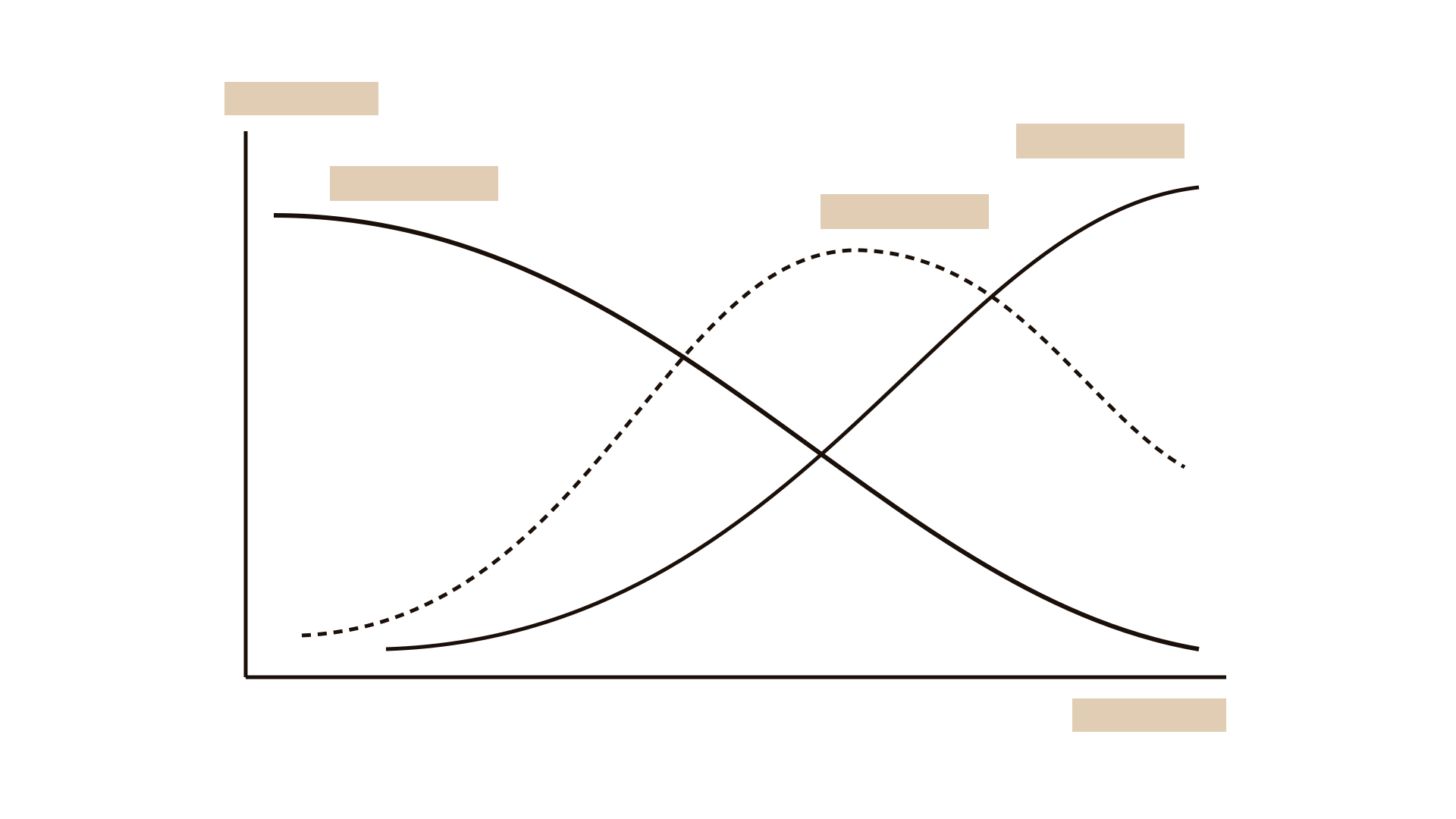
Insist on the same format for everyone. Projects that cannot fill field 6 are your first conversation.
Step 2: Map the portfolio before judging projects
Place every project on a portfolio map: horizon on one axis, stage on the other, bubble size for spend. Do this before discussing any individual project.
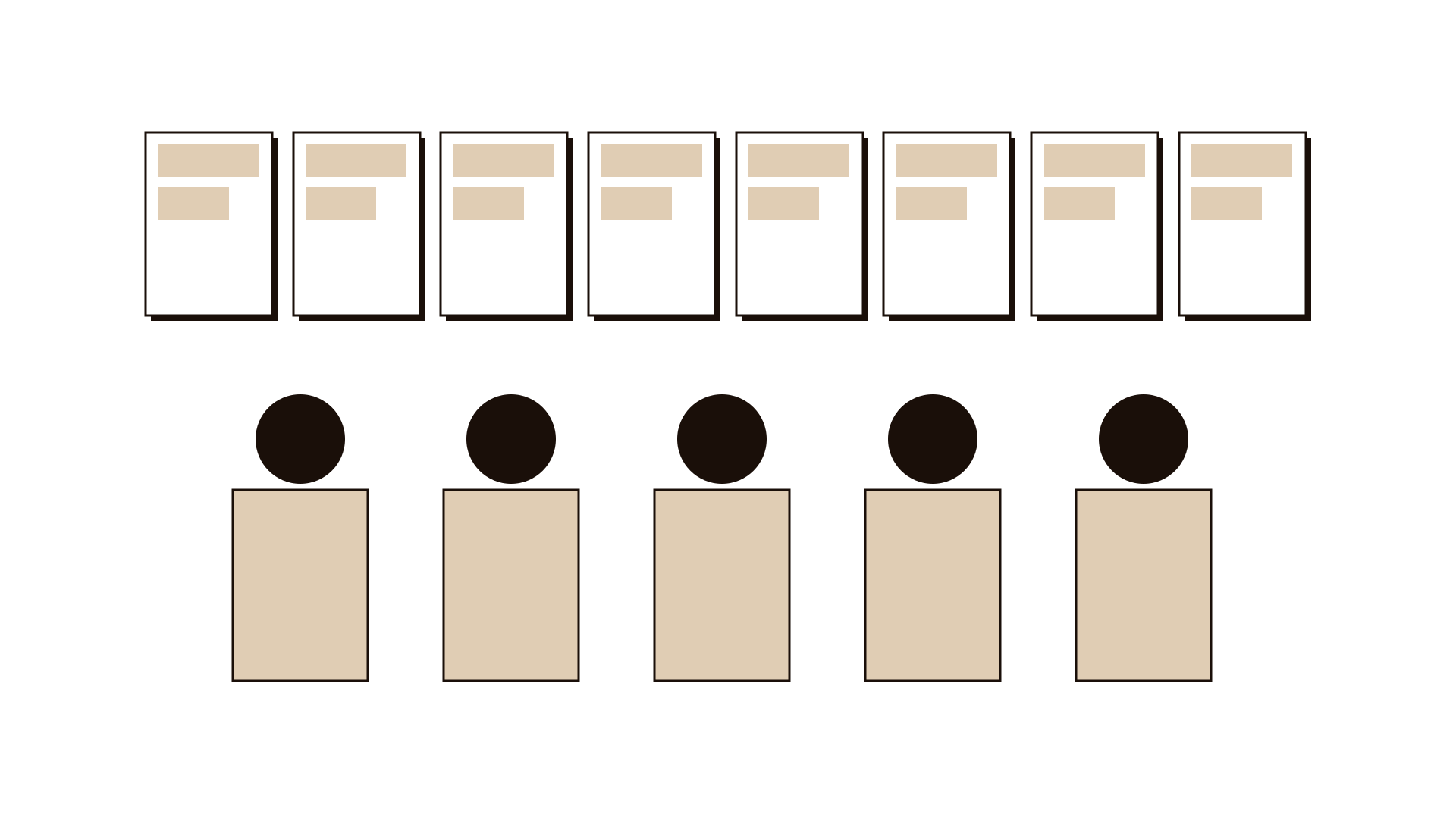
Then compare the map with your target mix. Typical patterns:
- Everything in horizon one. The portfolio is really an improvement programme. Fine if that is the strategy; a problem if leadership believes it is funding the future.
- A crowd in early stages, nothing in piloting. Ideas go in, nothing comes out. Usually a sign that nobody owns the move into operations.
- A few large projects swallowing the budget. Often one flagship that has become too visible to question.
Agree in the room which imbalance matters most this quarter. That shapes every decision that follows.
Step 3: Judge each project on evidence for its stage
Early-stage projects cannot show revenue or savings, and late-stage projects should not hide behind "we are still learning". Use different questions at each stage:
| Stage | The question to ask | Evidence that counts |
|---|---|---|
| Exploring the problem | Is the problem real, frequent and painful for a group we care about? | Interviews, observation, data on how often it occurs |
| Testing a solution | Do people use it, and does it change their behaviour? | Results of a hypothesis test against a threshold set in advance |
| Piloting | Does it work in real conditions, at a cost we can carry? | Pilot data, operational cost, a draft value case |
| Scaling | Is there an owner in operations and a budget line? | Signed handover, named operational owner |
Robert G. Cooper's Stage-Gate model made this idea standard: each gate is a decision point with its own criteria, not a progress report. You do not need the full Stage-Gate apparatus to apply the principle.
If you need to compare several projects at the same stage, a weighted decision matrix with three or four agreed criteria helps. Keep the criteria fixed for a year so scores stay comparable.
Step 4: Give every project one of four decisions
No project leaves the review without one of these:
- Fund. It goes to the next stage with a defined budget, a named next assumption and a date for the next review. Funding is for one stage at a time, never the whole journey.
- Scale. It leaves the innovation portfolio and becomes part of operations, with an operational owner and a budget line outside innovation. If nobody in operations will take it, it is not ready to scale; it is a pilot without a home.
- Pause. It stops consuming resources but is kept, with a written condition for restarting: a regulation passing, a partner becoming available, a technology maturing. A pause without a restart condition is a stop that nobody had the courage to call.
- Stop. It ends, its learning is written up, and its people move to other work. How to do this well is covered in How to stop a project well.
"Continue as is" is not on the list. It is the decision that creates zombie projects.
Step 5: Rebalance and record
After individual decisions, look at the map again. Has the portfolio moved towards the target mix? If all decisions were "fund", you have not made choices; you have renewed subscriptions.
Record each decision in a short log: project, decision, reason, conditions, next review date. Over a year, this log becomes the best evidence you have of how the organisation actually allocates innovation effort, and it is what auditors and boards ask for.
Step 6: Keep the rhythm
Quarterly works for most organisations. Monthly is too often for exploratory work to show progress; yearly is so rare that projects drift for months. Hold the review on the same week every quarter, chaired by the same senior sponsor, with finance in the room. Book the next four dates before you leave the first one.
Illustrative example
Illustrative. A regional health insurer in Canada ran its first quarterly portfolio review with 22 projects. The map showed 17 of them in horizon one and early stages, two pilots and no project ready to scale.
The review produced: nine funded for one more stage, each with a named assumption; one scaled (an automated claims-status message, handed to the customer service director with a budget line); four paused with written restart conditions, three of them tied to a pending data-sharing agreement; and eight stopped. Of the eight, five had not been able to name an assumption they were testing.
The freed budget went to the two pilots, which had been running with half the people they needed. By the third review, both had reached a scale decision.
Common mistakes
- Reviewing projects one by one. Without the map, every project looks reasonable in isolation.
- Funding whole projects upfront. Fund stages. A three-year commitment to an unproven idea removes the moment to change your mind.
- Same criteria for every stage. Asking an early idea for a business case kills it; letting a pilot avoid one wastes money.
- Letting owners present their own case without challenge. Invite one person whose job is to argue the opposite, or run a quick premortem on the largest bets.
- Pausing as a polite stop. If there is no restart condition, call it a stop.
- Scaling without an operational owner. The handover is the decision; a slide saying "scale" is not.
- Measuring the portfolio by count of projects. Track movement between stages and value delivered after scaling instead; a KPI tree helps link the two.
Questions people ask
What is the difference between project portfolio management and innovation portfolio management? Project portfolio management usually assumes the outcome is known and asks whether delivery is on time and on budget. Innovation portfolio management assumes the outcome is uncertain and asks whether each project is reducing that uncertainty fast enough to deserve more money.
What is the 70-20-10 rule in innovation? It is a rule of thumb for splitting effort between core, adjacent and transformational innovation, popularised by Bansi Nagji and Geoff Tuff in Harvard Business Review in 2012. They presented it as a starting point that varies by industry, not as a target every organisation should copy. Read more in Three horizons in practice.
How many projects should an innovation portfolio have? As many as you can staff properly. A useful test: if most projects have less than one person's real time each, you have too many. Fewer projects with real teams learn faster than many projects with fractions of people.
Where to go next
The guides behind this review are free: portfolio mapping, three horizons, assumption mapping and the weighted decision matrix.