
Change cards ("what if" questions)
Draw a provocative question, answer it for each idea on your shortlist, and keep the version that comes out stronger.
- Time
- 30 min
- People
- 3–8
- Kind of work
- Generate · Choose

In short
Change cards are a deck of provocative "what if" questions, such as "What if it had to be live in ten working days?", that a team draws and answers for each shortlisted idea. To run them, bring two to four ideas, draw a card for each, answer it, note what changes, then compare the stronger versions and choose.
What it is
Change cards push a team to look at its favourite ideas from angles it would not choose by itself. Each card carries one short question that changes a condition: the money, the time, who is in charge, how many people use it, or what is taken away. You apply the card to an idea and ask what that idea would have to become to survive the change. Some ideas get sharper and cheaper. Some merge with others. Some fall apart, which is useful to know before anyone spends money on them.
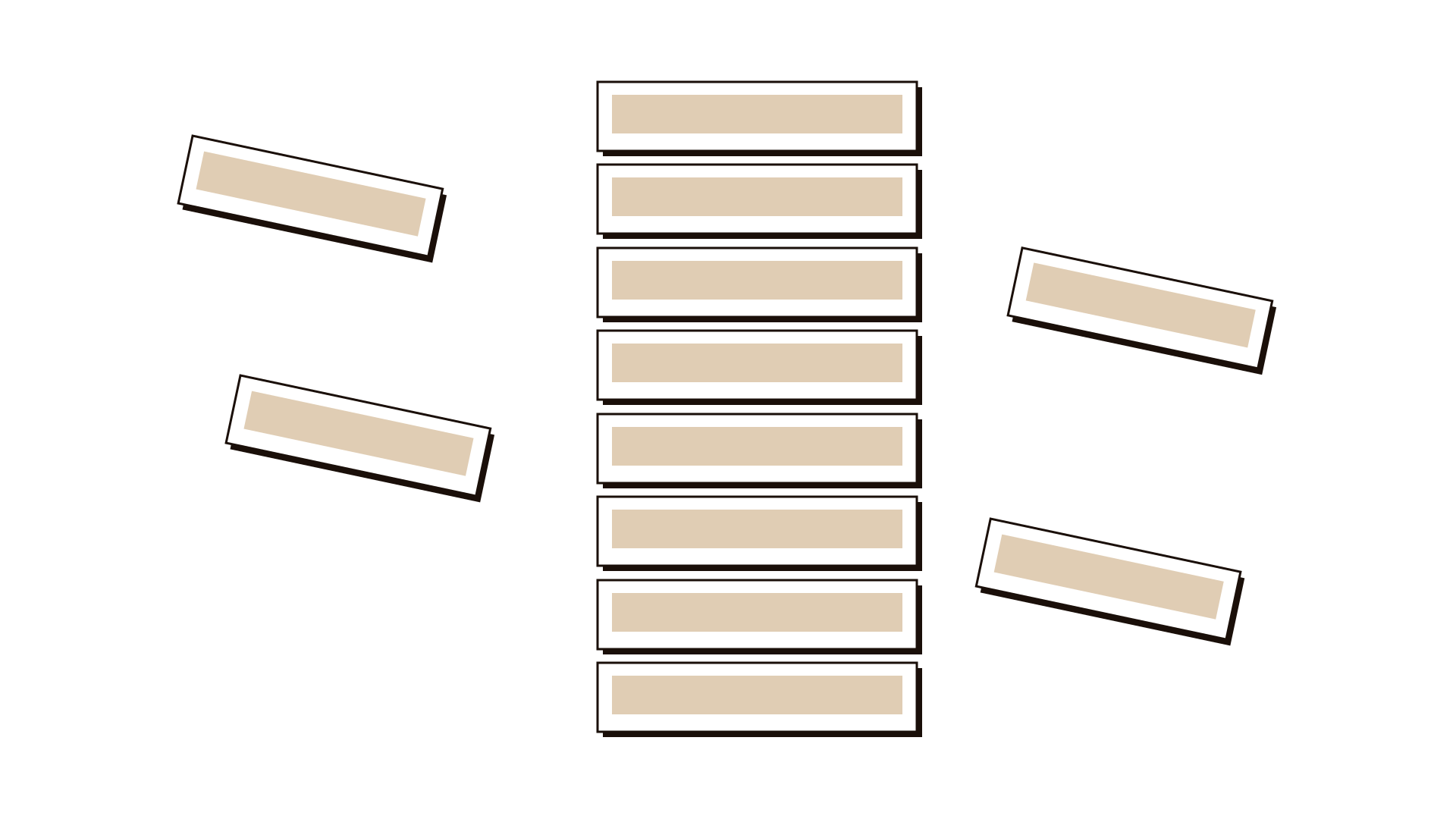
The method appears in the Open Policy Making toolkit published by the UK government's Policy Lab, where cards are drawn to test and develop policy ideas. The set below is Tiremesù's own. It has eight cards: "What if we had to do it with what we already own?", "What if it had to be live in ten working days?", "What if the people who use it set the rules?", "What if there were no screen at all?", "What if demand doubled overnight?", "What if a neighbourhood business delivered it?", "What if we had to cut one step completely?" and "What if our most sceptical director had to sign it off?". In this worksheet each answer gets one row: the idea, the card drawn, the answer, what changes in the idea, and the decision to keep, drop or merge it.
When to use it
Use it when
- You have a shortlist of two to four ideas and the team likes all of them for reasons nobody has tested.
- Ideas from a session look safe and similar, and you want to push them further before choosing.
- An idea depends on a budget, system or timeline that may not arrive, and you want to see whether a leaner version exists.
- A decision meeting is coming and you want each option in its strongest form before it is compared.
- A group has stopped generating new thoughts and needs a quick jolt rather than another blank brainstorm.
Skip it when
- You have no ideas yet. The cards change ideas that exist; they are not a starting prompt for a blank wall.
- The decision is already made and approved. Provocations at that point only reopen arguments nobody can act on.
- You need a careful risk review of a plan before launch. Use a premortem or failure modes analysis instead, since the cards are deliberately playful and incomplete.
You need
- Time
- About 30 minutes for three ideas and three cards each. Allow 10 minutes more for every extra idea.
- People
- 3 to 8 people, including at least one person who will have to deliver whichever idea is chosen.
- Materials
- A printed or written deck of 8 to 12 cards, one worksheet per idea, the shortlisted ideas on a wall, sticky notes and markers.
How to run it
Step 1: Bring a short list of ideas
Put two to four ideas on the wall, each written as one sentence that says who it is for and what it does. If an idea cannot be said in a sentence, sharpen it first. The cards work on clear ideas and only blur vague ones.

Step 2: Prepare the deck
Write 8 to 12 cards, one question each. Mix four kinds: limits (money, time), people (who decides, who uses it), scale (much more or much less demand) and removal (no screen, one step gone). Use the eight Tiremesù cards above as a starting set and add one or two that fit your setting, such as "What if it had to work during Ramadan hours?".
Step 3: Draw a card for the first idea
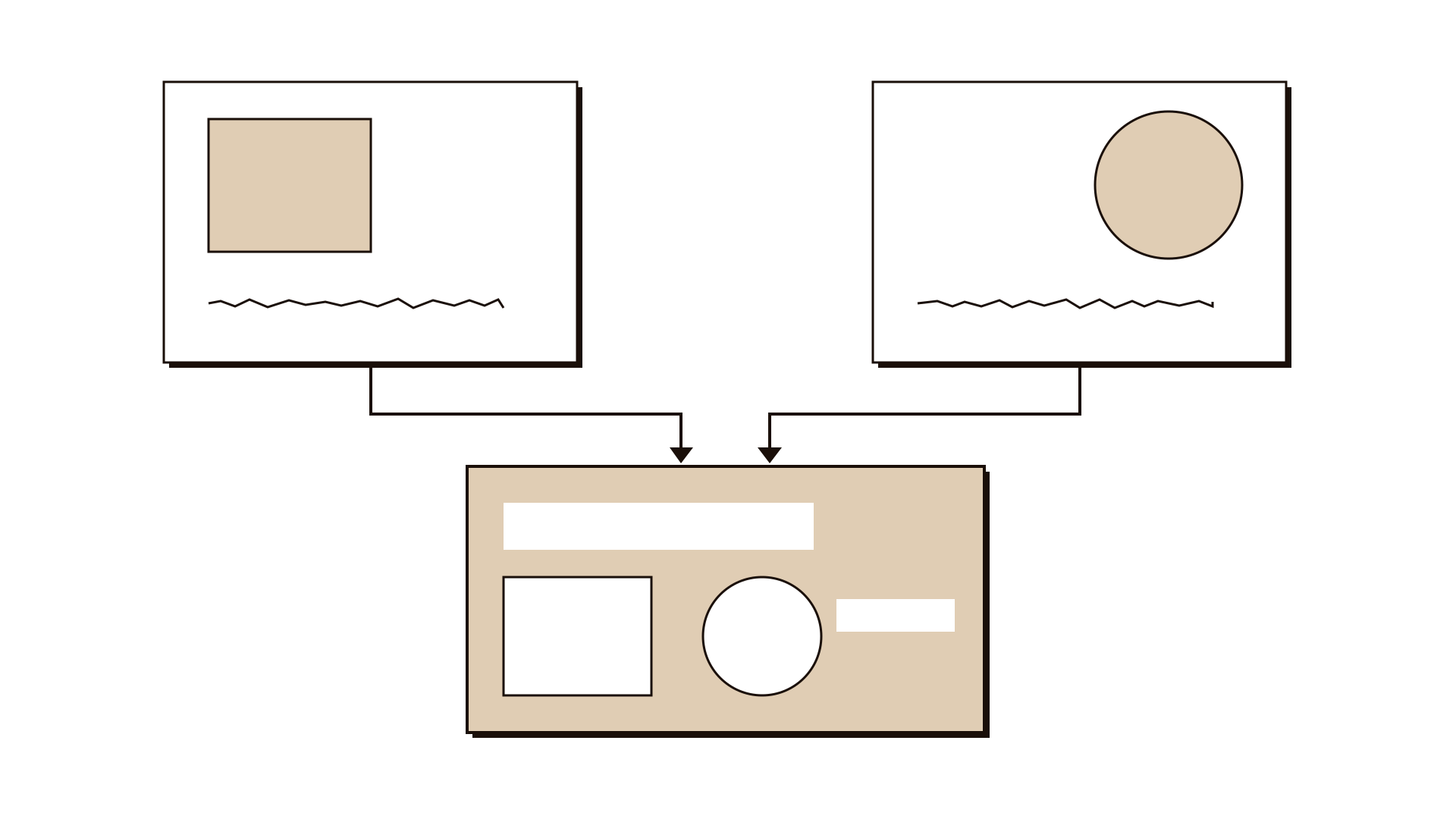
Shuffle the deck and turn over one card for the first idea. Read the question aloud. Everyone takes two minutes alone to write an answer: what would this idea look like if the card were true? Working alone first keeps the loudest answer from becoming the only one.
Step 4: Share and capture what changes
Read the answers out, then agree in one or two lines what the card changes in the idea. Write it in the "what changes" field. It might be a cheaper version, a different channel, a new partner or a step removed. If the card changes nothing, note that too: it means the idea is robust on that point.
Step 5: Rotate through the ideas
Give each idea three cards in total, drawing fresh ones so ideas do not all face the same questions. Keep each round to about three minutes. Speed matters here: the aim is to provoke, not to design every detail.
Step 6: Compare the stronger versions
Rewrite each idea as it now stands, folding in the changes the team agreed. Put the new versions side by side. Look for ideas that merged, ideas that got simpler, and ideas that only survived by losing what made them work. Mark each one keep, drop or merge.
Step 7: Choose and record
Choose which idea or merged idea goes forward to prototyping, using dot voting or a short discussion against your criteria. Record the strengthened sentence, the cards that shaped it and the ones it failed, so the people who prototype it know where it is weakest.
Worked example
A large municipality received about 2,100 requests a month to collect bulky household waste such as old furniture and appliances. The average wait was nine days, and complaints about items dumped on the street ran at roughly 380 a month. An idea session had produced three shortlisted ideas: a fixed monthly collection day per district, online booking with a photo of the items, and 12 drop-off points in neighbourhoods.
Six people met for 35 minutes: two collection supervisors, a call centre lead, a digital officer, a contracts manager and a service designer. Each idea got three cards.
"What if demand doubled overnight?" broke the fixed collection day. Supervisors pointed out that one day a month would leave items on pavements for up to four weeks, which was the very problem they wanted to solve.
"What if there were no screen at all?" changed online booking. The team agreed that residents should be able to book by phone or text message with a short list of items, and that the photo should be optional.
"What if a neighbourhood business delivered it?" changed the drop-off points. The contracts manager suggested asking furniture and appliance retailers to take away the old item when they deliver a new one, which could remove a share of requests at source.
The team dropped the fixed day and merged the other two: booking by phone, text or web with a 72-hour collection window, plus retailer take-back. The merged idea failed one card, "What if we had to do it with what we already own?", because the 72-hour window needed two extra crews.
They chose the merged idea for a prototype in one district and wrote the extra crews down as the first thing to test.
IllustrativeTips and mistakes
Tips
- Write the cards in the language of your organisation. A card about Ramadan hours or a Friday closure will provoke more than a generic one.
- Keep the rounds fast. If the group starts designing details, move on to the next card.
- Let the person who will deliver the idea answer last, so their realism tests the answers rather than closing them down.
- Keep a note of the cards each idea failed. They tell the prototype team exactly what to test first.
Common mistakes
- Choosing cards that suit each idea, so favourite ideas get the easy questions and weaker ones get the hard ones.
- Treating a card answer as a commitment, when it is a thought experiment that still needs testing.
- Using the same three cards for every idea, which makes the ideas converge rather than improve.
- Skipping the rewrite, so the team chooses between the old versions and loses what the cards produced.
What you walk away with
You leave with each shortlisted idea rewritten in a stronger form, a clear keep, drop or merge decision for each, and a record of the cards each idea failed. The next step is to prototype the chosen idea. A storyboard or paper prototype works well, with the failed cards becoming the first questions you test.
Questions people ask
How many change cards should a deck have?
Eight to twelve is enough. Fewer and ideas keep meeting the same questions. More and the group spends time reading cards instead of answering them.
Can we write our own change cards?
Yes, and you should add a few. The best cards name a condition people in your organisation recognise, such as a budget freeze, a change of minister or a peak season.
What is the difference between change cards and SCAMPER?
SCAMPER gives you prompts to generate variations of an idea, such as substitute, combine or remove. Change cards change the world around the idea, such as the budget, the time or who is in charge, and ask whether the idea still holds. Teams often use SCAMPER to widen options and change cards to test the shortlist.
Tool card
The worksheet your team fills in, one box per field.
- Idea on the table
- Card drawn
- Answer to the card
- What changes in the idea
- Keep, drop or merge
- Strengthened idea